
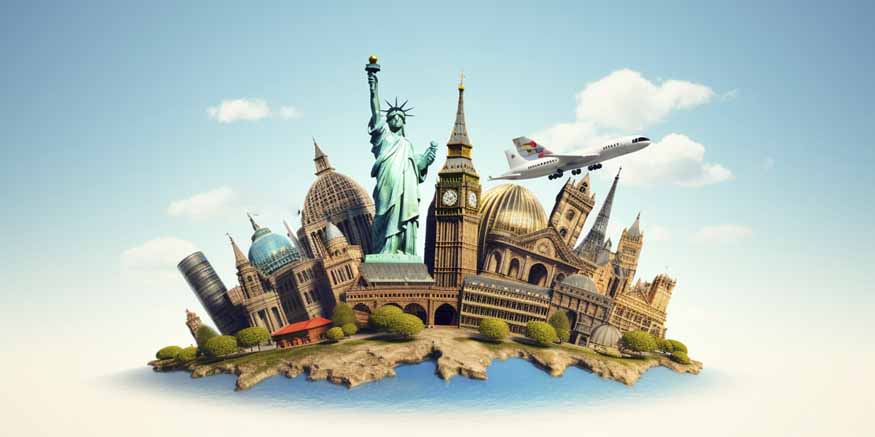
Geography is not just the mapping of places; it is the study of physical systems on Earth that shape landscapes, define ecosystems, and inspire human culture. This essay explains the discipline of physical geography, describes the major geographical features of the earth and tours the world landmarks and marvels that define the variety and the magnitude of our Earth.
Understanding Physical Geography
Physical geography is the study of physical phenomena and processes of the Earth, such as mountains, rivers, deserts, climate, soils, vegetation, and their inter-relations. It attempts to discover how landscapes are formed and modified, how water flows and how life adapts to different physical conditions. Physical geography helps us to understand the mechanics of the surface of the Earth in terms of plate tectonics, erosion, weathering and biogeography.
In physical geography, we discuss large geographical features of the world which include mountain ranges, plateau, plains, deserts, rivers, glaciers, and ocean basins. These make up the platform on which ecosystems grow and a civilization arises in human beings.
Major Geographical Features of the World
Examples of major features of geographical features include (though are not limited to):
- Mountains and Ranges: Uplifted areas which are created by the tectonic forces. Examples: the Himalayas (which are the location of Mount Everest).
- Plateaus and Highlands: Flat or slightly sloping regions which are raised up like the Tibetan Plateau.
- Plains and Lowlands: Huge flat areas in which agriculture and human settlement can take place (e.g. the Great Plains in North America).
- Deserts: A dry region that receives low levels of rainfall.
- Rivers and Watersheds: Shaping canyons and supporting life. The Amazon River is one of the largest basins.
- Glaciers and Icecaps: Snowy bodies in the polar and alpine regions which provide the landscape its features by erosion and deposition of the glaciers.
- Coasts, Bays & Islands: Land-sea interfaces; islands may form through volcanism.
- Lakes & Inland Seas: Stagnant water bodies trapped in landlocked basins, which may have unique physical characteristics, such as the Dead Sea, which is hypersaline and located in a tectonic basin.
These are just but a few of the key geographical features of the planet that shape residences, climate conditions and human settlement.
Natural Wonders of the Earth
Certain characteristics are so dramatic or rare to an extent that we call them natural wonders. Here are a few iconic ones:
- Grand Canyon (USA): The steep side of the canyon has been excavated by the Colorado River over millions of years revealing the layers of rock dated to the geological periods.
- Victoria Falls (Zambia / Zimbabwe): This is one of the widest waterfalls in the world and it is locally known as the Mosi-oa-Tunya (the smoke that thunders).
- Galapagos Islands (Ecuador): The islands are volcanic and they contain a lot of endemic species; they were also widely known to Charles Darwin.
- Amazon Rainforest (South America): It is one of the most biodiverse reserves on Earth and it is even called the lungs of the Earth.
- Mount Everest (Himalayas): The highest structure that is above sea level – it is the symbol of nature and human effort.
- Sahara Desert (Africa): It is the biggest hot desert on Earth with its hills and dunes, it has its legend of climatic changes.
- Dead Sea (Jordan / Israel): Although most aquatic life cannot survive in the Dead Sea because of its extreme salinity, there are a few types of bacteria and other microbial life found there.
These natural wonders are the result of tectonic, climatic, hydrological, and ecological forces interacting.
Famous World Landmarks and Their Geographical Context
Alongside natural features, the world is home to many famous landmarks, including historic and cultural buildings. Their value is in most instances geographically founded.
- The Great Wall of China: This colossal fortification took the pattern of mountainous landscapes and valleys that trace all of northern China and covers a total of 13,000 miles.
- Eiffel Tower (Paris): This is a tower that was constructed using wrought iron lattice by Gustave Eiffel and was built on the 1889 world fair. The height of the Eiffel Tower and the view of it at different locations within Paris highlight its connection to the flat terrain. It has become a symbol of both the city and engineering.
Although they are man-made, they are deeply connected to their physical location.
How Geography Shapes Landmarks and Nature
The interplay between physical geography and human culture is profound:
- Settlement & Civilization: Rivers and fertile plains attract agriculture and urban growth.
- Defense & Borders: Mountain ranges and deserts often serve as natural frontiers.
- Tourism & Identity: Natural wonders and landmarks become focal points for tourism and culture.
- Environmental Threats: Landmarks and natural features face climate change, erosion, and pollution.
- Scientific Value: Natural formations act as archives of Earth’s history.
A Geographical Tour: From Desert to Peak to River Gorge
- Start in the Sahara Desert, one of the most iconic geographical features of the planet.
- Then, fly to the Amazon Rainforest, a natural wonder crucial to the world’s climate. Continue on to the Galapagos Islands, a volcanic ecosystem teeming with exotic species.
- Next, visit the Zambezi River and witness the awe-inspiring Victoria Falls.
- Finally, end your journey at Mount Everest, the towering peak formed by the Earth’s tectonic forces.
Conclusion
Studying physical geography and being aware of the main geographical peculiarities of the world provides us with the understanding of the way the surface of our planet changes and supports life. Natural phenomena, such as the Grand Canyon and Victoria Falls, and man-made landmarks of the world, such as the Great Wall of China and the Eiffel Tower are closely interconnected.
Knowing these sceneries brings about admiration of our planet, environmental awareness of how fragile our environment is, and appreciation of natural as well as human resourcefulness.
Are you enjoying reading our content? Do visit EuroSchool to explore more!!