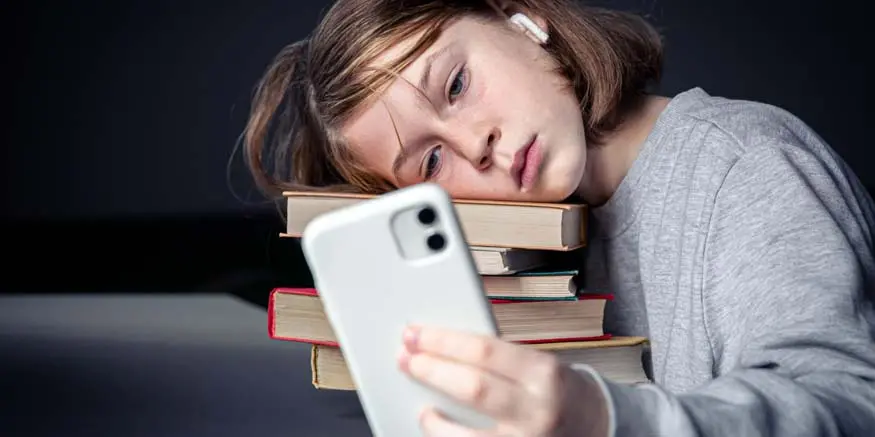
Mobile phones are now part of everyday life for almost every student. They are used by children to take online classes, search information, do their schoolwork, play games, watch videos, and even be in contact with their friends.
Learning has become more convenient with smartphones in various perspectives, but there has been the introduction of new challenges that have never been encountered in the previous generations. Mobile phones can seriously impact the academic performance, physical health, emotional well-being, and social development of a student when used too frequently and without proper guidance.
In many homes, phones are present from morning until night, which makes it harder for children to switch off and relax away from screens. Many students spend hours each day on their phones without realising how much time has passed.
What may begin as a few minutes of checking messages or watching a video can quickly turn into long periods of screen use. In the long run, this habit may influence the way students think, act, and relate to the world.
Knowledge about these negative impacts is significant to parents, teachers, and schools to help them create healthy digital habits as early as possible. When adults work together and give clear guidance, students are more likely to develop a balanced and responsible relationship with technology.
1. Reduced Concentration and Attention Span
Constant distraction is one of the largest issues brought about by mobile phones. Notifications, pop-ups, games, and social media updates pull a student’s attention away again and again.
A phone is distracting even when you are not using it as there is always the possibility of an alert or a message and you can become distracted.
This makes it difficult to:
- Concentrate while studying: Students find it harder to stay focused on books or homework when their phone is nearby.
- Stay attentive during classes: Messages and apps distract students from listening to teachers.
- Complete homework efficiently: Tasks take longer when attention is broken repeatedly.
In the long run, students become comfortable with switching between activities, and their capacity to concentrate on a single task reduces.
Also Read: What Is Continuous and Comprehensive Evaluation (CCE)?
2. Decline in Academic Performance
Excessive mobile phone use often leads to procrastination. Instead of revising lessons or completing assignments, students may spend long periods on games, videos, or social media.
This results in:
- Reduced study time: Hours that should be spent learning are lost.
- Poor exam preparation: Students are not fully ready for tests.
- Lower academic performance: Grades may drop as a result.
When phones are always close by, it becomes harder for students to stay disciplined with their studies.
3. Sleep Disturbances and Fatigue
Many students use their phones late into the night. Watching videos, chatting, or scrolling before bed affects the body’s natural sleep cycle.
As a result:
- Sleep quality decreases: The brain does not get enough rest.
- Students feel tired during the day: Fatigue makes it harder to learn.
- Memory and learning ability are affected: Lack of sleep harms concentration and recall.
Poor sleep can quickly lead to mood changes and poor academic performance.
4. Increased Stress, Anxiety, and Emotional Issues
Constant connection to social media and online life can affect a student’s emotional health.
Excessive phone use may lead to:
- Anxiety and stress: Students worry about messages, likes, and replies.
- Fear of missing out: They feel pressured to stay online.
- Low self-esteem from comparison: Seeing others online can affect confidence.
- Emotional dependence on online approval: Likes and comments become very important.
These pressures can make students feel overwhelmed.
5. Physical Health Problems
Long hours on mobile phones can cause physical discomfort and health issues.
These include:
- Eye strain and headaches: Looking at screens for too long tires the eyes.
- Neck and back pain: Poor posture while using phones affects the body.
- Reduced physical activity: Screen time replaces movement.
- Increased risk of weight gain: Less activity affects overall health.
Children need regular movement for healthy growth.
Also Read: Best Time to Study: Every Student Must Know!
6. Mobile Phone Addiction
Some students become overly dependent on their phones.
Signs include:
- Constantly checking the phone
- Feeling restless without it
- Losing interest in offline activities
This habit affects emotional balance and self-control.
7. Poor Social Skills and Reduced Real-Life Interaction
Spending too much time online limits face-to-face communication.
Students may:
- Avoid real conversations
- Struggle with confidence
- Develop weaker communication skills
Real-world interaction is important for emotional development.
8. Exposure to Inappropriate Content
Students are exposed to inappropriate content without any supervision.
This includes:
- Inappropriate videos or images
- Cyberbullying
- Unsafe online challenges
This kind of exposure may influence behaviour and feelings.
9. Reduced Creativity and Critical Thinking
Overuse of phones limits creative activities.
It can:
- Reduce imagination
- Limit problem-solving
- Encourage instant rewards
Creative play and reading are often replaced by screen time.
10. Impact on Behaviour and Discipline
Too much phone use can change behaviour.
Common effects include:
- Irritability
- Low patience
- Poor routine
Students may become less engaged with school and family.
Balance is key. Cell phones are not bad when they are used in a healthy manner. It is not the phone, but its usage that is a problem. There should be a balance between learning, play, rest, and screen time.
How Parents Can Help Reduce the Harmful Effects
Parents can:
- Set screen time limits
- Create phone-free study time
- Encourage sports and reading
- Monitor content
- Show good habits
Role of Schools in Promoting Healthy Digital Habits
Schools can:
- Teach digital well-being
- Encourage balance
- Promote sports and creativity
- Educate about online safety
Guiding Students Toward Responsible Technology Use
Mobile phones are powerful resources, however, when abused, they can be detrimental to students. Problems such as poor focus, lack of sleep, stress, and weak social skills must be addressed.
Forward-thinking institutions like EuroSchool understand the importance of balanced technology use. By encouraging physical activity, reading, creativity, and mindful screen habits, EuroSchool helps students build strong academic and personal foundations. When technology is used wisely, students grow into focused, confident, and well-prepared individuals.
Also Read: A Comprehensive Guide to CBSE Syllabus for Class 1-5