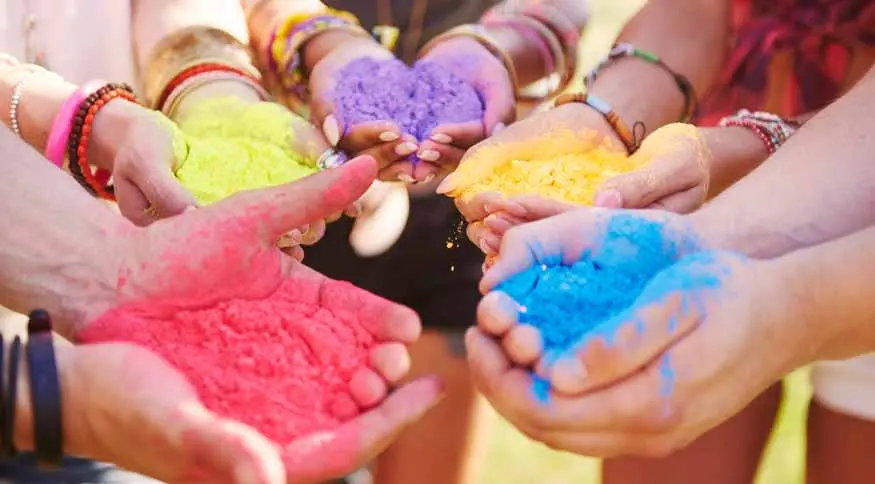

When children think of Holi, they usually think of colour first. Bright gulal floating through the air. Faces covered in pinks, yellows and blues. Laughter that feels louder than usual. For them, it is one of the happiest days of the year. And that joy matters.
But if we look at Holi only as a colourful celebration, we miss something deeper. The festival has always carried lessons about courage, forgiveness, equality and fresh beginnings. These ideas are simple, yet powerful. When schools take time to talk about them, Holi becomes more than an event on the calendar. It becomes part of how children learn to think and behave. Holi gives educators a natural opening to speak about values without sounding preachy.
The Stories That Shaped the Festival
The story about Prahlad and Holika is known to most students. Although they may not remember all the details, they are aware of the gist of it. Prahlad stands by his convictions. He does not abandon his faith even when it endangers him. Eventually, he is saved by goodness. The ritual of Holika Dahan, observed on the night before Holi, symbolises burning away negativity. It is a powerful image. Fire reduces harmful intentions to ash. Light overcomes darkness.
Then there is Krishna and Radha. Krishna’s playful act of applying colour has become one of the most recognisable parts of Holi. Over time, that playful gesture grew into a tradition of sharing colours openly and warmly.
Holi also marks the arrival of spring. After the stillness of winter, trees bloom again. The air feels lighter. Nature itself appears to promise that the end is succeeded by something new. For children, these stories and seasonal changes are not distant ideas. They capture experiences they are already going through.
Choosing Integrity in Everyday Moments
The story of Prahlad may feel ancient, but its lesson shows up daily in school corridors. Doing the right thing is rarely dramatic. It could be as easy as not duplicating homework. It may include acknowledging a mistake. It may imply not laughing at an offending joke. Such choices appear insignificant, but they build character.
When Holi is explained as a celebration of goodness prevailing over wrongdoing, students begin to connect tradition with behaviour. They see that festivals are not only about rituals. They are reminders of how to live. Courage, especially at a young age, is often quiet.
Learning to Repair, Not Just React
Another lesson woven into Holi is forgiveness. Conventionally, individuals take this period to repair broken relationships and to move on. Misunderstandings are common in school. Friends fall out. Frustration is expressed through words. Feelings are hurt.
Holi creates space to talk about letting go. Forgiveness does not imply forgetting about what has occurred. It is choosing to consider a relationship more valuable than a quarrelsome argument in the interim. For students, this shift can change the atmosphere of an entire classroom. When grudges are not carried from week to week, learning feels lighter.
Understanding That Everyone Has a Place
Holi has long brought people together across differences. During the celebration, age, status and background matter less. Schools reflect a similar diversity. Children come from different homes, languages and traditions. Some celebrate Holi enthusiastically. Others may observe it quietly or differently.
When approached thoughtfully, Holi becomes a lesson in inclusion. It can be presented as a celebration of spring and togetherness rather than something exclusive. Students learn something important: respect does not depend on shared traditions. Everyone deserves a place.
The Quiet Power of Starting Again
Spring symbolises renewal. Holi carries that same energy. Renewal may seem easy to students. Trying harder with homework. Being more tolerant in group work. Improving one small habit.
Children tend to think that they are characterized by mistakes. Holi gently challenges that belief. It reminds them that growth is constant and that there is always a new chance to become better. This attitude creates strength and self-recognition.
Remembering That Joy Is Not a Distraction
Life in school may be hectic and tough. Holi reminds us that joy has value too. It is a bond formed through common laughter. Sharing in a common feast creates a feeling of unity. These moments shape emotional wellbeing as much as academic achievement. Holi teaches balance without announcing it. It shows that responsibility and celebration can exist together.
Becoming More Aware of the World Around Us
Traditionally, in the past, flowers and herbs were used to make Holi colours. Nowadays, artificial powders and water misuse may cause issues. Discussing eco-friendly celebrations connects the festival to everyday responsibility. Students can reflect on simple actions that matter. Choosing safer colours. Avoiding unnecessary water waste. Cleaning up afterwards. When environmental care is linked to something joyful, the lesson feels real.
Finding Confidence Through Expression
Holi is expressive. It is bold and bright. This could represent confidence to students. Speaking up in class. Sharing creative ideas. Participating in performances without fear. When children feel accepted, they begin to express themselves more freely. That confidence extends well beyond one festival. Holi becomes a reminder that individuality is not something to hide.
Keeping the Lessons Alive Beyond the Festival
The true impact of Holi lies in what remains after the colours fade. If students remember only the excitement, something is missing. But if they carry forward even a few ideas such as honesty, forgiveness or inclusion, then the festival has served its purpose. Schools can support this through small reflections and conversations. Holi does not need to be overexplained. Its meaning becomes clear through experience.
How EuroSchool Approaches Holi
At EuroSchool, Holi is not treated as just a lively day on the calendar. It is approached with balance. Students explore the stories behind the celebration. They take part in creative and eco-conscious activities. Conversations around respect, inclusion and responsibility are woven naturally into the day. The aim is not to turn the festival into a lecture. It is to allow students to experience joy while understanding what it represents.
In the end, Holi is not only about the gulal that colours our clothes for a few hours. It is about the values that stay with us long after the day is over. Courage in difficult moments. The willingness to forgive. The confidence to be oneself. And the belief that no matter what has happened before, there is always room to begin again.