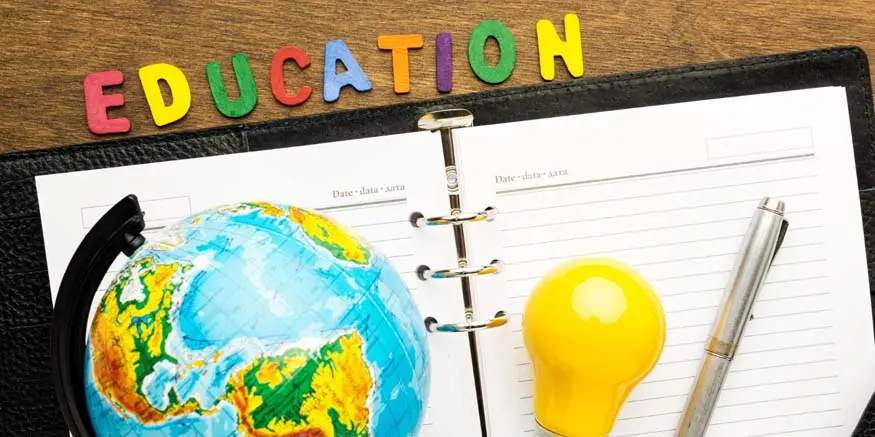
The education system of India is undergoing one of the most significant changes in decades. The manner in which children learn, how teachers teach and how schools assess is gradually transforming.
This transition is reflected in the National Education Policy, which is currently identified as NEP 2025. It continues upon the objectives, established above, and aims at making the learning more practical, variable, and applicable to reality.
For parents and educators, this change can feel both hopeful and uncertain. On the one hand, the shift towards skills, creativity, and understanding is desirable. On the other, many families want to know what this actually means for their child in a classroom.
How will subjects be taught? Will exams change? Will children still be prepared for future careers?. This guide describes the framework, curriculum, and the learning model of NEP 2025 in a simple and realistic manner.
Important factual note:
The Government of India has an official National Education Policy 2020. The NEP 2025 as it is often discussed in many schools and other education sources is not a brand-new policy document. It usually means the implementation phase and targets being rolled out by 2025 based on NEP 2020. The ideas explained in this article reflect the NEP framework and how it is being applied in schools today.
Also Read: What Is Continuous and Comprehensive Evaluation (CCE)?
What Is NEP 2025 in Simple Terms
NEP 2025 is commonly used to describe the stage where the ideas of NEP 2020 are being put into real classrooms.
It focuses on:
- Making curriculum, teaching, and assessment work together
- Moving away from rote memorisation
- Developing skills alongside academic knowledge
- Preparing students for real-world challenges
The intention is to create students who can think, communicate, adapt, and apply what they learn, not just repeat information in exams.
Key Goals of the Policy
The policy is designed around the learner rather than the system. Its main goals include:
- Making education more inclusive and accessible
- Allowing children to explore different subjects
- Reducing unnecessary academic pressure
- Supporting skills such as communication, problem-solving, and creativity
- Encouraging lifelong learning habits
It recognises that every child learns in a different way and at a different pace. Schools are encouraged to respond to this instead of forcing all students into the same narrow mould.
The 5+3+3+4 School Structure Explained
One of the biggest changes under NEP is the shift from the old 10+2 system to a 5+3+3+4 structure. This is designed to match how children grow and learn at different ages.
Also Read: Documents Needed for School Admission: A Complete Parent Guide
1. Foundational Stage (5 Years)
Ages 3 to 8: This includes three years of pre-primary and Classes 1 and 2. Learning here is built around play, stories, music, movement, and conversation. The focus is on:
- Language and early communication
- Basic numbers and patterns
- Motor skills and coordination
- Social and emotional development
This stage ensures children build strong roots without pressure.
2. Preparatory Stage (3 Years)
Classes 3 to 5: At this level, textbooks are introduced, but learning is still meant to be active and engaging. Children focus on:
- Reading, writing, and speaking
- Mathematics and basic science
- Art, physical education, and activities
The aim is to help children become confident learners who enjoy understanding new ideas.
3. Middle Stage (3 Years)
Classes 6 to 8: Subjects become more clearly defined, and children are encouraged to think more deeply. This stage includes:
- Science, mathematics, and social studies
- Exposure to coding and technology
- Vocational and practical skills
- Projects and teamwork
This builds curiosity and analytical thinking.
4. Secondary Stage (4 Years)
Classes 9 to 12: This stage offers greater choice and depth. Students are allowed to mix subjects and explore interests. The focus is on:
- Understanding rather than memorising
- Critical thinking
- Real-world application
- Career readiness
Curriculum Reforms Under NEP
The curriculum is being reshaped to focus on what really matters. Instead of heavy textbooks and endless chapters, the aim is to build strong foundations.
Key changes include:
- Reduced syllabus load
- Strong focus on literacy and numeracy
- Integration of arts, sports, and vocational skills
- Learning through activities, projects, and discussion
- Environmental awareness and life skills
Learning is no longer just about reading and writing. It is about doing, observing, and thinking.
Assessment Reforms
Exams are changing too. Under NEP-aligned systems, the focus is shifting from high-pressure testing to regular progress tracking.
What is different:
- More formative assessments
- Less reliance on one final exam
- Questions based on understanding and application
- Reduced stress in early years
Board exams are also being redesigned to test clarity of concepts rather than memorised answers.
Language and Medium of Instruction
The policy supports learning in a language the child understands well, especially in the early years.
This includes:
- Mother tongue or regional language as medium of instruction till at least Grade 5 where possible
- Exposure to multiple Indian and foreign languages
- Focus on communication and comprehension
This approach supports stronger thinking and cultural connection.
Technology in Learning
Digital tools are becoming part of classrooms, but they are meant to support teachers, not replace them.
Schools are encouraged to use:
- Blended learning models
- Digital resources
- Teacher training in educational technology
- Personalised practice tools
At the same time, healthy screen use is emphasised.
Skill and Vocational Development
NEP recognises that future careers need more than academic marks. Skills matter.
This includes:
- Vocational exposure from middle school
- Real-world problem solving
- Teamwork and collaboration
- Project-based learning
- Career exploration
Education is no longer just about degrees. It is about capability and confidence.
What This Means for CBSE and Other Boards
Boards such as CBSE are updating their systems to reflect NEP ideas. This includes:
- Competency-based questions
- More interdisciplinary learning
- Reduced content overload
- Greater flexibility in subject choices
These changes are being introduced gradually.
How Parents Can Support Their Child
Parents play a big role in making NEP work.
They can:
- Encourage curiosity and questions
- Focus on understanding, not just marks
- Support interests beyond academics
- Communicate with schools
- Help children manage time and balance
How EuroSchool Aligns with NEP
EuroSchool follows the spirit of NEP through its approach to learning. It focuses on:
- Strong foundations in literacy and numeracy
- Experiential and application-based learning
- Multidisciplinary exposure
- Emotional and social development
- Technology used with purpose
By combining modern teaching methods with structured academic excellence, EuroSchool helps students become confident, capable, and adaptable.
The focus is not only on exams but on preparing children for life beyond the classroom. The National Education Policy, which has remained in action up to date, 2025 and beyond, is a step towards meaningful, balanced and future-oriented learning.
It puts great importance on knowledge, abilities, and character over the knowledge of academics. When schools like EuroSchool align their teaching with these principles and parents support children at home, students gain the confidence to grow, explore, and succeed in a changing world. It is not merely a replacement of textbooks. It is a shift in the way children learn.
Also Read: Why Is History Important and How Can It Benefit Your Future?