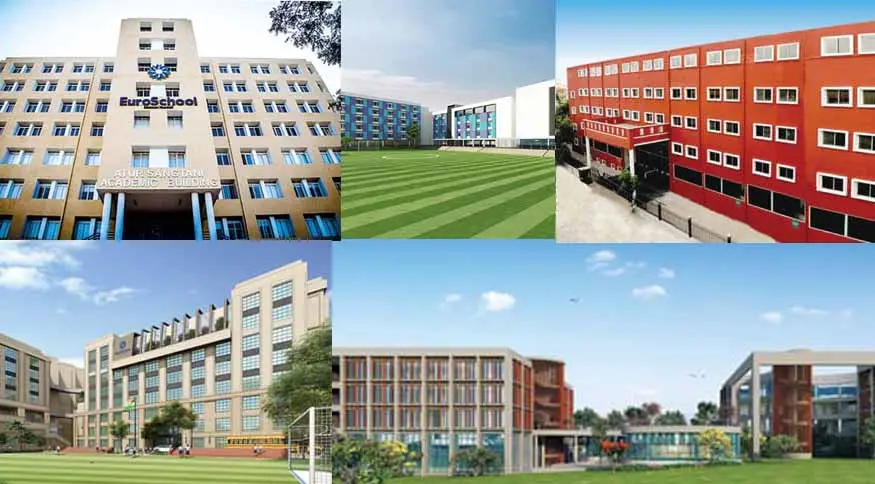

If you’re searching for Schools in Pune, you’re not just looking for a name on a list. You’re trying to answer three real questions fast:
1. Will my child thrive here daily (teaching style, attention, confidence, wellbeing)?
2. Will it work for our family logistics (commute, timing, transport, homework load)?
3. Will it hold up long-term (board fit, skill development, high school pathways)?
This guide is built for Indian parents who want a clear, comparison-ready method. It avoids “one-size-fits-all rankings” and instead shows you how to rank schools like a parent would—based on fit, proof, and practicality.
You’ll also see why families often use terms like best schools in Pune, top schools in Pune, or good schools in Pune interchangeably—while actually meaning different things (academic outcomes vs all-round development vs location convenience).
1) What “best school” really means in Pune (and why lists don’t help)
In Pune, “best” usually depends on your child’s learning temperament and your family’s non-negotiables.
A school that’s “best” for a child who loves debate, projects, and independent thinking can feel frustrating to a child who needs a tighter structure and frequent practice. So instead of chasing a generic list, most experienced parents quietly shortlist using four questions:
Q1. Is the teaching style aligned with my child?
● Some schools are practice-heavy and exam-structured.
● Others are inquiry-based and concept-driven.
Q2. What does the average weekday look like?
● Class size, homework, teacher availability, sports time, screen time.
Q3. Can we sustain the commute for 8–10 years?
● Pune traffic is not linear. Your “20 minutes” can become “45 minutes” in a year.
Q4. Is the school transparent and consistent?
● Policies, fees, communication, discipline approach, and learning support.
Parents are happier when they choose “fit + proof” over “fame + hype”.
2) Quick answers (for busy parents)
What boards do Pune schools commonly offer?
You’ll typically see:
● CBSE (Indian national board; many families prefer it for structured academics and transferability)
● ICSE / ISC (broad curriculum focus; English-forward; strong arts/languages mix)
● Cambridge IGCSE (international qualification for ages ~14–16; flexible subject choices)
● IB (PYP/MYP/DP) (inquiry-based, student-centred, globally recognised programmes)
What about admission age criteria in Pune?
There is no single Pune-wide cut-off that all private schools follow; schools publish their own dates. For example, some schools show cut-offs like “3 years for Nursery, 4 for LKG, 5 for UKG, 6 for Grade I” with a specific “as on” date.
Also remember: the Right to Education Act guarantees free and compulsory education for children aged 6 to 14 in the elementary stage—useful context when you’re evaluating entry-grade expectations.
What should you compare first?
If you do only three comparisons, do these first:
1. Board + teaching approach (how learning happens)
2. Commute + school day rhythm (how life feels)
3. Proof + transparency (affiliation, policies, communication)
Decide your board preference and commute boundary early—everything becomes easier after that.
3) Boards explained in plain language (what changes for your child)
Parents don’t actually choose a board; they choose a learning experience. Here’s a practical translation.
3.1 CBSE: structured progression, national alignment
What it usually feels like:
● Clear syllabus structure, consistent assessments, and exam readiness mindset.
Who it often suits:
● Children who prefer structured learning, practice, and predictable expectations.
● Families who move cities and want a widely available board.
How to verify legitimacy:
CBSE publishes affiliation and related information as part of its affiliation framework. When a school claims to be CBSE-affiliated, check the official affiliation information and the school’s disclosures. Choose CBSE if you want a stable structure and broad availability.
3.2 ICSE/ISC (CISCE): breadth, language strength, balanced academics
What it usually feels like:
● Wider subject exposure, strong English orientation, attention to detailed understanding.
Who it often suits:
● Children who enjoy reading/writing, presentations, and varied subjects.
Official context:
CISCE is the body that develops and conducts ICSE/ISC examinations and related curriculum work.
Choose ICSE if you want breadth + language strength and your child enjoys expressive learning.
3.3 Cambridge IGCSE: flexibility and international alignment (especially in secondary)
What it usually feels like:
● A flexible, “build your subject mix” style in the IGCSE phase (typically ages 14–16).
● Strong emphasis on understanding, application, and varied assessment formats.
Official context (in simple terms):
Cambridge describes IGCSE as a flexible curriculum supported by resources and training, built around core subjects with room to add breadth. Choose IGCSE if you value flexibility and international benchmarks, especially for secondary years.
3.4 IB (PYP/MYP/DP): inquiry-led learning with global programmes
What it usually feels like:
● Children learn through questions, concepts, connections, reflection—not just content coverage.
● Strong focus on communication, projects, and real-world context.
Official context (high-trust summary):
IB’s Primary Years Programme is described as inquiry-based and student-centred for children roughly ages 3–12. IB Diploma Programme curriculum includes a core and six subject groups designed to broaden learning and application.
Choose IB if your child learns best through exploration, discussion, and projects—and you want a globally consistent framework.
4) The Parent-Rated Ranking Method (transparent, practical, repeatable)
Instead of “Top 10” claims, use this parent-rated scoring framework to rank any shortlist fairly.
Step 1: Fix your non-negotiables (3 items max)
Pick only three to avoid decision fatigue. Examples:
● Commute under 35 minutes one-way
● Board preference (CBSE/ICSE/IGCSE/IB)
● Strong learning support (SEN, counsellor, differentiated teaching)
If a school fails a non-negotiable, it’s out—no matter how famous.
Step 2: Score schools across 8 parent criteria (out of 100)
Use this weighting (adjust based on your child):
1. Teaching quality + classroom practices (20)
Evidence to look for: teacher stability, lesson structure, feedback quality, student work samples.
2. Child wellbeing + culture (15)
Evidence: counselling, anti-bullying approach, discipline policy, respectful communication.
3. Academic clarity (10)
Evidence: curriculum planning, assessment transparency, remedial support, exam readiness.
4. Co-curricular depth (10)
Evidence: sports timetable, arts, clubs, participation quality (not just annual day).
5. Facilities + safety systems (15)
Evidence: pick-up protocols, visitor policies, transport rules, campus supervision.
6. Parent communication + transparency (10)
Evidence: clear policies, timelines, written communication, fee clarity.
7. Commute + transport quality (10)
Evidence: bus routes, GPS, adult supervision, travel time realism.
8. Future pathways (10)
Evidence: career guidance (for older kids), subject choices, readiness for senior secondary.
Step 3: Use proof, not promises
During your visit, ask for:
● A sample weekly timetable
● Sample student work (age-appropriate)
● Assessment policy
● Teacher-student ratio (or typical class strength)
● Transport and safety SOPs
Your “best” school is the one that scores highest on what your child needs most—using evidence you can verify.
5) Pune-specific shortlists (how to choose based on your family situation)
This section doesn’t name “winners”. It tells you which type of school to shortlist based on your real constraints.
5.1 If commute is your biggest constraint
Shortlist schools that are:
● Within your realistic peak-hour radius
● Transparent about transport routes and supervision
● Consistent on start/end times (especially for working parents)
A brilliant school that exhausts your child daily can reduce learning outcomes over time.
5.2 If academics and exam outcomes matter most
Shortlist schools that show:
● Strong assessment discipline
● Clear academic calendar
● Regular feedback loops and remedial support
● Consistent teacher continuity
Boards often preferred in this bucket: CBSE or ICSE (depending on school practices), but the board is not the whole story—teaching quality is.
5.3 If your child is curious, creative, or easily bored
Shortlist schools that demonstrate:
● Inquiry-based practices
● Project work done well (not just decorated charts)
● Strong library, labs, arts, theatre, clubs
● Teachers who welcome questions
Many IB-style approaches describe inquiry learning as central to the programme.
5.4 If you want a globally-aware, future-ready learning environment
Look for:
● Strong communication skills culture
● International mindset in projects and reading
● Exposure to multiple perspectives
● Choice and flexibility in higher grades
Cambridge IGCSE and IB frameworks often appeal to families seeking international alignment and flexible pathways.
5.5 If you need learning support (SEN, ADHD, dyslexia, anxiety)
Shortlist schools that can show:
● A real learning support team (not just “we can manage”)
● Documented processes: accommodations, counsellor access, teacher training
● Sensitive discipline approach
● Parent collaboration style
Support is not a brochure line. Ask “What happens on a difficult day?” and listen carefully.
6) Admissions in Pune: what typically happens (and how to prepare)
Admissions vary by school, but many follow a pattern:
Typical steps
1. Enquiry / application form (online or campus)
2. Document submission (ID, birth certificate, previous records if applicable)
3. Interaction / observation (often child + parent, especially in early years)
4. Offer and fee payment timelines
5. Orientation
Age criteria: what you should do
Do not rely on WhatsApp forwards. Check the school’s published “age as on” date.
Examples of how schools publish this:
● Some schools specify entry ages with a cut-off date (e.g., “as on 30 Sept 2025”).
● Others publish cut-offs like “3 years by Dec 31” for Nursery and so on, plus cycle windows.
What the RTE context means for parents
The RTE Act provides for free and compulsory education for children 6–14 in elementary education, and sets norms for schools.
This doesn’t automatically define every private school’s pre-primary admission process—but it helps you understand what is guaranteed at the elementary stage and why Grade 1 entry age expectations are commonly around 6.
Treat admissions like a project—start early, track deadlines, and confirm cut-offs directly from the school.
7) What to verify before you commit (affiliation, curriculum, governance)
7.1 Board affiliation and authenticity
If a school claims CBSE, ensure you can verify affiliation through official CBSE affiliation information and school disclosures.
If a school claims ICSE/ISC, confirm it is under CISCE and follow official communications.
If the school claims Cambridge IGCSE or IB, check that the programme structure matches official programme descriptions.
7.2 Curriculum reality: “What does your child actually do?”
Ask for:
● Weekly timetable
● Homework norms by grade
● Assessment approach
● Reading expectations
● Use of technology in class
7.3 Policy transparency
Get clarity on:
● Fee schedule and annual increases (how communicated)
● Refund policy
● Transport policy
● Safety and pick-up protocols
● Communication channels (app, email, diary, meetings)
A good school is predictable in processes, not just impressive in facilities.
8) The School Visit Playbook
10 questions parents should ask on every campus visit
1. “What does a typical day look like in this grade?”
2. “How do you support different learning speeds in one classroom?”
3. “How do you handle bullying or repeated conflict?”
4. “How do you communicate concerns to parents—frequency and format?”
5. “How much homework is expected weekly?”
6. “How are reading and writing built year-on-year?”
7. “What does sports look like weekly (not annually)?”
8. “How do you manage bus safety and supervision?”
9. “How do you support children who feel anxious or struggle socially?”
10. “What are the top 3 reasons parents leave your school?”
Red flags (gentle but important)
● Answers that are entirely “marketing language” with no examples
● No clarity on supervision, pick-up, or visitor policy
● “We don’t have bullying here” (every school needs a process)
● Unclear fee policy or changing statements
● Over-focus on trophies with little talk about classroom learning
The best signal is specificity—real examples, real processes, real accountability.
9) Where EuroSchool fits (brand reference only, non-promotional)
Some parents prefer schools that describe themselves as child-centric, inquiry-driven, and globally aware while still maintaining academic rigour. EuroSchool, for example, positions its approach around a holistic philosophy (“Balanced Schooling”) and references NEP-aligned practices in its own thought leadership content.
Use that as a starting point, but still apply the same parent framework:
● Verify the board offered at the Pune campus you’re considering
● Ask for classroom proof (timetable, work samples, assessment approach)
● Check commute feasibility for your home location
● Confirm support systems, safety, and communication quality
Brand positioning is helpful for direction, but your final decision should be evidence-based and child-fit-based.
10) Conclusion: how to choose confidently (without second-guessing)
Choosing a school is not about finding the “perfect” option. It’s about finding the most sustainable option where your child can grow confidently—and your family can support the rhythm for years.
Before you finalise:
● Lock your 3 non-negotiables
● Score your shortlist using the 8-criterion parent framework
● Visit with your question list
● Verify affiliation and policies
● Choose the school that wins on fit + proof + practicality
And if you came here searching for schools in Pune, remember this: the “right” school is the one that matches your child’s daily learning needs—not just your aspirations.
FAQ
1) What are the best boards for schools in Pune—CBSE, ICSE, IB, or IGCSE?
There’s no universal “best” board. CBSE is often chosen for structure and wide availability, ICSE for breadth and language strength, IGCSE for flexibility in secondary years, and IB for inquiry-based learning. The right choice depends on your child’s learning style and your long-term pathway goals.
2) How can parents verify if a school in Pune is genuinely CBSE or ICSE affiliated?
For CBSE, check official affiliation information and the school’s disclosures aligned to CBSE affiliation frameworks. For ICSE/ISC, confirm the school’s association with CISCE and follow official communications from CISCE.
3) What age should my child be for Nursery, LKG, UKG, and Grade 1 in Pune?
Age criteria vary by school and are published with a specific cut-off date. Many schools show patterns like 3 years for Nursery and 6 years for Grade 1, but you should confirm the “as on” date on the school’s admission page.
4) What’s the biggest mistake parents make while shortlisting schools in Pune?
Relying on reputation or a friend’s experience without checking daily fit—teaching style, commute burden, classroom practices, and policy transparency. A school can be excellent but still not right for your child.
5) How many schools should I shortlist before visiting?
Ideally, 5–7 on paper, then visit 2–3 serious finalists. Too many visits create confusion; too few can lead to rushed decisions.
6) What should I look for during a school visit besides infrastructure?
Ask for the weekly timetable, assessment approach, sample student work, safety and pick-up protocols, teacher continuity, and learning support processes. Specific answers matter more than impressive facilities.
7) Does the Right to Education (RTE) Act matter for private school admissions?
RTE guarantees free and compulsory education for children aged 6–14 in elementary education and sets norms. It helps parents understand baseline rights and expectations, though private pre-primary processes can still vary by institution.
8) Are “top schools” lists reliable for Pune?
They can be a starting point, but many lists don’t explain the criteria. Use them to discover names, then apply a transparent parent framework (fit, proof, commute, safety, communication) before deciding.