Diwali, also called the Festival of Lights, is one of the most vibrant and eagerly awaited Indian festivals. It is also the perfect time to teach children about creativity, culture, and values through hands-on activities, in addition to lights and sweets. Parents and schools can ensure that their Diwali celebrations can be more significant by presenting their students with Diwali activities that will be both entertaining and informative.
This article discusses such thrilling concepts as Diwali crafts with kids, Diwali drawing concepts, and colourful Rangoli art all of them enable children to express themselves, whilst also relating with tradition.
The importance of Diwali Activities to students
Festivals are not only about rituals; they also provide an opportunity for experiential learning. Allowing children to be involved in creative Diwali activities can help them:
- Master artistic and motor skills.
- Develop team building by use of group activities such as Rangoli during Diwali.
- Get to know about the cultural and spiritual meaning of Diwali.
- Improve their self-esteem by displaying their work in school or at home.
- Form cheerful recollections of conventional values.
1. Diwali Drawing Ideas
Among the most basic and, at the same time, the most effective Diwali activities that students can enjoy is themed drawing. One of the most basic yet effective Diwali activities that students can enjoy is themed drawing:
- Diyas (oil lamps) which represent light and optimism.
- Firecrackers (and environmental conscious messages).
- The symbols of prosperity are Lord Ganesha and goddess Lakshmi.
- Families making merry over Diwali.
- Green Diwali posters (yes no to crackers).
2. Rangoli for Diwali
Rangoli art is the best way to describe the festival art. Trying in schools can be made to:
- Uncomplicated Rangoli with children: Simple flower shapes, stars or dots painted with bright colours.
- Designs of festival Rangoli: More elaborate designs such as those of peacocks, diyas or lotus designs.
- Diwali Rangoli decoration: With environmentally friendly decorations such as flower petals, pulses, and rice.
3. Diwali Crafts for Kids
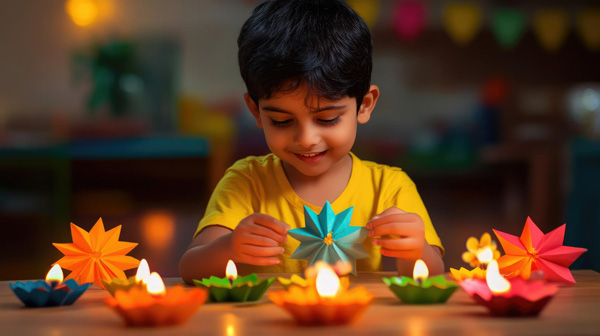
There are some interesting Diwali crafts that kids can do:
- Paper Diyas and Lanterns
- Greeting Cards
- Clay Diyas
- Torans and Wall Hangings
4. Storytelling and Role Play
The cultural background of Diwali is very profound, and there are Ramayana stories and myths about Goddess Lakshmi. Students are helped by storytelling and role plays:
- Know about the cultural Diwali.
- Learn to speak and act in public.
- Take moral teachings of truth, justice and benevolence.
5. Eco-Friendly Diwali Awareness Projects
Educators can develop projects where students create posters, models, or presentations about celebrating a green Diwali. Some ideas include:
- Instead of crackers, lights and music.
- Decorations made using biodegradable materials.
- Conservation of electricity by escaping the use of too many lights by use of diyas.
6. Diwali Games and Quizzes
Some examples of fun activities are:
- Diya Decoration Contest
- Treasure Hunt
- Diwali Quiz
7. Food and Festive Sharing
Small potlucks may be organized in schools where children bring individually prepared snacks or sweets. Young children can have fun decorating cookies or making ladoos.
8. Classroom Decoration
Students can participate in classroom decoration by creating diyas, rangoli, lanterns, and crafts. Rangoli Diwali Decorations of the classroom make it festive and colourful with diyas and colorful strands of paper chains.
Final Thoughts
There is more to Diwali than lights and sweets; it is an opportunity to promote the creativity and collaboration of students, as well as their cultural pride. Since Diwali drawing makes the drawing ideas, Rangoli art, and Diwali crafts among kids, each of these activities enables children to learn as they have fun. At EuroSchool, we believe in turning festivals into opportunities for growth, learning, and joy. This Diwali, let your child experience creativity and culture together through fun activities that spark imagination and values.