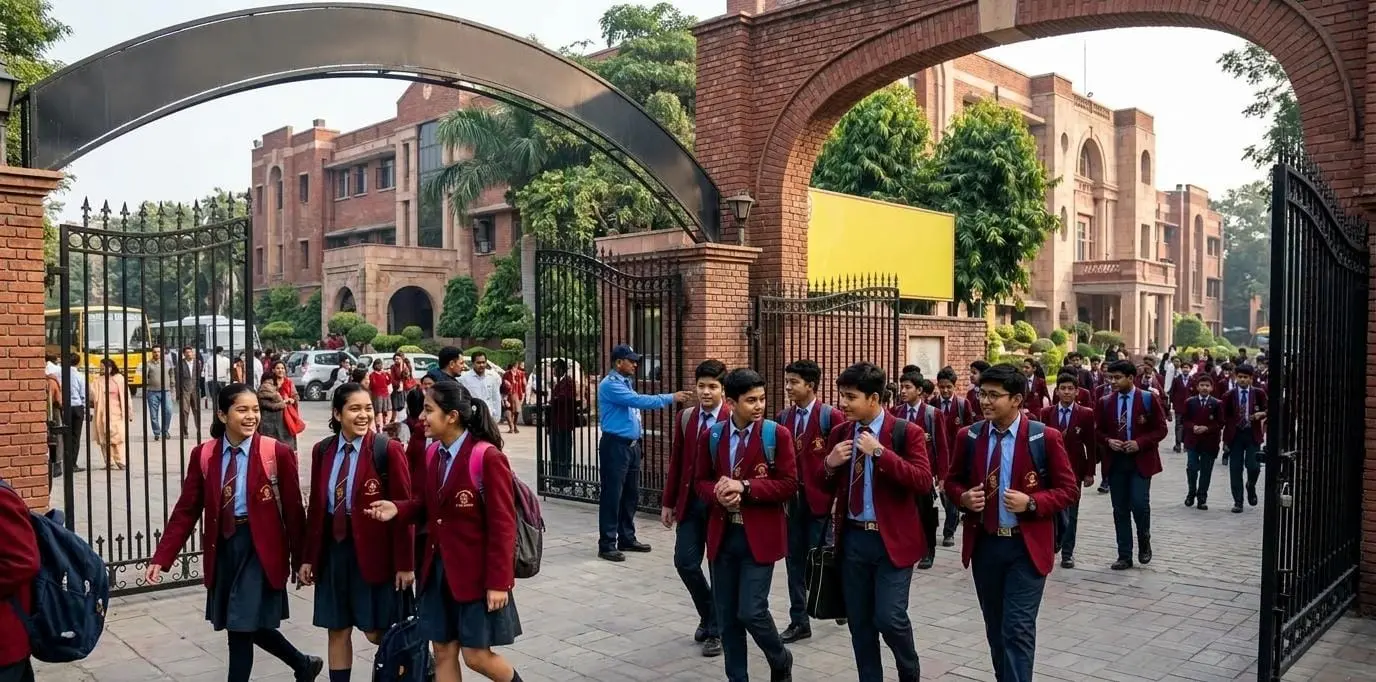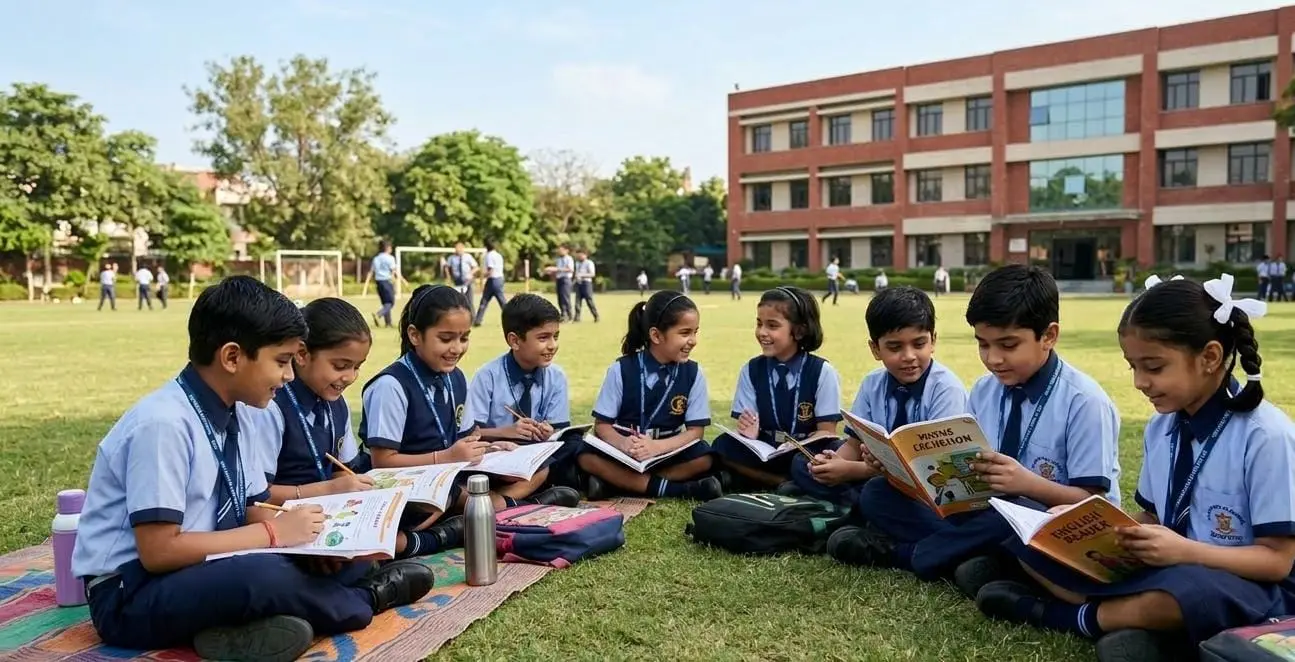
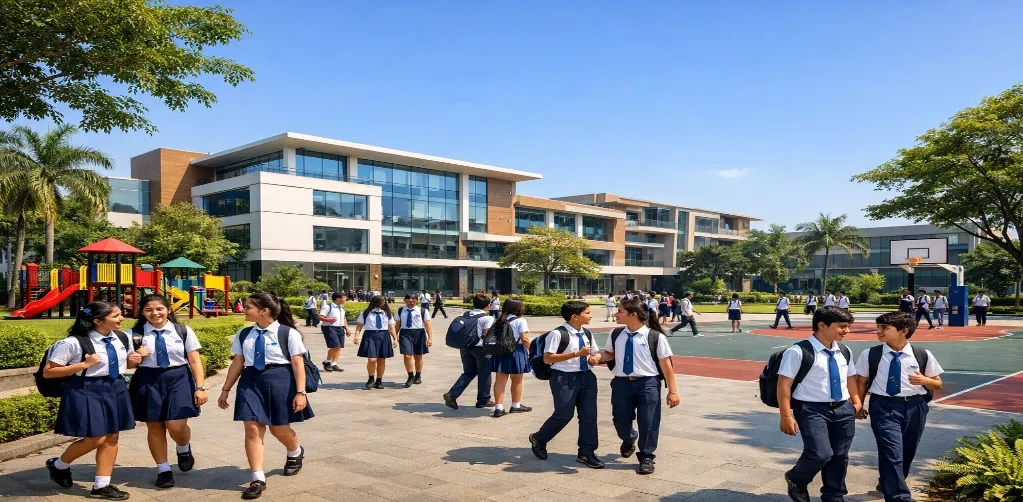
Choosing a school in Pune is rarely just a search for a famous name. For most families, it is a decision that brings together curriculum, teaching quality, commute, fees, safety, activities, future plans and, most importantly, the child’s personality. With so many schools and boards available across the city, a long list can quickly become more confusing than helpful.
That is why this guide to schools in Pune takes a parent-first approach. Instead of treating a ranking as the final answer, it explains how to compare schools, understand CBSE and ICSE options, assess international pathways, plan the 2026-27 admission process and judge the real cost of schooling.
How should you shortlist schools in Pune?
If you are starting from scratch, do not begin by opening twenty school websites. Start with five filters: board, distance, age or grade, budget and the kind of learning environment you want for your child.
Then reduce the list to three to five schools. Check the official curriculum and affiliation information, understand the complete fee structure, visit the campus if possible, speak to the admissions team and observe how teachers interact with children.
A useful shortlist should make your life easier. If it still leaves you comparing fifteen schools, the filters are probably not specific enough.
Why Pune has so many schooling choices
Pune has developed into a major education and employment hub, and the school market reflects that diversity. Families live across established central neighbourhoods, large residential developments in the east and south, and employment corridors around the west of the city.
Current school-search platforms show that parents are comparing schools by board, fees, location, stage of education, facilities and admission availability rather than relying on a single city-wide ranking. The current Edustoke school directory for Pune, for example, allows searches by location, fees, board and school type. Other current guides also organise Pune schools by locality and curriculum.
This matters because the best school on paper may not be the best school for a particular family. A daily commute, for example, can influence a child’s energy, sleep, homework time and opportunity to participate in activities. A school that is twenty minutes away may therefore be a better practical choice than one that looks stronger in an online list but requires a long daily journey.
What makes a school one of the best schools in Pune?
The phrase best schools in Pune is useful as a search term, but it is not a complete decision-making criterion. A school can be excellent academically and still be a poor fit for a child who needs a different teaching style. Likewise, a school with impressive facilities may not suit a family whose first priority is curriculum continuity.
Parents should therefore look at the whole experience. The strongest schools usually have a clear academic purpose, capable educators, safe and purposeful infrastructure, opportunities beyond textbooks, transparent communication and a culture in which children can develop confidence without losing curiosity.
India’s National Education Policy 2020, published by the Ministry of Education, places emphasis on holistic development, critical thinking, experiential learning, flexibility and foundational learning. These principles are useful benchmarks when parents evaluate what a modern school actually provides.
1. Start with the board, but do not stop there
The board affects curriculum structure, assessment and the way learning progresses through the school years. Pune gives parents access to CBSE, ICSE, Maharashtra State Board and international pathways such as Cambridge and IB.
CBSE schools in Pune are often considered by families looking for a nationally recognised curriculum and continuity when moving between Indian cities. The board is also familiar to parents planning for a structured academic route through secondary school.
ICSE schools in Pune can appeal to families looking for a broad subject base and strong emphasis on language and application. The curriculum choice should, however, be made after understanding the school’s actual classroom practice rather than assuming that a board alone determines teaching quality.
Cambridge pathways offer another option for families seeking an international curriculum. Cambridge International describes its pathway as flexible and spanning stages from Early Years to Advanced, with Cambridge Primary and Lower Secondary designed around a broad curriculum and flexible assessment options.
The key point is simple: do not ask only, ‘Which board is best?’ Ask, ‘Which board and teaching environment are best for my child and our likely future plans?’
2. Location and commute can change the school experience
Pune is a city where geography matters. Families in Wakad and Hinjawadi may have very different practical options from families in Kharadi, Hadapsar or Undri.
A school search should therefore begin with a realistic travel radius. Think about the morning journey, afternoon return, transport availability and what happens on days when you need to pick up the child yourself.
For younger children, the question is even more important. A long commute can make an otherwise attractive school less comfortable in everyday life.
Current Pune school guides consistently use locality as a major comparison factor. That is a useful signal for parents because school choice is not only an academic decision. It is also a daily family logistics decision.
3. Look beyond the headline fee
Searching for private schools in Pune often brings up fee figures, but a single annual number rarely tells the full story. Ask for the complete fee structure for your child’s exact grade.
Check tuition or academic fees, admission or registration charges, transport, books, uniforms, meals where applicable, activities, technology-related charges and any other recurring costs. Also ask which charges are one-time and which repeat every year.
Public directories can help you understand the broad market, but they should not be treated as the final fee authority. Fees can vary by grade, campus and academic year. The safest approach is to obtain the latest fee communication directly from the school.
A useful rule is to compare total annual cost, not just the number displayed next to ‘tuition’. This makes your shortlist much more realistic.
4. Assess teachers, classroom culture and individual attention
Facilities are easy to photograph. Teaching quality is harder to judge, but it has a much greater effect on the everyday experience of a child.
During a campus visit, ask how teachers support children who learn at different speeds. Ask how the school identifies learning gaps, how feedback reaches parents and how students are encouraged to ask questions.
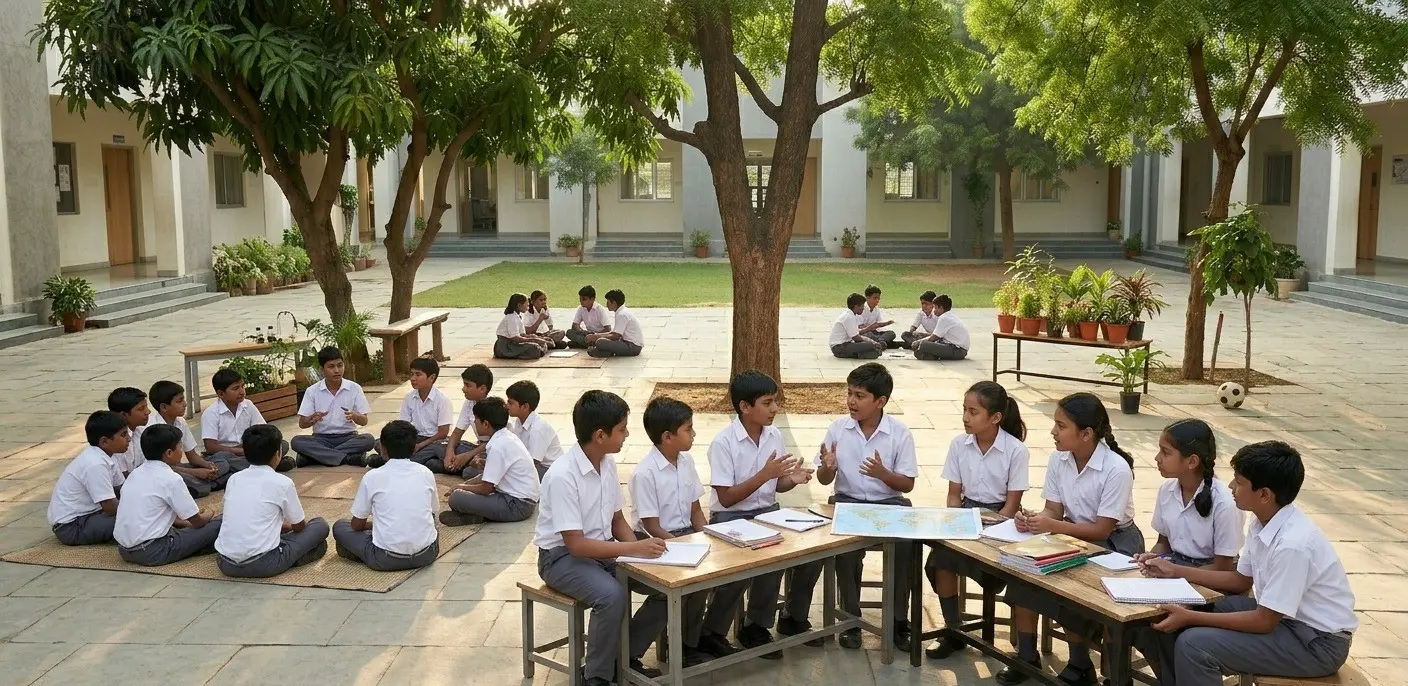
Also look at classroom tone. Are children encouraged to explain their thinking? Do teachers listen? Is the environment orderly without being intimidating? These observations often tell you more than a brochure.
A good school does not simply deliver a syllabus. It creates conditions in which children can understand, practise, question, apply and improve.
5. Check whether learning goes beyond textbooks
Academic performance matters, but children spend years developing interests, habits and social confidence at school. That is why extracurricular opportunities should not be treated as decoration.
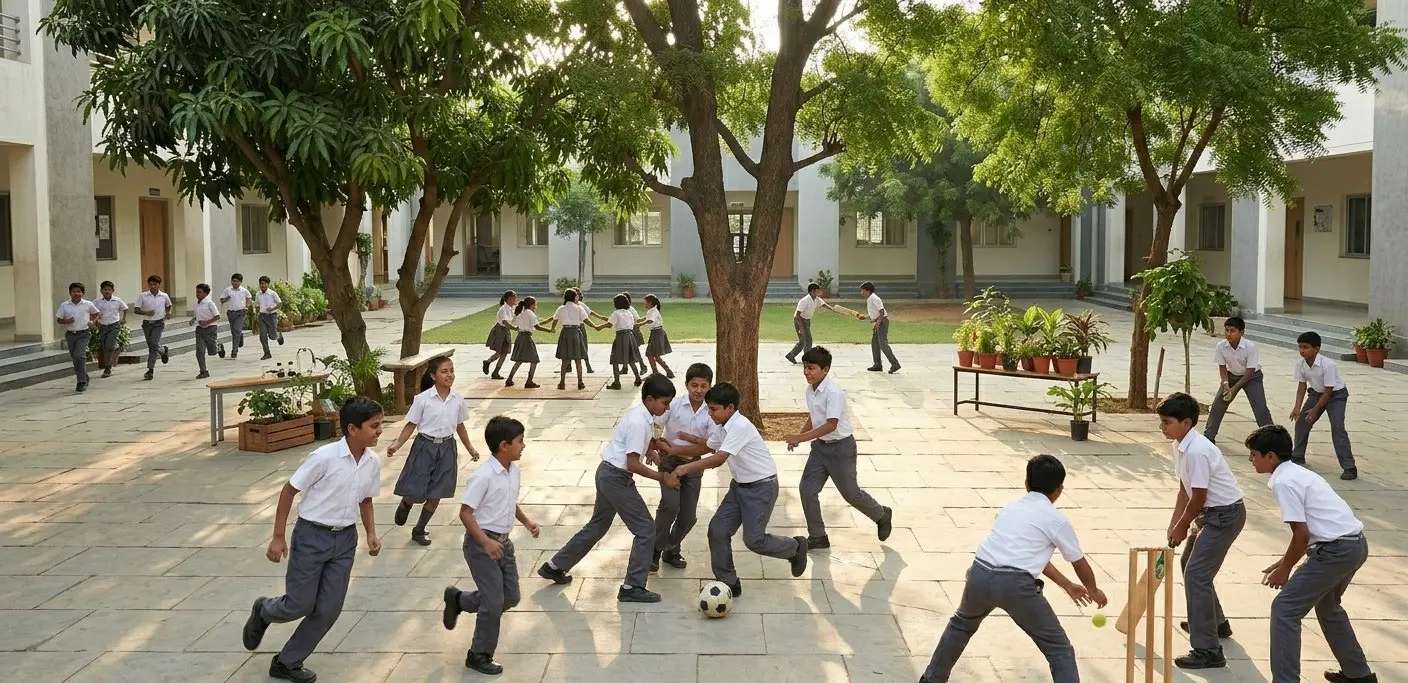
Look for meaningful access to sport, performing arts, visual arts, technology, communication, leadership, clubs and project-based learning. The important question is not how many activities appear on a website. Ask how regularly students participate and whether the opportunities are available across grades.
The National Education Policy 2020 also supports a broader conception of education, including experiential learning, skills and holistic development. Parents can use that principle when comparing the real balance between academic work and wider development.
6. Safety, wellbeing and inclusion deserve equal attention
Parents understandably focus on academics when comparing top schools in Pune, but safety and wellbeing are not secondary considerations. Ask about campus access, transport supervision, medical support, emergency procedures, child protection processes and communication with parents.
Wellbeing also includes the emotional environment. Children should be able to ask for help, make mistakes and learn without feeling that every difficulty is a failure.
Ask how the school handles bullying, learning differences, transitions between grades and pastoral concerns. The answers can reveal the school culture more clearly than a list of facilities.
School options in Pune worth exploring
For families specifically considering the best schools, two names are particularly relevant to the Pune search: EuroSchool and Billabong High International School.
These schools should still be evaluated on campus-specific details. Curriculum, grade availability and admissions information can vary by campus, so parents should confirm the exact offering for the grade they need.
EuroSchool Pune: campuses, boards and parent fit
EuroSchool Pune has a presence across important Pune catchments. Its official contact information currently lists EuroSchool Wakad with an ICSE campus and a separate CBSE campus, EuroSchool Kharadi and EuroSchool Undri.
This is useful for parents because the board is not necessarily identical across every campus. Families should confirm the specific campus and curriculum rather than assuming that every EuroSchool in Pune offers the same board.
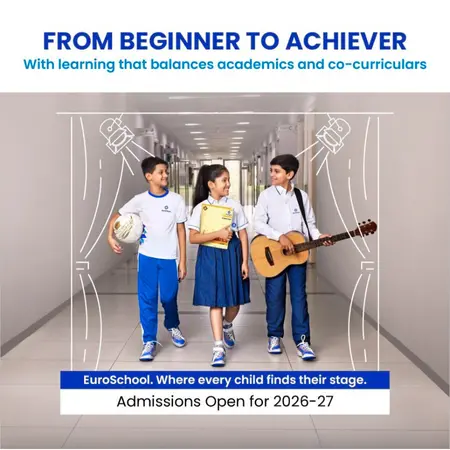
EuroSchool’s broader school philosophy emphasises a balance between academic learning, co-curricular exposure, technology-enabled learning and student wellbeing. The school describes its learning approach through frameworks and programmes intended to connect learning with practice and application.
For a parent, the practical takeaway is more important than the terminology: look for evidence that concepts are understood, practised and applied, and that children have opportunities to develop interests outside the core curriculum.
EuroSchool Wakad
EuroSchool Wakad is relevant to families living around Wakad, Hinjawadi and nearby western Pune neighbourhoods. The official EuroSchool contact page lists both an ICSE Wakad campus and a CBSE Wakad campus, so parents should verify the correct campus before applying.
For families working in the western IT corridor, commute and transport can be major factors. A nearby school with a suitable curriculum may be a more sustainable choice than a distant school with a marginally different feature set.
When visiting, ask about class structure, transport routes, activity participation, after-school arrangements and the transition path through later grades.
EuroSchool Kharadi
EuroSchool Kharadi serves the eastern Pune catchment around Kharadi and nearby residential and employment areas. Its official information identifies the Kharadi campus as a CBSE school.
The campus is particularly relevant to families who want a CBSE route while living in east Pune. Parents should still compare the actual journey, school timings, transport and grade availability with other nearby options.
Recent official school communication also highlights academic performance and an approach combining inquiry, mentorship, academic rigour and co-curricular growth. Such claims are most useful when parents ask how these ideas appear in everyday classroom practice.
EuroSchool Undri
EuroSchool Undri is an ICSE school serving families in and around Undri and the wider south Pune catchment. The school’s official campus page describes a learning environment combining academics, communication, creativity, physical activity, technology-enabled learning and life skills.
For families in Undri, Mohammadwadi, NIBM Road, Kondhwa and nearby areas, locality is a practical advantage worth considering alongside curriculum fit.
A campus visit can help parents assess whether the school’s stated child-centred approach matches what they actually observe in classrooms, corridors, activity areas and interactions with staff.
Billabong High International School Pune
Billabong High International School Pune operates from its Amanora campus in Hadapsar and offers both CBSE and Cambridge pathways. The school’s official Pune page describes a Playschool-to-Grade-12 offering and highlights science and IT facilities, sports, performing arts, leadership, STEM and critical-thinking opportunities.
This dual-curriculum model can be useful for families who want to compare a national curriculum with an international pathway within the same school ecosystem. It is still important to understand the specific progression, subjects and assessment structure for the grade your child will enter.
The school’s official admissions information describes a process involving counsellor interaction, form collection, document submission, skill assessment and parent orientation. Parents should confirm current timelines and grade availability directly with the admissions team.
CBSE vs ICSE vs Cambridge: a simple parent guide
Board comparisons become easier when you stop treating them as a competition and start treating them as different routes.
CBSE may be a practical fit for families who value a nationally portable framework and a structured academic route. It is also familiar to families who may relocate within India.
ICSE may appeal to families who value breadth, language development and detailed subject engagement. The right choice still depends on the school’s teaching quality and the child’s learning preferences.
Cambridge can suit families looking for an international curriculum with flexibility and a pathway that can continue into Cambridge IGCSE and advanced qualifications. Cambridge itself emphasises broad, adaptable curricula and progression across its pathway.
If your family has a clear long-term destination, such as moving countries, applying to international universities or staying within India, discuss that plan with the school before deciding. The board should support the child’s journey, not become a badge.
A screenshot-friendly school comparison checklist
Use this checklist when you are comparing good schools in Pune. Give each school a simple score from 1 to 5 after your campus visit.
Curriculum fit: Does the board suit your child and likely future plans?
Commute: Is the daily journey realistic on ordinary working days?
Teaching: Did the classroom environment feel engaging, respectful and purposeful?
Academic support: How does the school help children who need additional support or greater challenges?
Activities: Are sports, arts, technology and leadership genuinely accessible?
Safety: Are transport, campus access, medical support and emergency systems clearly explained?
Wellbeing: Can children seek help easily, and is emotional development taken seriously?
Fees: Do you understand the complete recurring and one-time cost?
Communication: Does the school answer questions clearly and promptly?
Continuity: Can your child remain in the same educational pathway as they grow?
A simple scoring system is not a substitute for judgement. It is a way to stop one impressive feature from overshadowing several practical concerns.
Locality-wise approach to Schools in Pune
Instead of trying to cover every school in the city, divide your search into the area that your family can realistically reach.
West Pune families may begin with Wakad, Hinjawadi and surrounding neighbourhoods. EuroSchool’s Wakad campuses are relevant here, with campus-specific board options that should be checked before application.
EuroSchool Kharadi: East Pune families can consider Kharadi and surrounding areas. EuroSchool Kharadi is a CBSE option within the best school ecosystem.
EuroSchool Undri: South and south-east Pune families may focus on Undri, NIBM, Mohammadwadi, Kondhwa and Hadapsar. EuroSchool Undri and Billabong High International School’s Amanora campus are some relevant school options in this broader catchment.
Locality should narrow your list, not make the decision for you. A short commute is valuable only when the curriculum, teaching and school culture also fit your child.
School fees in Pune for 2026-27: how to compare them properly
Parents searching school fees in Pune will find very different numbers across boards and school directories. That variation is normal because schools have different facilities, grades, transport arrangements and fee structures.
Rather than publishing one city-wide fee number as if it applies to every school, treat public fee estimates as market signals. The final figure should always come from the school for your child’s grade and academic year.
Ask for the fee structure in writing. Then separate it into four buckets: mandatory annual fees, one-time admission charges, optional services and likely additional spending.
This approach is particularly helpful when comparing premium private schools. A lower tuition figure can become less affordable once transport, activities and other recurring costs are added.
Admissions in Pune for 2026-27
The admission process varies by school and grade, so there is no single Pune-wide timeline that applies to every institution. Many private schools begin enquiries and applications months before the academic year starts, while some grades are filled as vacancies arise.
For the 2026-27 cycle, parents should check the official school website and admissions office rather than relying on an old blog or directory listing. Current school pages may change as seats, dates and grade requirements change.
Prepare documents early. Commonly requested records can include the child’s birth certificate, photographs, previous school records where applicable, identity and address proof, and transfer-related documents for students moving between schools.
Keep digital copies in a clearly named folder. It sounds small, but it can save hours when several admissions processes overlap.
What to ask during a school visit
Do not leave a campus visit with only a brochure. Take a short list of questions and write down the answers immediately afterwards.
Ask: What is the class size for my child’s grade? How are learning gaps identified? How much homework is typical? What happens if a child struggles socially? How are parents updated? What activities are compulsory or optional? What does the transport system cover? Which fees are recurring? What is the process if we need to change a bus route or activity?
Also ask to understand the school day. A timetable that looks impressive may feel very different in practice. Ask how much time children spend in core subjects, physical activity, creative work, projects and free or transition periods.
Finally, ask what the school expects from parents. The best school-parent relationships are usually built on clear expectations from both sides.
How to evaluate the school without relying on rankings
Online rankings can help you discover schools, but they should not decide the final choice. Different websites use different data, and some ratings are based on small numbers of reviews or directory information.
Look instead for verifiable evidence. Check official affiliation or curriculum information, school policies, published academic information where available, admissions details and campus-specific information.
For CBSE, parents can use the official CBSE SARAS portal and the CBSE websites to verify affiliation information where relevant. For Cambridge, use the official Cambridge International programme and school resources. For national education policy context, use the Ministry of Education rather than relying on summaries from third-party websites.
Why a downloadable list of schools can still be useful
The search phrase list of schools in Pune pdf reflects a very practical need. Parents often want something they can save, share with a spouse or family member and use while visiting campuses.
A downloadable list is useful when it contains the right decision fields: locality, board, grades, admissions status, official website, contact information and a space for notes. A long list of names without context is much less helpful.
If you are building your own shortlist, keep it to five or fewer schools after the first research stage. Add notes on commute, curriculum, fees, strengths, concerns and the date on which you verified the information.
Common mistakes parents make
One common mistake is choosing a school because everyone in the family recognises the name. Reputation matters, but fit matters more.
Another is comparing tuition alone. The real cost includes transport, uniforms, books, activities and other recurring expenses.
A third is ignoring the commute. The school may be excellent, but if the journey is exhausting every day, the practical experience can suffer.
Parents can also wait too long. Popular grades may have limited availability, so it is sensible to research early and keep a backup option in the same locality.
Finally, avoid choosing a board solely because it sounds prestigious. A curriculum should match the child’s needs and the family’s future plans.
A practical shortlist for the best schools
If your search is specifically the best schools in Pune, start by matching geography and curriculum.
Families in west Pune can investigate EuroSchool Wakad, checking whether the CBSE or ICSE campus matches their preference.
EuroSchool Kharadi Families in east Pune can explore EuroSchool Kharadi for its CBSE offering, particularly if a school with a balance of academic learning, inquiry and co-curricular development is a practical fit.
Families in south Pune can explore EuroSchool Undri for ICSE and Billabong High International School Pune at Amanora for CBSE and Cambridge pathways.
These are not interchangeable options. Their campuses, boards and local catchments differ. The best choice is the one that aligns with your child’s grade, preferred curriculum and daily routine.
Sources parents can trust
A useful school guide should make it easy for readers to verify important claims. For this article, the most useful primary references include the Ministry of Education, CBSE, Cambridge International, EuroSchool, and Billabong High International School.
Parents should prefer official sources for current admission dates, affiliation status, curriculum details, fee information and campus-specific requirements. Third-party directories are useful for discovery and comparison, but final decisions should be based on information supplied by the school or governing body.
This distinction also protects families from outdated information. Admission dates, fees, age cut-offs, available grades and transport routes can change between academic years.
Frequently Asked Questions
Which is the best school in Pune?
There is no single best school for every child. A better approach is to shortlist schools based on curriculum, locality, teaching quality, wellbeing, activities, fees and long-term fit. EuroSchool and Billabong High International School offer relevant Pune options across different localities and curriculum pathways.
Which board is best for my child in Pune?
CBSE, ICSE and Cambridge can all be strong choices. The right option depends on your child’s learning style, your family’s likely mobility and your longer-term education plans.
What are the best schools in Pune for CBSE?
EuroSchool WakadStart by comparing schools by locality, affiliation, teaching quality, facilities, student support, fees and commute. EuroSchool Wakad and EuroSchool Kharadi are some relevant CBSE options, while Billabong High International School Pune also offers CBSE at Amanora.
What are the best ICSE schools in Pune?
EuroSchool WakadFamilies looking for ICSE should compare curriculum delivery, language development, academic support, co-curricular opportunities and location. EuroSchool Wakad and EuroSchool Undri are some relevant ICSE options.
Does Billabong High International School Pune offer Cambridge?
Yes. The official Billabong High International School Pune information states that its Amanora campus offers Cambridge and CBSE pathways.
Does EuroSchool have different boards across Pune campuses?
Yes. Campus offerings differ. The official EuroSchool contact information lists an ICSE Wakad campus, a CBSE Wakad campus, Kharadi and Undri. Parents should confirm the current board and grade availability directly before applying.
When should I start looking for schools in Pune?
Start several months before the academic year whenever possible. Earlier research gives you time to compare campuses, understand fees, visit schools and prepare documents without rushing.
How can I compare school fees fairly?
Compare the total expected annual cost for the same grade. Include mandatory fees, transport, books, uniforms, activities and other recurring charges, and separate one-time costs from annual costs.
Should I choose a school based on online ratings?
Ratings can help with discovery, but they should not be the deciding factor. Visit the campus, ask specific questions and verify important information with official sources.
Is a nearby school always better?
Not automatically. A manageable commute is a major advantage, but it should be considered alongside curriculum, teaching, safety, activities and the child’s overall fit.
Conclusion
The search for schools in Pune becomes much easier when you stop trying to find a universal number one school and start looking for the right match for your family.
Compare the board first, but then go deeper. Look at teaching, commute, fees, safety, wellbeing, activities, academic support and the school’s ability to grow with your child.
Pune offers meaningful choices through EuroSchool and Billabong High International School. EuroSchool provides campus-specific CBSE and ICSE options across key Pune catchments, while Billabong High International School Pune offers CBSE and Cambridge pathways at Amanora.
Do not make the final decision from a search result alone. Verify the current information, visit the campus, speak with the admissions team and, where possible, talk to parents who already have children in the school.
The best school is not necessarily the one with the longest list of facilities or the strongest marketing language. It is the school where your child can learn well, feel safe, build confidence and develop the skills they will carry long after they leave the classroom.