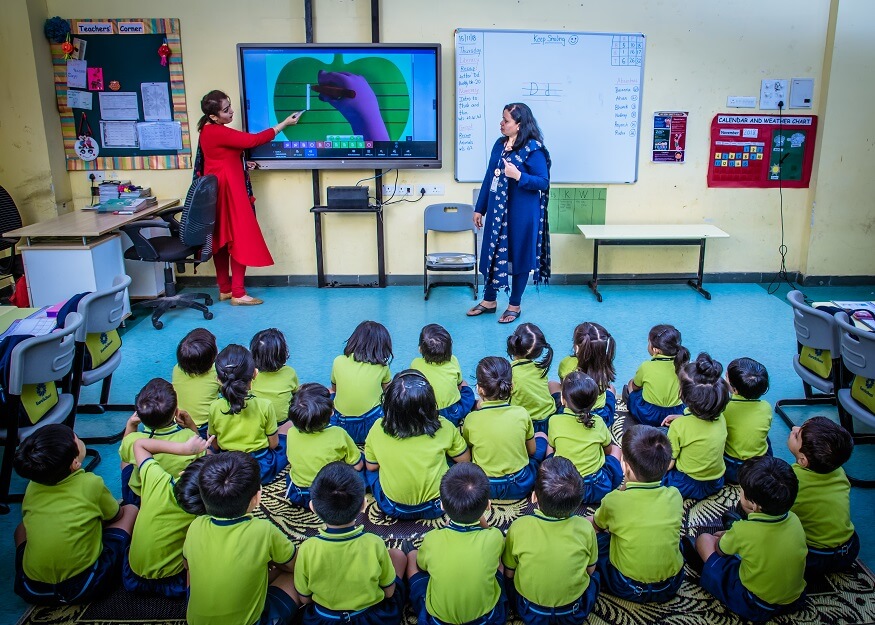
Listening is an important part of learning. Children need to listen to their teachers, understand instructions, and talk to their friends. Good listening skills help them learn better and communicate with others.
But listening is more than just hearing someone speak. It means paying attention to what they say and understanding it.
In this blog, let us understand what listening skills are, why they are important, and how parents can help children improve them.
What Are Listening Skills?
Listening skills are the ability to pay attention to what someone says and understand their words.
For example, when a teacher explains a lesson, a child with good listening skills pays attention and follows the instructions. If something is unclear, the child asks questions.
Good listening also means waiting for others to finish speaking instead of interrupting them.
Also Read:
Active Listening & Its Importance
What Is the Difference Between Hearing and Listening?
Hearing and listening are not the same.
Hearing means noticing sounds around you.
Listening means paying attention to those sounds and trying to understand them.
For example, a child may hear a teacher explaining a lesson while looking elsewhere. But when the child pays attention and understands the lesson, they are listening.
Why Are Listening Skills Important for Children?
Good listening helps children learn, understand others, and communicate clearly.
- Helps Children Learn
Children need to listen to their teachers to understand lessons and follow instructions.
For example, listening carefully helps a child understand how to complete a classroom activity.
- Improves Communication
Children who listen carefully can understand what others say before giving their answers.
This helps them take part in conversations and share their thoughts clearly.
- Builds Friendships
Listening to friends shows that children care about what others have to say.
It also helps them understand different ideas and build stronger friendships.
- Helps Children Understand Feelings
Listening helps children understand how others feel.
For example, if a friend says they are sad, a child who listens carefully can understand their feelings and offer comfort.
- Builds Confidence
When children listen carefully, they can understand instructions and take part in activities more easily.
This can help them feel more confident at school and when talking to others.
What Are the Different Types of Listening Skills?
Children use different listening skills in everyday life. Here are four common types.
- Active Listening
Active listening means giving someone your attention and trying to understand what they say.
For example, a child listens to a friend without interrupting and asks questions about their story.
- Informational Listening
Informational listening means listening to learn something.
For example, children use this skill when their teacher explains a new topic.
- Critical Listening
Critical listening means thinking carefully about what someone says before deciding whether it makes sense.
For example, a child listens to different answers during a class discussion and thinks about which one is correct.
- Empathetic Listening
Empathetic listening means listening to understand how another person feels.
For example, if a friend feels nervous about a school performance, a child listens and tries to understand why.
How Can Parents Help Children Improve Their Listening Skills?
Children can improve their listening skills with regular practice. Parents can help in simple ways.
Talk to your child: Give them time to speak and share their thoughts.
Read stories together: Ask your child to explain what happened in the story.
Give simple instructions: Ask your child to follow a few steps, such as putting away their books and packing their school bag.
Encourage questions: Let your child ask questions when they do not understand something.
Set a good example: Listen carefully when your child speaks and avoid interrupting them.
Reduce distractions: Turn off the television and put away phones during conversations.
Play listening games: Games such as Simon Says teach children to listen carefully and follow instructions.
These simple activities can help children become better listeners over time.
How Does EuroSchool Support Listening Skills?
Listening helps children understand lessons, follow instructions, and work with others.
Classroom activities, group discussions, and conversations with teachers and classmates give children opportunities to practise listening.
At EuroSchool, these learning experiences can help children listen to different ideas, ask questions, and share their thoughts. This supports their learning and helps them become more confident communicators.
Conclusion
Listening skills help children understand lessons, follow instructions, and build friendships. They also help children understand how others feel.