
Introduction: Understanding Mediocrity in Education
Education shapes human potential. It helps individuals to learn, develop values, and acquire life and social skills. Not all systems achieve these objectives. Some inspire and lift learners. Others settle for “good enough”, which helps students scrape through but does not spark or sustain growth.
Mediocre quality education sits in this middle ground. It is average or below the expected standard. It does not fully fail, yet it does not truly succeed. Students may pass exams, but deeper understanding, creativity, and real-world application are often missing.
Defining Mediocre Quality Education
Mediocre education offers minimal value. It delivers basic information, but it does not encourage curiosity, critical thinking, or personal growth. The focus shifts to finishing the syllabus rather than nurturing learning.
Britannica says education should help people acquire knowledge, skills, values, and habits. When a system falls short of these aims, its quality is mediocre. On the surface it looks fine. Schools run, exams take place, and certificates are issued. The deeper purpose of education, which is transformation, is not met.
Core Characteristics of Mediocre Quality Education
- Outdated curriculum
A fixed curriculum is not helpful to contemporary students. Memorisation is a substitute for comprehension, imagination and critical thinking. Students memorize facts to pass a test, and then forget them since they cannot visualize the ways on how the facts are useful in real life. - Lack of skilled teachers
Teachers are the heart of any system. If they are undertrained, overworked, or unmotivated, lessons feel dull. Instead of guiding curiosity, teaching becomes content delivery. The priority becomes finishing lessons rather than engaging minds. - Insufficient resources
Poor infrastructure, technology, and outdated textbooks make good learning difficult. Without labs, digital tools, or interactive aids, students struggle to connect theory with practice. - Exam-oriented approach
Exams become the goal rather than a checkpoint. Students study for marks, not for learning. Memorise, reproduce, forget. Understanding and long-term retention suffer. - Limited student engagement
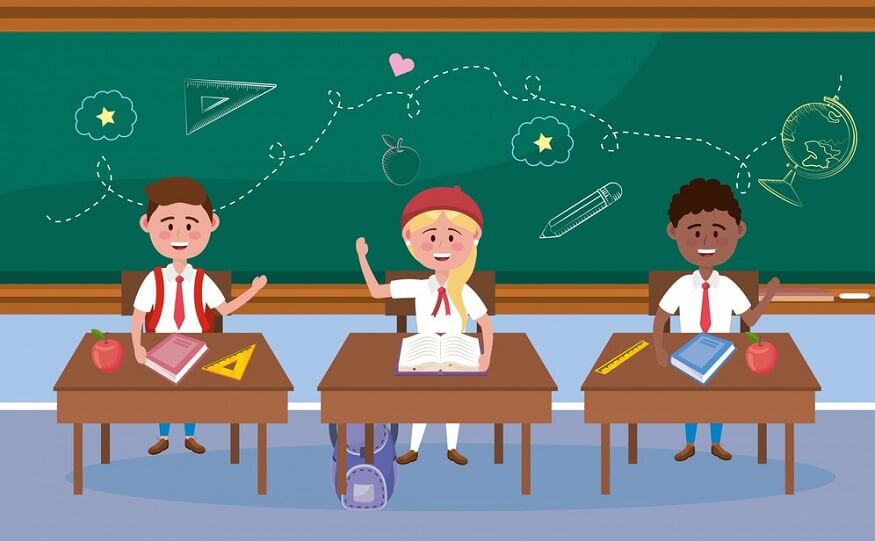
Learning works best when students are active. In many classrooms, learners listen, copy notes, and repeat answers. They rarely question or explore. The joy of discovery fades. - Weak assessment methods
If tests measure memory more than understanding, grades do not reflect real learning. This creates a false sense of achievement for students and schools alike.
Consequences of Mediocre Quality Education
- Weak thinking and problem solving
Students trained to memorise struggle when faced with new or complex situations. They can recall theories but cannot apply them. - Reduced employability
Employers want analytical thinking, creativity, teamwork, and adaptability. Mediocre education produces graduates who are short on these skills. - Poor link between theory and practice
When learning stays in textbooks, knowledge feels abstract. Professionals may know the content but fail to innovate, lead, or empathise. - Drop in innovation and research
Curiosity and experimentation fuel new ideas. Systems that discourage questions and risk taking stifle creativity. - Lower motivation and confidence
If learning feels like a chore, interest declines. Many children come to believe that school is dull, and curiosity fades early. - Wider social and economic gaps
Poor-quality education hits marginalised groups hardest. It limits opportunity and deepens cycles of poverty.
Global and Indian Context
Worldwide, access has grown faster than quality. A lot of children go to school and fail to acquire simple skills. According to estimates by UNESCO, over 250 million school-going children are not able to achieve basic literacy and numeracy.
This is the same case with India. The enrolment is high but the report of ASER indicates that most students in middle and high school have difficulties in reading and arithmetic. Access alone does not equal learning. Contributing factors include an overfocus on board exams, limited teacher training, and too little attention to life skills.
The National Education Policy 2020 seeks to address this. It promotes critical thinking, multilingual learning, and digital literacy. These are important steps toward better quality.
The Importance of High-Quality Education
Quality education is not only about marks. It builds confidence, independence, and a sense of responsibility. It forms people who can think for themselves and contribute to their communities.
Features of strong education include:
- Dynamic curriculum: Updated to reflect current knowledge, technology, and global perspectives.
- Empowered teachers: Well trained and supported, able to spark curiosity and confidence.
- Practical learning: Clear links between theory and real life through experiments, projects, and fieldwork.
- Inclusivity: Equal access for all learners, regardless of background.
- Skills and values together: Academic learning paired with empathy, ethics, and social responsibility.
Read More: How Does the Student Management System Help with Multiple Tasks
How to Overcome Mediocrity in Education
- Invest in teacher development: Ongoing training in pedagogy, technology, and pastoral care.
- Upgrade infrastructure: Provide modern tools and resources that make learning active and engaging.
- Adopt interactive methods: Debates, experiments, group projects, and inquiry-based tasks.
- Assess more holistically: Measure understanding, application, creativity, and collaboration, not only recall.
- Encourage lifelong learning: Link classroom study to real problems, current events, and innovation.
Conclusion: Transforming Learning for the Future
Mediocre education produces students who are familiar with but incapable of practicing, know but not comprehending and pass tests but fail to succeed. It restrains curiosity, confidence and creativity.
In order to proceed, the systems should support teacher development, renew the curriculum, and reinforce skill-based instruction. The education must be a participatory one, inclusive and future oriented. It must not only equip students with tests but life.
At EuroSchool Bangalore, learning is treated as a transformative journey. A balanced approach that blends academics, life skills, emotional intelligence, and digital literacy helps students grow into confident, capable, and compassionate people. This shows how schools can rise above mediocrity and aim for excellence.
True education does not only inform. It changes minds, attitudes, and futures.