

Chemistry is full of fascinating compounds that play important roles in our daily lives. Two such types of compounds are carbonates and bicarbonates. They may sound similar, but there are key differences in their composition, formation, and reactions. Let us explore these basic chemistry concepts in a simple and fun way so that young learners can understand how they work and where we find them in real life.
What Are Carbonates?
Carbonates are chemical compounds that contain the carbonate ion, CO₃²⁻. They are usually formed when carbon dioxide, CO₂, reacts with metal oxides or hydroxides. Common examples include calcium carbonate, CaCO₃, sodium carbonate, Na₂CO₃, and magnesium carbonate, MgCO₃.
You will find carbonates everywhere, from chalk used in classrooms to seashells and limestone rocks. They play a huge role in nature’s carbon cycle and appear in many household products. Note that baking soda is a bicarbonate, not a carbonate.
What Are Bicarbonates?
Bicarbonates, also known as hydrogen carbonates, contain the bicarbonate ion, HCO₃⁻. They can form when carbon dioxide dissolves in water and the solution is partially neutralised, or when carbonates react with acids. Common examples include sodium bicarbonate, NaHCO₃, and potassium bicarbonate, KHCO₃.
Sodium bicarbonate is popularly known as baking soda and is used for cooking, cleaning, and in science experiments. Bicarbonates are also naturally present in our bodies, helping to maintain the pH balance of blood.
Key Differences Between Carbonates and Bicarbonates
Here’s a simple comparison to understand how carbonates and bicarbonates differ:
Feature | Carbonates | Bicarbonates |
Chemical Formula | CO₃²⁻ | HCO₃⁻ |
Hydrogen Atom | Absent | Present |
Acidity | Weaker base | Stronger base |
Formation | Formed from metal oxides and CO₂ | Formed when carbonates react with acids |
Example | Calcium carbonate (CaCO₃) | Sodium bicarbonate (NaHCO₃) |
Reaction with Acid | Releases CO₂ quickly | Releases CO₂ gradually |
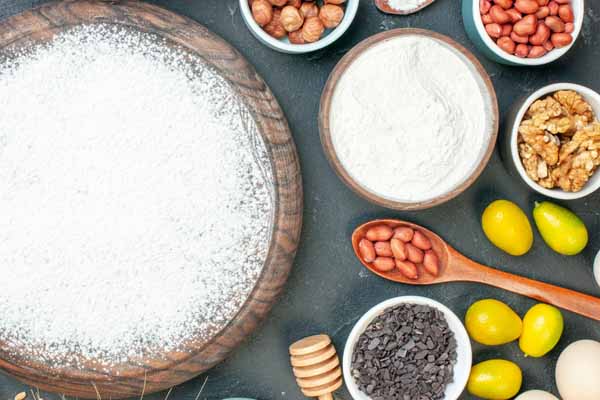
Fun Learning Activity: The Fizz Test!
You can easily see the difference between carbonates and bicarbonates through a small science experiment.
You’ll Need:
- Baking soda (sodium bicarbonate)
• Chalk powder (calcium carbonate)
• Vinegar (acid)
• Two small bowls
Steps:
- 1. Add some baking soda to one bowl and chalk powder to the other.
2. Pour vinegar slowly into both bowls.
3. Watch the fizzing reaction!
4. Bicarbonates fizz more gently, while carbonates create stronger bubbling as they release more carbon dioxide gas.
Real-Life Applications of Carbonates and Bicarbonates
Both carbonates and bicarbonates have many uses in our daily lives:
- Glass manufacturing: Sodium carbonate (soda ash) lowers the melting point of silica, making glass production more efficient.
- Water treatment: Carbonates help soften hard water by precipitating calcium and magnesium ions.
- Construction materials: Calcium carbonate is a key ingredient in cement, lime, and marble used for construction.
- Baking: Sodium bicarbonate (baking soda) releases carbon dioxide when heated, making cakes and bread soft and fluffy.
- Cleaning: Baking soda acts as a mild abrasive and deodorizer, used in cleaning kitchens, bathrooms, and even removing stains.
- Medicine: Sodium bicarbonate helps neutralize stomach acid and is used in antacid tablets.
- Fire extinguishers: Sodium bicarbonate and potassium bicarbonate are used in dry chemical fire extinguishers to smother flames.
- Textile and paper industries: Carbonates are used in dyeing fabrics and as fillers in paper manufacturing to improve brightness and quality.
- Agriculture: Calcium carbonate (lime) is added to soil to reduce acidity and improve crop yield.
- Food preservation: Bicarbonates are used in some packaged foods to control acidity and extend shelf life.
- Environmental protection: Carbonates help in flue gas desulfurization to reduce sulfur dioxide emissions from factories.
- Nature and biology: Carbonates form the structural basis of shells, corals, and limestone, while bicarbonates help maintain pH balance in oceans and human blood.
Quick Recap
- Carbonates (CO₃²⁻) and Bicarbonates (HCO₃⁻) are closely related compounds.
• Carbonates are basic salts, while bicarbonates are mild bases formed by partial neutralization.
• Both release carbon dioxide when they react with acids.
• They are essential in nature, industry, and even inside our bodies!
Explore Chemistry the Fun Way at EuroSchool
At EuroSchool, we make science exciting through hands-on activities, interactive lessons, and creative experiments. Our goal is to make every young learner fall in love with subjects like chemistry, physics, and biology. Join us to explore, experiment, and excel in learning!
Visit EuroSchool today and start your fun learning journey!