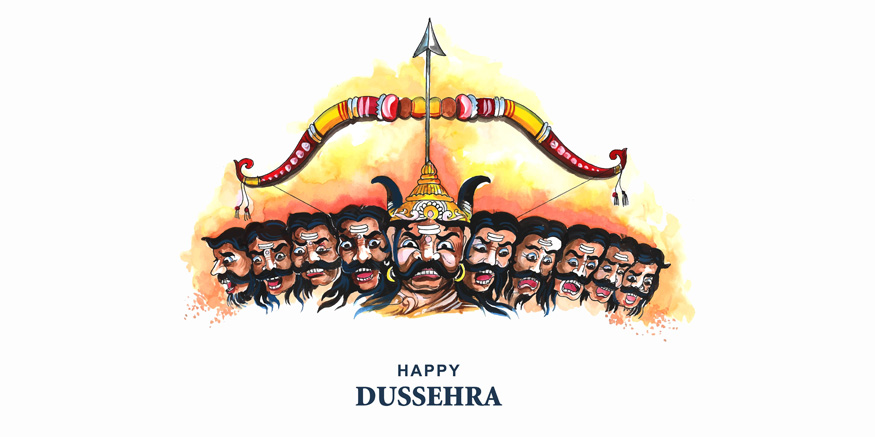
India is a land of festivals, each with its own cultural background and moral teachings. Among these festivals, Dussehra (or Vijaya Dashami) is one that glorifies the victory of good over evil. The meaning of Dussehra, as far as children are concerned, is not that of fireworks and effigies; it is that of partaking in some values, as bravery, honesty, or righteousness.
Parents and teachers tend to popularise Indian festivals to make them more palatable to children, helping them associate with and relate to these traditions. Dussehra provides the most appropriate time to educate children a bit and even provide them an opportunity to become parties to the festive spirit.
What is Dussehra?
Vijaya Dashami, popularly known as Dussehra, is celebrated on the tenth day after the Hindu festival of Navratri, which lasts for nine nights. It is celebrated all over India, and rituals vary by region:
- In north India, it is linked with the triumph of Lord Rama over Ravana.
- In the Eastern direction, particularly in West Bengal, it is the realisation of Goddess Durga subduing Mahishasura.
- In the South, the focus is on worshipping Goddess Saraswati and celebrating the success of rituals and learning during Navratri.
Although the regional observances vary, the main focus which goes in all of these is the victory of good, virtue and humility over evil, arrogance and pride.
Cultural Significance of Dussehra
Dussehra is not just a festival, but a cultural pillar which has the power of uniting families, communities and customs. Some of the cultural attractions there include:
Ramleela Performances
The dramatization of the Ramayana imparts virtues such as loyalty, justice, and courage to children.
Effigy Burning
The effigies of Ravana, Meghnath, and Kumbhkaran are burned as a symbol of the destruction of arrogance and evil.
Community Bonding
Families gather to pray, eat and conduct fairs so that children can learn the value of solidarity and cultural pride.
Moral Lessons of Dussehra for Children
Good Wins Over Evil
The battle against Ravana and Mahishasura shows that the good and the right are in the lead.
The Teaching of Perseverance –
Rama never gave up in his quest and Durga showed children the ability of her power to never give up.
The Perils of Pride
The fall of Ravana introduces the incorporation of humility.
Unity and Teamwork
The strength of teamwork is demonstrated by Rama’s victory with the help of Hanuman and others.
Respect to Women and Elders
The importance of family values is emphasised by Rama’s devotion to Sita and his respect for his parents.”
Make Dussehra Craft For Kids
– Storytelling Sessions – Arts and Crafts – Thematic Games – Moral Discussions – Cooking Together
Dussehra In India: Learning Diversity
Durga idol immersion is a practice in West Bengal, which has taught people the lesson of letting go of the negative.
Mysuru is a place where pride in heritage is produced in the form of big processions.
It is a gesture of goodwill in Maharashtra where families give Apta leaves to one another.
Why Dussehra is Important in the lives of Kids today
In today’s tech-driven world, Dussehra offers children valuable lessons in:
- Choosing honesty over shortcuts.
- Staying humble despite achievements.
- Building courage to face failures.
- Respecting family and community values.
Dussehra 2023 and Beyond
The emphasis on ecologically friendly effigies and cultural events was the characteristic feature of the Dussehra 2023 celebrations. The school and the community are using the festival as a moral learning tool in the future.
Final Thoughts
Vijaya Dashami also known as Dussehra provides children with a living example of how good conquers evil and why humility, respect, and truth are eternal values.
At EuroSchool, we believe that every festival is a valuable learning experience for children. We foster curiosity, values and cultural awareness through stories, activities and celebrations. This Dussehra, brings your child joy through learning the traditional way.