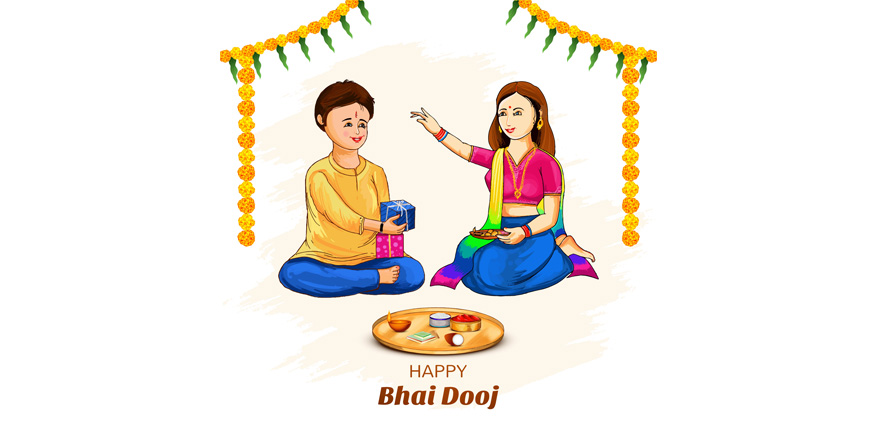
India is known for its colourful traditions and family-oriented celebrations. One of its numerous festivals is Bhai Dooj also known as Bhaiya Dooj, which is a special festival that celebrates the holy union of brothers and sisters. Although other festivals like Raksha Bandhan are also meant to portray the love between siblings, the Bhai Dooj festival has its own history and rituals.
For children, understanding Bhai Dooj significance goes beyond rituals. It’s about learning values like love, respect, and responsibility within the family. That is why Bhai Dooj is frequently mentioned in schools and the part of Indian festivals among children, and they learn about relations and traditions become familiar with a sense of fun.
What is Bhai Dooj?
Bhai Dooj is celebrated on the second day after Diwali, during Shukla Paksha (the waxing phase of the moon) in the month of Kartika according to the Hindu calendar. In India it is also called by other names:
– Bhaiya Dooj in North India.
– Bhau Beej in Maharashtra and Goa.
– Bhatru Dwitiya in Odisha and West Bengal.
– Yama Dwitiya in southern parts of India.
Though the name is different, the main theme remains the same, which is the brother-sister festival that enhances family relationships.
The Mythological Origins of Bhai Dooj
There are a few myths of the origin of this beautiful festival. The storytelling of these stories to the children makes the Bhai Dooj festival special.
The story of Yamraj and Yami (Yamuna).
Hindu mythology suggests that Yamraj, the God of Death, came to visit his sister Yami on this day. She fed him sweets and performed an aarti for his long life and well-being. Moved with her affection, Yamraj said that those brothers who have their sisters respect them today will have long and healthy lives. This tale is why it has another name of the festival, Yama Dwitiya.
Krishna and Subhadra
There is one more legend that links Bhai Dooj to Lord Krishna. Krishna had visited the sister of Narakasura by defeating the demon. With flowers, candy, and a ritual tilak she received him. Since then, it became a tradition for sisters to apply tilak to their brothers on this day.
The Cultural Significance of Bhai Dooj
Bhai Dooj is essentially an expression of the emotional bond between siblings. The Bhai Dooj meaning can be explained in various ways:
- Love and Protection: Sisters pray that their brothers have a long life, brothers vow to protect and assist their sisters.
- Building Family Ties: The festival promotes family togetherness in the form of family meetings.
- Gratitude: Bhai Dooj teaches children the importance of gratitude–sisters recognize it by rites, and brothers reward it by giving gifts and love.
- Cultural Continuity: Bhai Dooj being one of the major Indian festivals that kids attend to learn about, cultural stories and rituals are maintained across the generations.
Bhai Dooj Celebrations in India
The manner Bhai Dooj festivities in India are followed is different across states, which makes it a varied but binding festival.
North India:
Sisters are requesting their brothers to come home, aarti is done, tilak is put on, and sweets are given. Gifts are returned by the brothers.
Maharashtra and Goa (Bhau Beej):
Before rituals, the sisters draw a rangoli or decorative pattern on the floor where the brothers are seated.
West Bengal and Odisha (Bhatru Dwitiya):
The sisters fast for the long life and well-being of their brothers and perform grand rituals.
Southern India (Yama Dwitiya):
Here the Yamraj Yamuna myth is more pronounced and they pray to Yamraj to protect them.
How Children Can Celebrate Bhai Dooj
Bhai Dooj among children can be fun and educational at the same time. The following can be attempted by parents and schools:
Storytelling Sessions:
Narrate the legends of Yamraj-Yamuna and Krishna-Subhadra to make the children relate to tradition.
Drawing and Craft Ideas:
Ask children to make greeting cards, tilak plates or posters about the festival.
Role Play:
Allow the children to play the rituals so that they know how to do the culture.
Cooking with them:
It is possible to prepare simple sweets together with kids such as kheer or ladoos at home.
Bhai Dooj vs. Raksha Bandhan: What’s the Difference?
Although they are both brother-sister festivals, they are both celebrated differently. Raksha bandhan is celebrated during the month of Shravan (July-August) where the sister ties a rakhi on the wrists of their brothers. Bhai Dooj is observed after Diwali when the tilak is applied on the forehead of the brother.
The message is however, universal: love, protection, and family bonding.
Why Bhai Dooj Matters Today
In the modern busy society, family relationships are being diminished and children spend more time with technology than with customs. Certain festivals such as Bhai Dooj also teach us that we should value relationships, emotional support and gratitude.
Explaining the meaning of Bhai Dooj to children helps them to love their siblings, embrace family customs and pass on cultural heritage in a proud manner.
Final Thoughts
The festival of Bhai Dooj is not merely a ceremony, it is the festival of love, trust, and unity. It is a beautiful means to educate children about relationships and values because of its legends, traditions and cultural value. Parents and teachers can make sure that the brother-sister festival will be inspirational even to their future generations by promoting storytelling, rituals, and crafts.
At EuroSchool, we believe that festivals are more than celebrations—they are lessons in values, culture, and relationships. Through engaging activities and learning opportunities, we help children understand the deeper meaning of traditions like Bhai Dooj.