
Nursery rhymes have been a childhood experience throughout the ages. Their simple tunes, catchy melodies and their playful lyrics are not only fun but also necessary to early learning. It could be ‘Twinkle Twinkle Little Star’ or ‘Baa Baa Black Sheep’ , but it is these rhymes that can be used to establish the baseline of language and memory and social skills. Rhymes are the ideal combination of fun and learning, which is why they cannot be replaced in the process of early childhood development of every child.
1. Building Blocks of Early Childhood Development
Some of the earliest learning tools introduced to toddlers include nursery rhymes. Their repetitive rhythm and repetitive musical patterns help the children to memorize words and sounds, sharpening their memory and concentration. Repeating and hearing rhymes develops and enhances auditory abilities and assists the brain in creating associations between sounds and symbols, which is a major stage towards reading readiness. An example is the basic rhyme such as Jack and Jill that teaches sequencing and prediction and promotes listening comprehension and remembering, which are essential in early childhood development.
2. Enhancing Language Development in Children
Children who are subjected to rhythm, rhyme and repetition are known to develop language. Nursery rhymes are a natural and fun way of introducing new words, the structures of sentences and sounds. Children sing rhymes, and in this way, they can practice pronunciation, learn word endings and learn language flow. As an example, in Humpty Dumpty, children understand rhyme patterns (wall/fall) and acquire the ability to tell a story with a cause and effect. These small exercises improve the process of articulation, listening, and general communication over time, which builds the confidence and fluency even prior to formal schooling.
3. Promoting Social and Emotional Growth
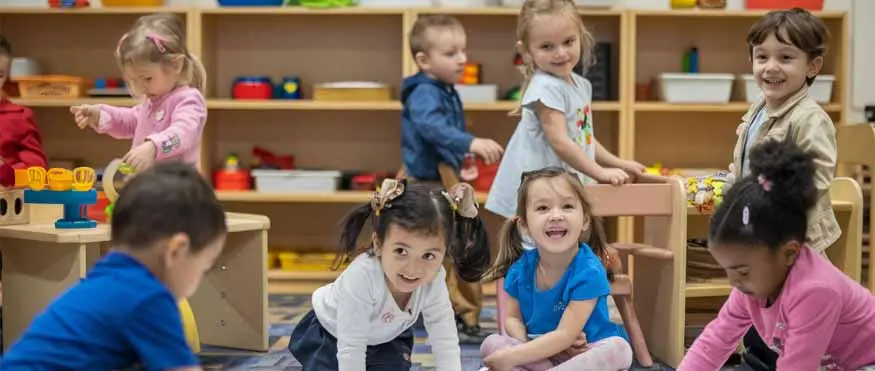
Together singing rhymes helps in bonding, cooperation and expression of emotions. Children feel that they belong and are happy when they repeat rhymes with their parents, teachers or their peers. Emotional intelligence is enhanced by the common rhythm and laughing during these activities. Children are also exposed to some basic moral lessons or emotions such as kindness, curiosity or courage through rhymes and children learn to name and articulate their feelings. Rhyme sessions in preschool classrooms usually represent the initial sessions of social interactions that promote collaboration, patience, and empathy.
4. Nursery Rhymes as Fun Learning Activities
Nursery rhymes are exciting to learn as they combine music, movement and story telling. Children are fond of singing rhymes such as ‘If You’re Happy and You Know It ‘or ‘ Head, Shoulders, Knees, and Toes’, which are physical movements combined with a song. These playful educational activities of children involve more than one of the senses, sight, hearing, and touch, which makes them remember better. Rhymes also help to bring out a rhythm and routine in the daily activities making any playtime or storytime a great learning experience.
5. Strengthening Cognitive and Motor Skills
Nursery rhymes enhance cognitive and motor growth besides language. When hand-eye coordination and fine motor control are improved, it is done by clapping, dancing, or making gestures in sync with rhymes. When children memorize verses and recite them, they acquire sequencing and pattern recognition, which are the main elements of problem-solving and logical thinking. Research has found that rhythm and rhyme at an early age may enhance the memory retention, attention span and creativity of the children.
6. Preschool Learning Through Rhymes
Rhymes are effective teaching instruments applied in preschools throughout the world. Rhymes make learning fun whether it is counting in One, Two, Buckle My Shoe or learning the names of animals in Old MacDonald Had a Farm. They render abstract concepts more tangible by means of repetition and rhythm, which is perfect in preschool education. Rhymes are also used by teachers to introduce a new theme such as weather, colours or daily habits and thus each session is educational and entertaining. The activities also create curiosity and involvement so that the kids will love the learning process very much.
Conclusion: Small Rhymes, Big Benefits
Nursery rhymes are much more than childhood songs; they are gateways to language, literacy, creativity, and emotional well-being. They support all the parts of the early childhood development through repetition, rhythm, and rhyme. With the involvement of various senses and the support of the desire to express oneself, this prepares them in life-long learning and confidence.
At EuroSchool, we believe learning should always be fun, interactive, and meaningful. Our curriculum blends rhyme-based activities, storytelling, and play to enhance holistic growth. Enrol your child at EuroSchool today and let them experience the joy of learning through rhythm, imagination, and creativity!