
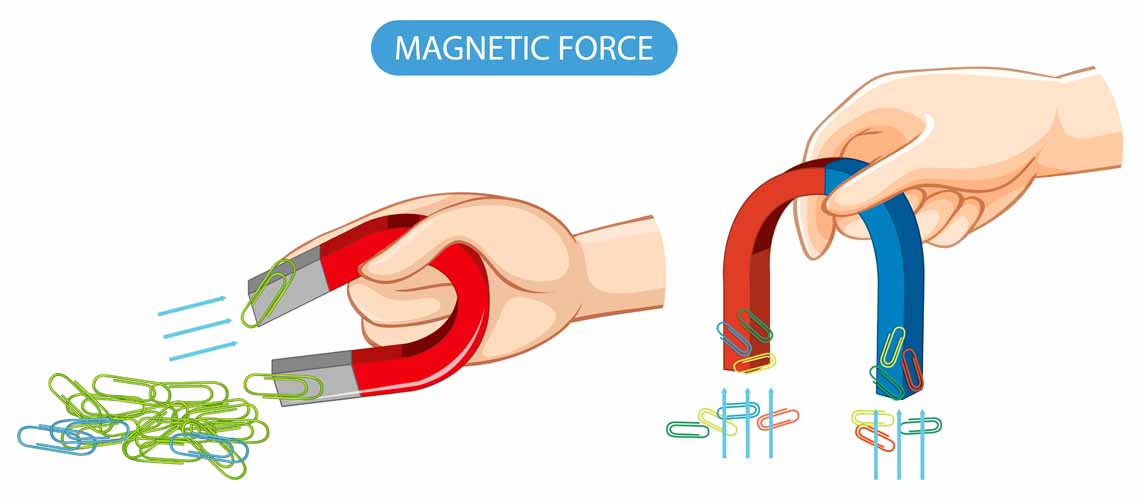
Have you ever wondered how the light turns on when you flip a switch? Or how magnets stick to your refrigerator? And there is the magic of electricity and magnetism, two of the most interesting forces of science that make the world go round! Learning about electricity and magnetism among kids develops curiosity and makes children investigate the way things around them such as lights, fans, and speakers, operate.
What Is Electricity?
Electricity is a type of energy that moves through materials and powers devices like your TV and toys. It passes by way of minute particles known as electrons. The flow of electrons in a closed circuit is referred to as an electric circuit.
A simple circuit has three parts:
- Power Source – A battery or cell that provides energy.
- Path – Wires through which electricity is transmitted.
- Load – A motor or bulb that consumes energy
As soon as you connect them in the right way, the bulb emits light. That’s electricity in action!
What Is Magnetism?
The force that causes the attraction or repulsion of objects by magnets is known as magnetism. These magnets are divided into two poles North and South. Unlike poles attract whereas same poles repel. Magnets have the ability to attract metals such as iron, nickel or cobalt.
Fun Fact:
The Earth acts like a giant magnet, which is why compasses always point north!
How Electricity and Magnetism Are Connected
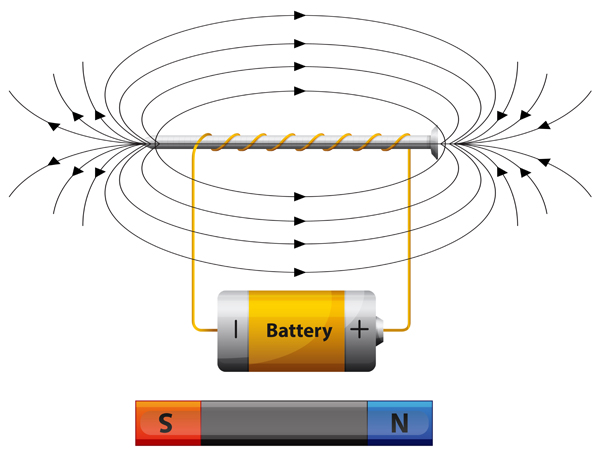
There is a relationship between electricity and magnetism. Passage of electricity through a wire produces a magnetic field. This connection is known as electromagnetism; this is the power behind electric fans, motors and even trains!
Everyday Examples:
- Doorbells use electromagnetism.
- Electric motors use magnetic force to rotate.
- Generators use magnets to produce electricity.
Conductors and Insulators
There are materials that allow passage of electricity with ease. These are conductors. Others block electricity. These are insulators.
Type | Function | Examples |
Conductors | Allow electricity to flow | Copper, aluminium, iron |
Insulators | Block electricity | Plastic, rubber, wood |
Try This: Touch both ends of household items to a small bulb connected to a battery (with adult help). When the bulb lights up it is a conductor. If not, it’s an insulator!
Hands-On Physics Activities: Exploring Magnets
Experiment 1: Magnetic Attraction Hunt
- Move a magnet over items like coins, keys, and paperclips.
- Note down the ones that do and the ones that do not.
This assists children to understand the functioning of magnets.
Experiment 2: Magnetic Maze
- Draw a maze on paper, place a paperclip inside, and move it using a magnet underneath.
This introduces magnetic fields for kids through play.
Electromagnet Experiments
Electromagnets are magnets created using electricity. This is a safe experiment that can be tried with the help of adults:
You’ll Need:
- A large iron nail
- Thin copper wire
- A small battery
- Paperclips
Steps:
- Wrap copper wire around the nail tightly.
- Connect both ends of the wire to the battery.
- Touch the nail to paperclips, it will attract them!
This demonstrates the ability of electricity in producing magnetism.
Science Projects for Kids: Electricity in Action
- Create a Light Circuit – Connect a battery, wire, and bulb.
- Make a Mini Motor – Use magnets, coils, and batteries to make it spin.
- Static Electricity Balloon – Rub a balloon on your hair to attract paper bits.
Fun Science Activities and Experiments at Home
- Lightning in a Spoon – Rub a balloon over some clothes and touch it with a spoon to observe a lightning-like effect.
- Floating Compass – Float a magnetized needle on cork in water, it points north.
- DIY Circuit Art – Use aluminium foil and LED bulbs to make glowing drawings.
How to Explain These Concepts to Kids
Children understand best through simple examples and play. Use real-life comparisons:
- Electricity makes toys move.
- Magnets pull things without touching.
- Wires can create magnetic fields when current flows.
How EuroSchool Encourages Scientific Curiosity
At EuroSchool, science is taught through play, observation, and creativity. To teach electricity and magnetism our teachers explain them with the help of interactive work and safe experiments. We include:
- Hands-on experiments and demonstrations.
- Real-life applications of electricity and magnets.
- STEM-based games for understanding forces and motion.
- Art-integrated science projects for fun learning.
Conclusion
Electricity and magnetism are forces that are potent and dictate the world around us. With hands-on and safe activities, children are able to study the functioning and can learn the wonder of science. Such experiments spark curiosity and lay the foundation for future learning.
Visit EuroSchool to learn how our fun, interactive science lessons and experiments inspire children to explore and understand the world, one discovery at a time!