
Parental involvement plays a crucial role in a child’s academic journey. The nature of this involvement, however, often varies depending on the educational board a child is enrolled in. When comparing Parental Involvement in CBSE vs ICSE, it becomes clear that each board offers distinct opportunities and challenges. This article explores how the parent-teacher relationship differs across these systems and what ultimately benefits students the most.
Understanding Parental Involvement
Parental involvement refers to the active engagement of parents in their child’s academic life. It includes attending parent-teacher meetings, monitoring progress, supporting at home, and collaborating with teachers. Strong parent-teacher communication encourages a positive academic environment and fosters better learning outcomes.
In both CBSE and ICSE boards, parents play an important role, but the structure and expectations of the boards influence the dynamics of involvement. The way parents and teachers interact can vary depending on the curriculum, assessment style, and school policies.
CBSE Board Overview
The Central Board of Secondary Education (CBSE) is widely adopted across India and designed with a national perspective. It focuses on preparing students for competitive exams like JEE and NEET, offering a structured and concise curriculum.
CBSE promotes a more exam-oriented education, where the emphasis is placed on core subjects such as Mathematics and Science. This often leads to a focused but sometimes rigid learning environment.
For parents, CBSE’s predictability in structure allows them to support their children by following a more standardized syllabus. However, it may offer fewer opportunities for creative parental engagement due to its exam-centric nature.
ICSE Board Overview
The Indian Certificate of Secondary Education (ICSE) follows a more expansive and literature-rich curriculum. It places greater emphasis on language, arts, and humanities in addition to science and mathematics.
ICSE encourages analytical thinking and overall personality development. As a result, parental involvement tends to be more holistic. Parents are often engaged in helping children with projects, research assignments, and reading activities.
Compared to CBSE, ICSE offers more room for parents to participate in their child’s learning process through home-based discussions and creative assignments, strengthening the parent-teacher relationship.
Communication Style: CBSE vs ICSE Board
Effective parent-teacher communication forms the foundation of parental involvement. CBSE schools typically follow a formal structure for interactions, such as scheduled meetings and report card discussions.
In contrast, ICSE schools often encourage informal and open channels of communication. Teachers might reach out more frequently for feedback, and parents may be involved in collaborative activities like exhibitions and field trips.
While both boards understand the value of parents and teachers working together, ICSE tends to encourage a more community-like environment, leading to more personalized engagement.
Academic Support at Home
Parents of CBSE students often provide support in the form of helping with exam preparation, homework supervision, and practicing past papers. The structured syllabus makes it easier to predict what students need and how parents can help.
In ICSE, the support is broader. Parents are more involved in reviewing creative assignments, participating in reading exercises, and discussing interdisciplinary topics. This requires more time and intellectual engagement.
When comparing Parental Involvement in CBSE vs ICSE, it’s clear that ICSE demands more qualitative involvement, while CBSE tends to require more quantitative support.
Project Work and Parental Role
Project-based learning is a key area where parental involvement becomes evident. ICSE schools often emphasize projects that require research, analysis, and presentation—offering parents a chance to participate actively.
In CBSE schools, while projects are included, they are often more guided and may not require as much open-ended exploration. Parental involvement here is more about facilitating resources and ensuring timelines are met.
This difference in project style shapes the parent-teacher relationship, as ICSE encourages a partnership model whereas CBSE maintains a facilitator role for parents.
Extracurricular Activities and Engagement
CBSE schools usually offer extracurricular activities as optional or peripheral to the main curriculum. Parental involvement here may include logistical support—dropping children to events or paying fees.
ICSE schools integrate extracurricular activities into their curriculum, giving them academic importance. Parents often help their children prepare for plays, debates, or music performances, and sometimes even participate themselves.
In terms of Parental Involvement in CBSE vs ICSE, ICSE allows parents to become co-learners and co-creators, while CBSE leans more toward supervisory roles.
Impact on Parental Involvement
CBSE’s exam-heavy assessment system means parents often focus on marks, tests, and academic performance. This leads to performance tracking and tutoring support.
ICSE’s assessment style includes both academic and non-academic evaluations. Parents are involved in a broader range of feedback loops—assessing projects, presentations, and co-scholastic skills.
The difference in CBSE vs ICSE assessments also affects how deeply parents engage with teachers, where ICSE encourages a more well-rounded involvement.
Parent-Teacher Meetings: Structure and Participation
In CBSE schools, parent teacher communication through PTMs (Parent-Teacher Meetings) is often structured and focused on academic performance.
ICSE schools may conduct more informal interactions, encouraging dialogue about the child’s social, emotional, and academic well-being. This approach fosters a more open parent-teacher relationship.
ICSE tends to create a platform where teachers listen to parents’ observations at home, leading to collaborative growth strategies.
Emotional and Social Development
Parents in ICSE systems often play a bigger role in guiding emotional and social growth. The ICSE curriculum’s holistic nature encourages discussions about feelings, friendships, and values.
In CBSE, emotional development may not be as integrated into the formal curriculum, although progressive schools are working to change that. Parents typically address these issues outside the academic framework.
Thus, Parental Involvement in CBSE vs ICSE varies significantly when it comes to social and emotional development, with ICSE offering more pathways for dialogue.
Homework Patterns and Parent’s Role
CBSE schools generally assign homework focused on textbook learning and repetition. Parents support children by ensuring regular practice and helping clarify doubts.
ICSE homework is often exploratory. Children might be asked to interview people, prepare models, or write essays. Parents frequently contribute ideas or help gather information.
Both systems rely on parental support, but the nature of engagement in ICSE leads to richer interactions between parents and teachers.
Exam Preparation and Study Support
CBSE’s exam-driven model places responsibility on parents to help with timetable planning, revision schedules, and mock tests.
In ICSE, while exam preparation is important, there is equal emphasis on understanding concepts and applying them creatively. Parents often help children find resources or relate lessons to real-world situations.
The CBSE vs ICSE board comparison here highlights that CBSE focuses more on structured preparation, while ICSE promotes conceptual clarity.
Cultural Participation and Parent Involvement
ICSE schools often integrate cultural events into academics. Parents participate by helping with costumes, rehearsals, or event organization.
CBSE schools also conduct such activities but usually treat them as optional. Parents may attend but are less likely to be involved in execution.
Thus, in the Parental Involvement in CBSE vs ICSE context, ICSE fosters a more culturally engaged learning community.
In choosing between CBSE vs ICSE board, parents must consider their own availability, their child’s learning style, and the kind of involvement they envision. The best system is one that fosters consistent parent teacher communication, encourages student growth, and allows parents and teachers to work as a team.
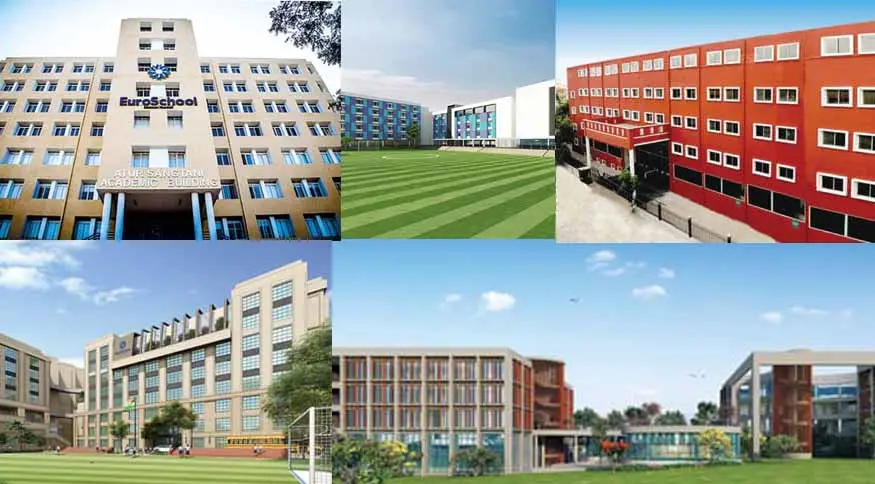
At EuroSchool, we value meaningful parent-teacher relationships across all boards. Whether you prefer the structured approach of CBSE or the holistic path of ICSE, EuroSchool fosters an environment where parents and teachers collaborate to bring out the best in every child.
Discover how our balanced approach to education supports effective parental involvement in CBSE vs ICSE. Explore our campuses and curriculum today!