Searching for International Schools in India in 2026–27 usually means you’re trying to answer a few urgent parent questions fast: Will my child be happy here? Will the curriculum keep doors open globally? Is the campus safe, well-run, and consistent year after year? And will the admissions process be transparent?
This guide is to help you evaluate campuses like a seasoned admissions researcher.
Mini Table of Contents (Jump To What You Need)
- What parents actually mean by “international school” in India (2026–27)
- Is EuroSchool an international school? How to think about it clearly
- EuroSchool’s -reputable school- markers: curriculum, teaching, wellbeing, safety
- EuroSchool Hot List (2026–27): Citywise campuses & what each is known for
- Bengaluru
- Mumbai/Thane/Navi Mumbai belt
- Pune
- Hyderabad
- Curriculum clarity: CBSE vs ICSE vs IGCSE—what changes for your child
- Admissions (2026–27): age, documents, interaction/assessment, timelines
- Fees: how to compare value when fee pages aren’t uniform
- A parent-first campus visit checklist (use it like a scorecard)
- Conclusion: how to choose the right EuroSchool campus for your family
- FAQs
1) What do parents mean by “international school” in India in 2026–27?
Parents rarely mean only one thing when they search “international school.” In real admissions conversations, it usually translates into a checklist like this:
- Global readiness: strong English communication, inquiry-based learning, presentation skills, teamwork, and exposure beyond textbooks.
- Future flexibility: a curriculum that supports Indian competitive exam pathways and keeps overseas options open (where possible).
- Quality + consistency: trained teachers, structured learning design, predictable academic standards.
- Whole-child focus: sports, arts, leadership, and wellbeing aren’t treated as “extras.”
- Safety + systems: transport, access control, supervision, health support, and clear policies.
EuroSchool’s positioning aligns with this parent intent through a NEP-aligned curriculum approach and a structured learning design (7E), alongside an ecosystem that explicitly highlights wellbeing, digital learning, teacher development, and safety practices at the network level. In 2026–27, “international” is often less about the label and more about learning approach + outcomes + systems. Use that lens while evaluating any EuroSchool campus.
2) Is EuroSchool an “international school”? A precise way to think about EuroSchool
EuroSchool is widely presented as a premium K–12 network offering CBSE and ICSE affiliations across campuses. So where does “international” fit? A practical, accurate way to frame EuroSchool for your decision-making is:
● Board affiliation: Primarily CBSE/ICSE (campus-dependent).
● International-minded schooling: The school network emphasizes a modern pedagogy, experiential learning, and “discover yourself” philosophy across its ecosystem.
● Cambridge/IGCSE mentions: Some EuroSchool location pages reference IGCSE (for example, EuroSchool Airoli mentions ICSE and IGCSE), so availability appears to vary by campus and should be confirmed with the specific campus you are applying to.
If your family’s non-negotiable is an international board (like IB/IGCSE) everywhere, don’t assume—verify campus-by-campus. If your non-negotiable is international-style teaching and exposure within CBSE/ICSE, EuroSchool is designed to fit that intent. EuroSchool can be a strong choice for families seeking global readiness within CBSE/ICSE—while any IGCSE offering should be checked at the campus level.
3) What makes a EuroSchool campus an excellent choice in 2026–27? (A parent scorecard)
When parents say they want the “best,” they usually mean they want predictable quality and fewer surprises after admission. Here are the EuroSchool markers you can use as a reputation checklist.
3.1 Curriculum design that is structured (not teacher-dependent)
EuroSchool’s NEP 2020 curriculum page describes a structured learning foundation based on the 7E Instructional Design Principle (Engage, Explain, Elaborate, Explore, Evaluate, Extend, Experience).
Why parents should care:
A consistent instructional model reduces the “it depends on the teacher” problem. In strong schools, great teachers still matter—but the system supports quality across classrooms.
What to ask on your visit:
● “How does 7E show up in a real week of classes?”
● “How do you support children who are advanced vs children who need reinforcement?”
Look for evidence in class routines, lesson artifacts, and student work—not just a poster on a wall.
3.2 Teacher development that is visible to parents
EuroSchool city pages highlight a teacher development program called BEEP (Beacon of Educators’ Excellence Program). Ask how often training happens, how it’s measured, and how it translates into classroom practice (assessment design, feedback quality, differentiation). A school’s teacher development system is often a better quality predictor than a one-time award.
3.3 A balanced schooling ecosystem: academics + co-curricular + wellbeing
EuroSchool city pages highlight structured components such as:
● ASPIRE (skills focus like sports, performing arts, leadership; described as partnered with global experts)
● SEL (social-emotional learning)
● ARGUS (a digital learning ecosystem/LMS)
Why this matters in 2026–27: Parents want a school that builds not only marks, but also communication, confidence, self-management, collaboration, and resilience. Ask for examples—student showcases, competition participation, project work, leadership structures, and how the school supports emotional regulation and friendships (especially in early years).
3.4 Safety and systems: transport, supervision, access, medical readiness
EuroSchool’s Pune city page explicitly claims a network-level safety commitment, including being a certified network of safe schools (as described on the page), plus GPS-enabled transport references on multiple city pages.
Parent guidance: Don’t stop at “we have CCTV.” Ask:
● Who monitors cameras and when?
● How do you manage visitor access?
● Bus attendance + route supervision + GPS protocol?
● Nurse availability and escalation tie-ups?
Safety is a system, not a slogan. Look for documented routines.
4) EuroSchool Hot List (2026–27): Citywise campuses to shortlist
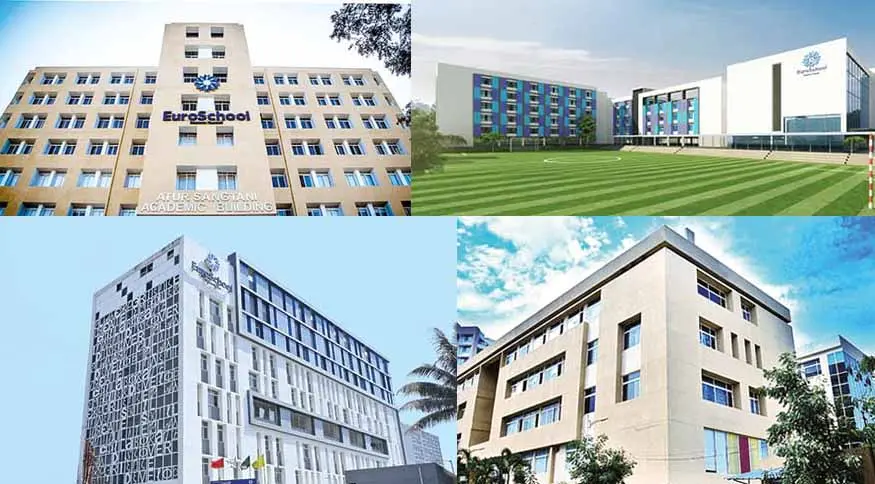
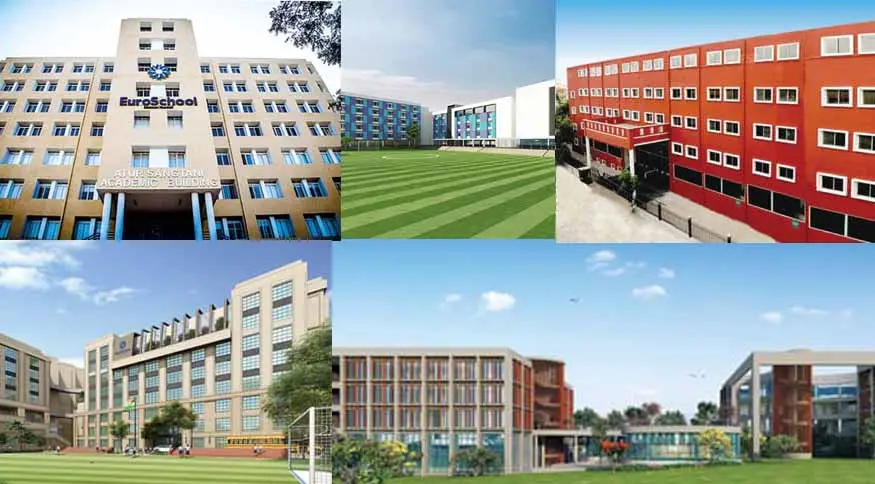
Below is a EuroSchool-only shortlisting list, built from EuroSchool’s own city pages. Use it as a starting point for comparing campuses based on location, board affiliation, and stated offering.
Important: Grade ranges can vary by campus and may evolve as campuses expand. Always confirm the latest intake grades and board availability directly with the campus. EuroSchool indicates admissions are open for 2026–27 via its admissions page.
4.1 EuroSchool Bengaluru: six campuses listed on the Bengaluru city page
EuroSchool’s Bengaluru page lists six campuses and indicates a mix of CBSE and ICSE affiliations.
Bengaluru EuroSchool campuses (as listed):
- EuroSchool HSR Layout (ICSE)
- EuroSchool Chimney Hills (CBSE)
- EuroSchool Bannerghatta (CBSE)
- EuroSchool Yelahanka / North Campus (CBSE)
- EuroSchool Electronic City (CBSE)
- EuroSchool Whitefield (CBSE)
Parent guidance for Bengaluru shortlisting:
- If you want ICSE in Bengaluru within EuroSchool, HSR Layout is the clearly listed ICSE option on the city page.
- If you want CBSE with a broad campus network across the city, the other five campuses are positioned as CBSE on the same page.
- Use the campus list to reduce commute burden first, then compare facilities, grade availability, and culture.
Start with commute + board fit. Then validate teaching quality and student support through an in-person visit and interaction.
4.2 EuroSchool Mumbai / Thane / Navi Mumbai belt: clusters that parents commonly compare
EuroSchool’s Mumbai page states campuses located in Thane, Upper Thane, Dombivli, Airoli, and Balkum.
Commonly shortlisted EuroSchool campuses in this belt:
- EuroSchool Airoli (ICSE; page mentions ICSE and IGCSE)
- EuroSchool Ghodbunder Road, Thane (ICSE)
- EuroSchool Balkum, Thane (CBSE; “K12 experience” language appears on Balkum about page)
- EuroSchool Upper Thane / Bhiwandi area (CBSE)
- EuroSchool Dombivli (CBSE)
Parent guidance for this belt:
- If you’re comparing CBSE vs ICSE, shortlist one campus of each board within your commute radius and do a like-for-like evaluation (teacher interaction quality, language options, math/science rigor, humanities, and assessment).
- If you’re looking for IGCSE specifically, treat it as a campus-specific feature (Airoli is the one explicitly mentioning it on its about page).
In Mumbai/Thane, campus choice is often driven by commute + board. Make the final decision based on classroom experience and student support systems.
4.3 EuroSchool Pune: four campuses highlighted on the Pune city page (CBSE + ICSE)
EuroSchool’s Pune page positions campuses in Wakad, Undri, and Kharadi, with both ICSE and CBSE options, and lists specific campuses.
EuroSchool Pune campuses (as listed):
- EuroSchool Undri (ICSE) (the city page references a Times School Survey 2023 ranking claim)
- EuroSchool Wakad (ICSE) City page references a Times School Survey 2023 claim)
- EuroSchool Kharadi (CBSE)
- EuroSchool Wakad (CBSE)
Parent guidance for Pune shortlisting:
- If you want to compare CBSE and ICSE within the same locality, Wakad offers both options on the Pune city page—use that to compare board impact while holding “area” constant.
- If you want a clear CBSE option in East Pune, Kharadi is positioned as CBSE on the page.
- Pune is a strong city for EuroSchool parents who want a clear CBSE vs ICSE comparison without switching neighbourhoods.
4.4 EuroSchool Hyderabad: two CBSE campuses listed
EuroSchool’s Hyderabad page positions two locations—Kukatpally and Gachibowli / HITEC City—both affiliated with CBSE per the city page.
EuroSchool Hyderabad campuses (as listed):
- EuroSchool Kukatpally / Metro Campus (CBSE)
- EuroSchool Gachibowli / HITEC City Campus (CBSE)
Parent guidance for Hyderabad:
● If you’re choosing between these two, treat it like a campus-culture comparison: leadership style, teacher stability, academic expectations, and student wellbeing routines.
● Ask specifically about language policy and support for new joiners (many families in Hyderabad have frequent relocations).
In Hyderabad, board is consistent (CBSE), so your decision can focus on campus environment and daily experience.
5) Curriculum clarity: CBSE vs ICSE vs IGCSE—what changes in day-to-day school life?
EuroSchool campuses commonly indicate CBSE or ICSE affiliation, with IGCSE referenced on select campus pages.
Here’s a parent-friendly way to understand what changes for your child:
CBSE
CBSE is a national board with a structured curriculum that many families prefer for continuity across cities and alignment with Indian entrance exam pathways later. CBSE is a national-level board with an official portal and affiliation systems.
Typically suits families who want:
● smoother transfers between cities
● a familiar academic structure
● strong math/science foundation for later exam pathways
Ask School: How does the campus balance concept clarity, practice, and application projects—especially in middle school?
ICSE
ICSE comes under the Council for the Indian School Certificate Examinations (CISCE), which conducts ICSE (Class X) and ISC (Class XII).
Often preferred by families who want:
● a broad-based curriculum with emphasis on language and depth
● strong writing and analytical skills development
What does assessment look like—projects, presentations, written work—and how is feedback shared with parents?
IGCSE
Ask the campus (very directly):
● Is IGCSE offered for my child’s grade at this campus?
● Which subjects and what assessment structure?
● How are transitions handled from ICSE/CBSE to IGCSE (if applicable)?
Don’t choose a board by reputation alone—choose it based on your child’s learning style, your relocation likelihood, and your long-term plans.
6) Admissions 2026–27: what can you expect?
Most school’s admissions page states admissions are open for 2026–27 and invites parents to learn about process and fee structure through enquiry.
6.1 The typical steps (parent workflow)
The process is described in a clear sequence: enquiry, application, interaction/assessment, document submission, fee payment to confirm admission.
What this means for you:
● Most families will start with an online enquiry or campus visit.
● An interaction/assessment may be scheduled depending on grade entry.
● Documentation and fee payment finalize the seat.
If you are applying for a high-demand grade (Nursery, Grade 1, Grade 6/7, Grade 11), begin early and keep a single folder (physical + digital) ready for documents.
6.2 Age criteria in 2026–27: why many states are tightening norms
NEP 2020 outlines the restructured school system and is commonly interpreted as supporting Class 1 entry around age 6 within the foundational + preparatory stages.
EuroSchool’s Bengaluru page explicitly states a parent-friendly rule of thumb: 3 years for Nursery and 6 years for Class 1 (noting it as typical for CBSE/ICSE schools in Bengaluru and stating EuroSchool adheres to these guidelines).
Parent guidance:
Age rules can vary by state and are increasingly formalized for 2026–27 in some regions. So use this approach:
1. Start with the state’s published rule (where applicable).
2. Use the campus counsellor to confirm EuroSchool’s cut-off date and acceptable age range for your entry grade.
3. If your child is close to the cut-off, ask about readiness expectations and support.
Plan admissions with age eligibility in mind; it can affect not only entry but also long-term grade alignment.
6.3 Documents parents should pre-prepare (so you don’t scramble)
A practical list: birth certificate, ID, photos, previous report card, transfer certificate (if needed).
A smart parent pack also includes:
● child’s Aadhaar (if available) and parent IDs
● address proof
● immunisation/health records (if requested)
● any learning support documentation (if applicable) to help the school support your child better
The smoother your paperwork, the smoother your seat confirmation.
7) Fees: how to compare EuroSchool value when fee information varies by campus
Fees can vary and encourage parents to contact the campus for the most accurate numbers. So how do you compare fairly?
Use a “total cost of schooling” lens (not only tuition)
When comparing campuses, ask for:
● annual tuition and term schedule
● admission/one-time charges
● transport fee (if using bus)
● meal plans (if applicable)
● uniforms, books, and field trips (expected range)
● activity or programme fees (sports/arts/tech)
Ask the value questions
● “What’s included in the fee vs optional?”
● “How many hours/week are sports and arts built into the timetable?”
● “How do you support a child who needs additional academic support?”
● “What is the student-teacher ratio and how does it show up in practice?”
A “competitive fee structure” claim is only useful when you can map it to learning time, adult supervision, facilities access, and student outcomes.
8) A parent-first EuroSchool campus visit checklist (printable scorecard)
If you want a simple way to identify a genuinely strong campus, use this on your visit.
Classroom & learning
● Do you see students explaining why an answer is correct (not only “what”)?
● Are teachers prompting inquiry (which aligns with EuroSchool’s 7E framing)?
● Is student work displayed with feedback, rubrics, or reflection?
Teacher quality & culture
● Do teachers seem calm, prepared, and consistent?
● Ask about teacher training (BEEP is referenced on city pages).
Wellbeing
● How does the school handle friendship conflicts and emotional regulation?
● Is there a counselor and how are parents involved?
Safety & transport
● Visitor entry process: ID, pass, escort rules
● Bus route supervision: attendance tracking + GPS protocol (GPS buses mentioned on city pages).
Communication with parents
● How often do teachers share progress updates?
● Do you get structured feedback or only report cards?
The “fit” question
● Does your child look curious and comfortable in the environment?
● Can you imagine your child thriving here on an average Tuesday—not just at the annual day function?
The best campus for your family is the one that matches your child’s temperament, your academic priorities, and your daily logistics.
9) Conclusion: choosing the right campus (without overthinking)
If you’re searching for the best international schools in India, you’re usually trying to reduce uncertainty: academic quality, safety, future options, and whether your child will enjoy learning. EuroSchool’s network—founded in 2009 and now spanning 18+ schools—positions itself around structured pedagogy (7E), NEP alignment, balanced schooling, and citywide campus options across major metros.
Here’s the simplest way to decide:
1. Choose your city cluster and shortlist by commute.
2. Pick the board that suits your child and future plans (CBSE vs ICSE; verify any IGCSE offering campus-by-campus).
3. Visit 2–3 campuses and use the same scorecard to compare learning quality, wellbeing, and safety systems.
4. Decide based on daily experience (teachers + classroom culture + support), not only brochure features.
If your search terms include top international schools in India or even top 10 international schools in India, the smartest move is to convert that list-style mindset into a decision framework—and then apply it carefully to EuroSchool campuses near you. And if you only remember one sentence from this guide: A reputable school is the one that delivers consistent learning, strong adult supervision, and a child-first culture—every day, not just on paper. (And yes—if you’re still comparing broadly, start by verifying what each campus actually offers. For EuroSchool, board affiliation and grade availability can differ by location.)
Finally, as you continue your research on International Schools in India, keep your evaluation grounded in what your child will experience daily: teaching quality, routines, safety, and belonging.
FAQs
1) Is EuroSchool an international school in India?
EuroSchool is a premium K–12 school network in India offering campuses affiliated with CBSE and ICSE, with international-minded teaching and learning practices highlighted through its NEP-aligned curriculum approach. Some locations may reference IGCSE, so families should confirm board availability with the specific campus.
2) Which boards does EuroSchool offer—CBSE, ICSE, or IGCSE?
EuroSchool’s main positioning highlights CBSE and ICSE affiliations across campuses. Certain campus pages (for example, EuroSchool Airoli) mention IGCSE, which suggests board options can be campus-specific. Always verify directly with the campus you are applying to.
3) How do I choose between CBSE and ICSE at EuroSchool?
Choose CBSE if you want a nationally uniform structure and easier transfer continuity; choose ICSE if you prefer a broader curriculum emphasis and deep learning style. The best choice depends on your child’s learning style, your relocation likelihood, and your long-term plans.
4) Are EuroSchool admissions open for 2026–27?
EuroSchool’s official admissions page states admissions are open for the 2026–27 session and encourages parents to begin via an enquiry and campus process.
5) What is the typical age for Nursery and Class 1 at EuroSchool?
EuroSchool’s Bengaluru page states a common guideline of around 3 years for Nursery and 6 years for Class 1, and notes EuroSchool adheres to these guidelines. Since age rules can vary by state, confirm the cut-off date and policy with the campus.
6) What documents are usually needed for admission at EuroSchool?
EuroSchool’s Bengaluru page lists typical documents such as a birth certificate, ID, photos, previous report card, and a transfer certificate if needed. Requirements can vary by grade and campus, so keep a ready folder and confirm the campus list.
7) How can I get EuroSchool’s fee details for my city?
EuroSchool notes that fee structures can vary and typically asks parents to contact the nearest campus or submit an enquiry for detailed fee information. For accurate totals, ask for tuition plus transport, books, uniforms, and activity-related costs.
8) Which EuroSchool campuses are available in Bengaluru, Pune, Mumbai, and Hyderabad?
EuroSchool’s city pages list multiple campuses: Bengaluru (six campuses), Pune (four campuses), Hyderabad (two campuses), and the Mumbai/Thane belt with campuses such as Thane, Upper Thane, Dombivli, Airoli, and Balkum referenced across pages. Always confirm grade availability per campus.