Introduction: The Grammar Time Machine
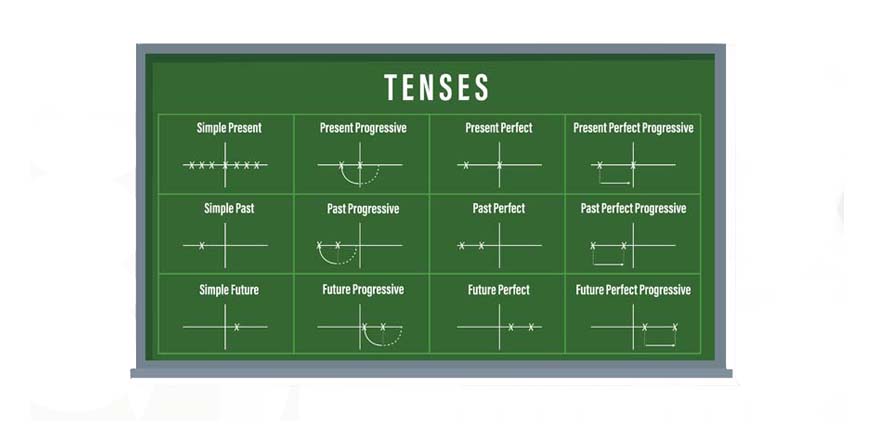
Language is a remarkable invention that bridges our thoughts, emotions, and stories. But what if it could also transcend time? In English grammar, tenses act as a time machine, allowing us to travel effortlessly between the past, present, and future. At the heart of this capability lie the 12 tenses of English—each a key to unlocking moments across timelines.
For educators, these tenses are more than grammar rules; they are tools of empowerment. Teaching them equips students with the ability to narrate their past, engage with the present, and imagine the future. The Grammar Time Machine invites us to explore the language universe. Using the unique essence of every tense, understand how educators can transform our classrooms into vibrant spaces of communication. Let’s begin our timeless journey.
The Past: Reliving History and Stories
The past is where stories begin, offering us a window into actions, memories, and lessons that shape our lives. The four past tenses help students narrate events with precision and clarity.
Simple Past: The Storyteller of Events
This tense is straightforward and used to describe completed actions. It adds life to memories and narratives.
Example: “She visited the museum last summer and admired its ancient artefacts.”
Teaching Tip: Encourage students to write personal stories or recount historical events using the simple past.
Past Continuous: The Backdrop of a Narrative
The past continuously provides context, showing actions in progress when something else occurred.
Example: “I was reading a fascinating book when the lights suddenly went out.”
Teaching Tip: Use role-playing activities where students describe overlapping actions in a story.
Past Perfect: The Historian’s Lens
The past perfect highlights sequences, showing which action occurred first.
Example: “By the time the play began, the actors had already rehearsed for weeks.” Teaching Tip: Assign timeline activities where students organise events using this tense.
Past Perfect Continuous: The Archaeologist’s View
This tense emphasises sustained actions over time, adding depth to narratives.
Example: “The researchers had been studying the ancient ruins for years before making their discovery.” Teaching Tip: Ask students to describe long-term historical processes, such as the building of monuments or civilizations.
Importance of Past Tenses:
Mastering past tenses gives students the ability to articulate events with clarity and purpose, making history come alive.
The Present: Capturing the Moment
The four present tenses anchor us in the here and now, helping us communicate our actions, routines, and reflections with immediacy and relevance.
Simple Present: The Voice of Truths and Habits
This tense describes routines, universal truths, and general facts.
Example: “The Earth orbits the sun.”
Teaching Tip: Use this tense to discuss daily schedules or scientific facts in class.
Present Continuous: The Action Artist
It brings life to ongoing actions, creating a sense of immediacy.
Example: “The students are practising grammar in the library.”
Teaching Tip: Engage students in classroom discussions about what they are doing in real-time.
Present Perfect: The Bridge to the Past
This tense connects past actions to their relevance in the present.
Example: “She has already completed her assignment.”
Teaching Tip: Use this tense to discuss personal achievements or recent events.
Present Perfect Continuous: The Chronicle of Effort
This tense reflects ongoing actions that began in the past and continue to the present.
Example: “He has been working on this project since morning.”
Teaching Tip: Have students describe ongoing efforts, such as preparing for exams or mastering a skill.
Importance of Present Tenses:
Present tenses empower learners to express themselves in the now, fostering engagement with their immediate world.
The Future: Envisioning Possibilities
The four future tenses propel us into the realm of what lies ahead, enabling us to articulate plans, dreams, and predictions with confidence.
Simple Future: The Planner’s Voice
This tense describes intentions or predictions.
Example: “We will visit the art gallery tomorrow.”
Teaching Tip: Encourage students to write about their future goals or create plans for a fictional trip.
Future Continuous: The Lens of Anticipation
It paints a picture of actions in progress at a specific moment in the future.
Example: “This time next week, I will be presenting my project.”
Teaching Tip: Use timeline exercises to help students visualise future scenarios.