
Let’s travel back to a time when flickering candles lit up homes and no one had even imagined wireless charging or smartphones. It was during this period that a major breakthrough in science took place — the discovery of electromagnetic induction.
This invisible force powers nearly every modern electrical device, from massive power plants to the lamp beside your bed. But have you ever wondered who was behind its discovery? And how does it actually work?
Electromagnetic Induction Definition
To put it in layman’s terms, electromagnetic induction is the process of creating electricity through a changing magnetic field. Sounds like magic? It’s actually pure science. When we move a magnet close to a coil of wire, electricity starts to flow through the wire. No batteries or plugs required! Simply movement and magnetism working in sync to create power.
Although it might seem obvious now, this concept was ground-breaking when first discovered.
Michael Faraday: The Man Behind the Spark
The scientist credited with uncovering electromagnetic induction is Michael Faraday, a Britisher born in 1791. Surprisingly, Faraday didn’t have a formal education. He started out as an apprentice to a bookbinder and gained knowledge by reading the books he worked with.
What he lacked in schooling, he made up for with boundless curiosity and hands-on experiments. In 1831, he conducted a series of trials that led to one of the most pivotal findings in electrical science.
Faraday’s Big Moment in the Lab
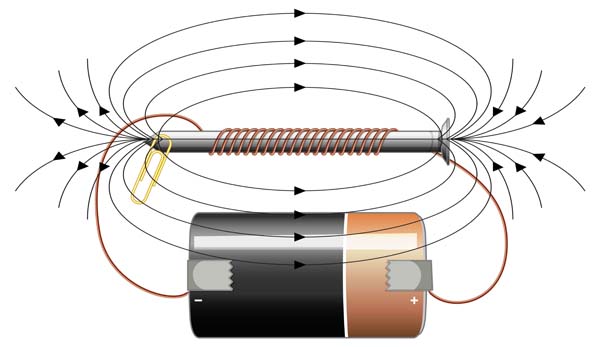
Faraday set up an experiment where he attached a copper wire to a galvanometer (which is a device that can detect electric current). He then proceeded to move a bar magnet through the coil. Each time the magnet passed into or out of the coil, the galvanometer’s needle moved, indicating that electricity was being generated. When the magnet stayed still, nothing happened. It was the motion — or the change in magnetic field — that triggered the current.
This demonstrated for the first time that a shifting magnetic field could create electricity in a nearby wire. This basic yet powerful experiment laid the foundation for today’s electricity generation.
Breaking Down the Science
Let’s make it even clearer. When the magnetic field near a wire goes through a change — either because the magnet moves or the wire moves — an electric current is produced. The more rapidly the magnetic field changes, the stronger/greater the resulting current would be.
This is explained by Faraday’s Law of Electromagnetic Induction, which is written like this:
e = -N × (ΔΦ/Δt)
- e (or EMF) stands for the induced voltage (electromotive force)
- N represents the number of turns in the wire coil
- Δ means “change in”
- Φ (phi) is the magnetic flux (the amount of magnetic field passing through the coil)
- t is time
The minus sign comes from Lenz’s Law, which tells us that the induced current acts to counter the change in magnetic field that created it — a built-in balancing act by nature to maintain stability.
How We Use Electromagnetic Induction Today
Electromagnetic induction is at the root of many technologies we rely on daily. Let’s explore some exciting real-world examples.
- Induction Cooktops
- Electric Generators
- Transformers
- Credit Card and Metro Card Scanners
- Electric Toothbrushes
- Wireless Charging
Forget heating burners — induction cooktops heat your pot or pan directly using magnetic fields. It’s quick, efficient, and modern. No flames, no hot coils — just sleek, stylish cooking.
Generators successfully convert mechanical energy, such as a spinning turbine, into electrical energy. And turbines can spin in all kinds of ways: pushed by steam, turned by falling water, or even spun by the wind. No matter the method, the basic principle stays the same — move the coil or a magnet, and we get electricity.
Not the movie kind — these quiet devices adjust voltage levels so electricity can travel long distances efficiently. Thanks to electromagnetic induction, they step up or step down the voltage to meet our requirements.
Ever tapped your school ID, metro card, or credit card at a scanner and watched it work in seconds? That’s electromagnetic induction in action — quietly making your life easier. These cards have tiny coils and chips inside them. When you bring them near a scanner, the magnetic field from the reader induces a small current in the card’s coil. This powers the chip just long enough to send your data back to the system — and boom, the gate opens, the payment goes through, or your attendance gets logged.
Many electric toothbrushes use inductive charging to stay cordless and waterproof. When you place the brush on its base, the charger goes on to create a changing magnetic field. This induces a current in a coil inside the brush, charging the battery — all without any metal pins or plugs.
Ever charged your phone by just placing it on a pad? That’s electromagnetic induction at work again. The pad creates a magnetic field, which causes a current to flow in a coil inside your phone — powering it up without a plug.
Why Faraday’s Discovery Still Matters
As we move toward cleaner and smarter energy sources, Faraday’s discovery remains a key player. Wind and water-powered plants rely on induction to turn motion into electricity. Electric vehicles use it for motors and charging. Even futuristic tech like maglev trains and wireless power transmission owe their existence to this principle.
Simply put, Faraday helped shape the electrified world we live in today
Michael Faraday’s discovery of electromagnetic induction was a ground-breaking milestone that transformed both science and engineering. Without it, our modern way of life — with its gadgets, lighting, and global communication — wouldn’t exist. His drive to explore and understand nature’s laws led to one of the most influential scientific breakthroughs ever. Alongside contributions from thinkers like Joseph Henry and James Clerk Maxwell, Faraday’s legacy still powers the world around us. So, next time you plug in your phone or flip on a light, think of the man who started it all — with just a coil, a magnet, and a brilliant mind.