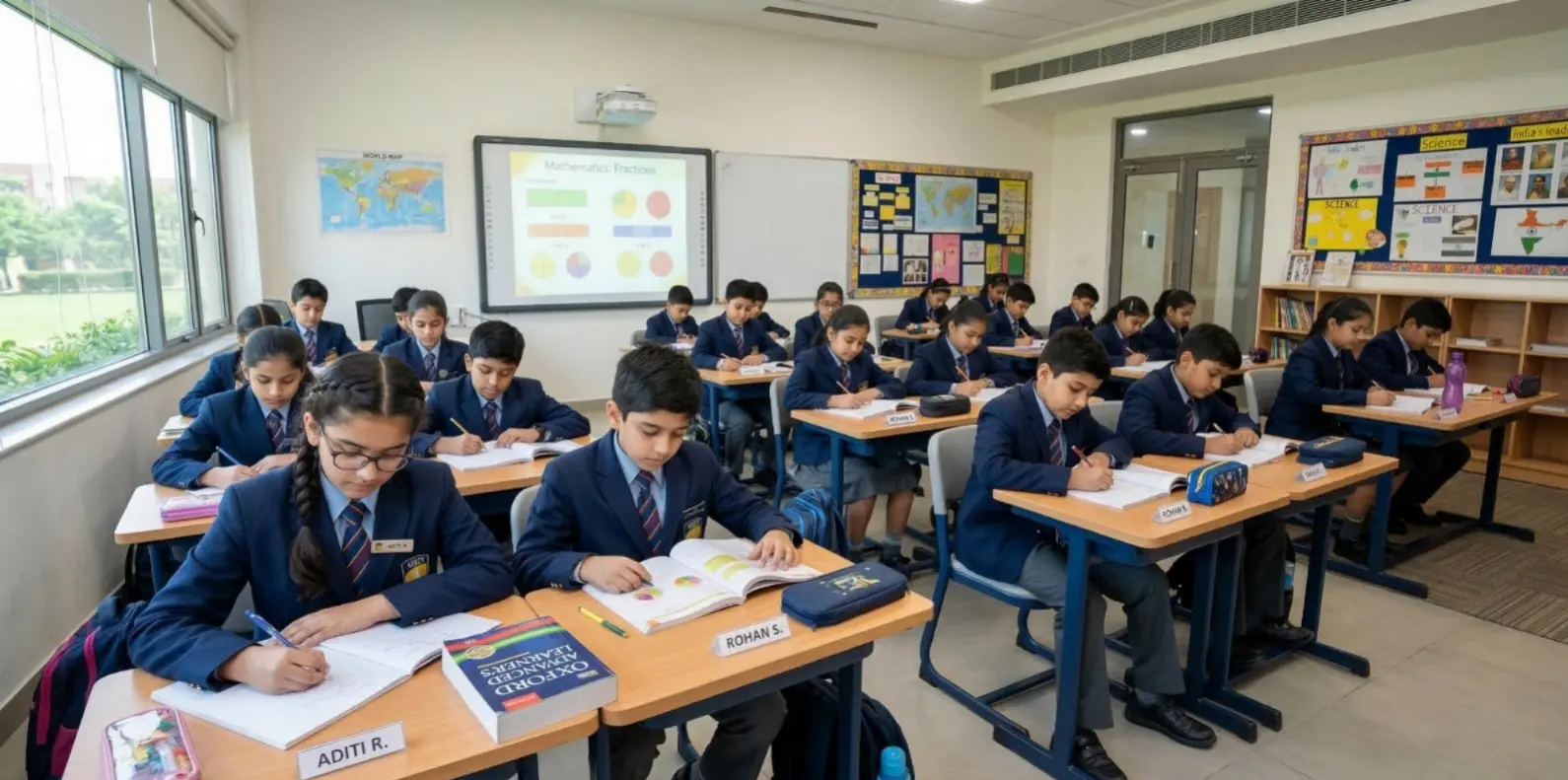

Science becomes most compelling when students get hands-on. By 10th grade, students have reached an age where they can do more advanced experiments that combine physics, chemistry, biology, and environmental science concepts. High school students can perform exciting, manageable, and meaningful science experiments that are compatible with school laboratories and home setups. Some of these are listed below.
Why Choose Projects in Class 10
– They support theory by practice
– They develop skills: observation, measurement, and analysis
– They render science enjoyable and catchy
– They equip students with science fairs and additional studies
– With good planning, they can be constructed using small resources.
Key Tips Before You Begin
– Safety first: It is always preferable to wear protective equipment, and chemicals should be avoided.
– Begin with simple experiments: Find experiments that you can easily manipulate.
– Take notes: Precision of data is important.
– Lay out in a well-presented manner.
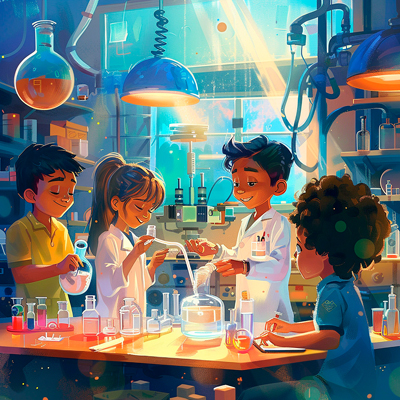
Top 10 Science Experiments for 10th Class Students
- Influence of Concentration on Reaction Rate
- Electrochemical Cell or Battery Efficiency
- Plant Transpiration and Stomatal Density
- Water Purification Using Natural Filters
- Solar Cell Efficiency under Different Conditions
- Magnetic Induction and Faraday’s Law
- Effect of pH on Enzyme Activity
- Sound Waves and Resonance
- Crystallization Process and Growth Rate
- Cloud Chamber – Visualizing Particle Trails
Branch: Chemistry
Problem: Investigate the influence of the concentration of hydrochloric acid on the rate of reaction.
Why it works: Illustrates reaction kinetics and collision theory.
How to do: Hold the temperature constant and change the concentration and reaction time.
Branch: Physics / Chemistry
Concept: Construct batteries with lemons or saltwater and measure voltages.
Why it works: Gives lessons on electrochemistry and the conversion of energy.
Procedure: Use copper and zinc electrodes, and measure current output.
Branch: Biology
Concept: Determine the rate of transpiration in light, shade, or high humidity.
Why it works: Demo of the water cycle and plant physiology.
How to do: Gauge potometer or plastic bag method and weigh the weight lost.
Branch: Environmental Science
Concept: Experiment with the purification of dirty water using sand, charcoal, and gravel.
Why it works: Shows environmental consciousness and filtration.
How to do: Filtrate muddy water and check its clarity.
Branch: Physics
Concept: Test the change in solar panel output with light intensity or temperature.
Why it works: Relates renewable energy to physics concepts.
How to do: Take small solar panels, multi-meter, and make measurements under different light conditions.
Branch: Physics
Concept: Take magnets and generate current by moving them close to coils.
Why it works: It demonstrates the effect of electromagnetic induction, which is central to generators.
How to do: Coils, magnets, measure induced voltage with a galvanometer.
Branch: Biology / Biochemistry
Concept: Determine enzyme catalase activity in potato or liver at various pH levels.
Why it works: Understands the action of enzymes and chemical reactions in living things.
How to do: Measure the gaseous release during the decomposition of hydrogen peroxide.
Branch: Physics
Concept: Investigate the sound resonance in a tube or column of water.
Why it works: It exhibits the properties of sound waves and frequency.
How to do: Work with a tuning fork and a partially filled tube of water to determine the resonance height.
Branch: Chemistry
Concept: Crystallize salt or alum at various temperatures.
Why it works: Crystal formation, solubility, and saturation.
Preparation: Prepare saturated solutions, allow solutions to cool slowly, note shape and size.
Branch: Physics
Concept: Construct a basic cloud chamber in order to observe the paths of radiation particles.
Why it works: Shows modern physics in an engaging manner.
How to do: alcohol vapor, cold plate and light (under supervision) in closed container.
How to Pick the Right Project
– Choose a project that matches your interests.
– Use materials that are easy to find.
– Focus on measurable results.
– Align your experiment with your school syllabus.
Steps for a Successful Experiment
- Form a hypothesis.
- List your materials and safety requirements.
- Collect accurate data.
- Record and analyse your results.
- Create charts or graphs for presentation.
- Discuss findings and suggest improvements.
Why These Projects Help
– They promote critical thinking and curiosity.
– They make students comfortable with real-life scientific methods.
– They encourage teamwork and presentation skills.
– They assist in bridging theory with discovery in the classroom.
Conclusion
Science projects are not assignments but a chance to discover and invent. All the experiments in this list encourage observation, imagination and learning through doing. You can study chemistry, biology, or physics; either way, the projects will make science fun and interesting.
Are you enjoying reading our content? Do visit EuroSchool to explore more!!