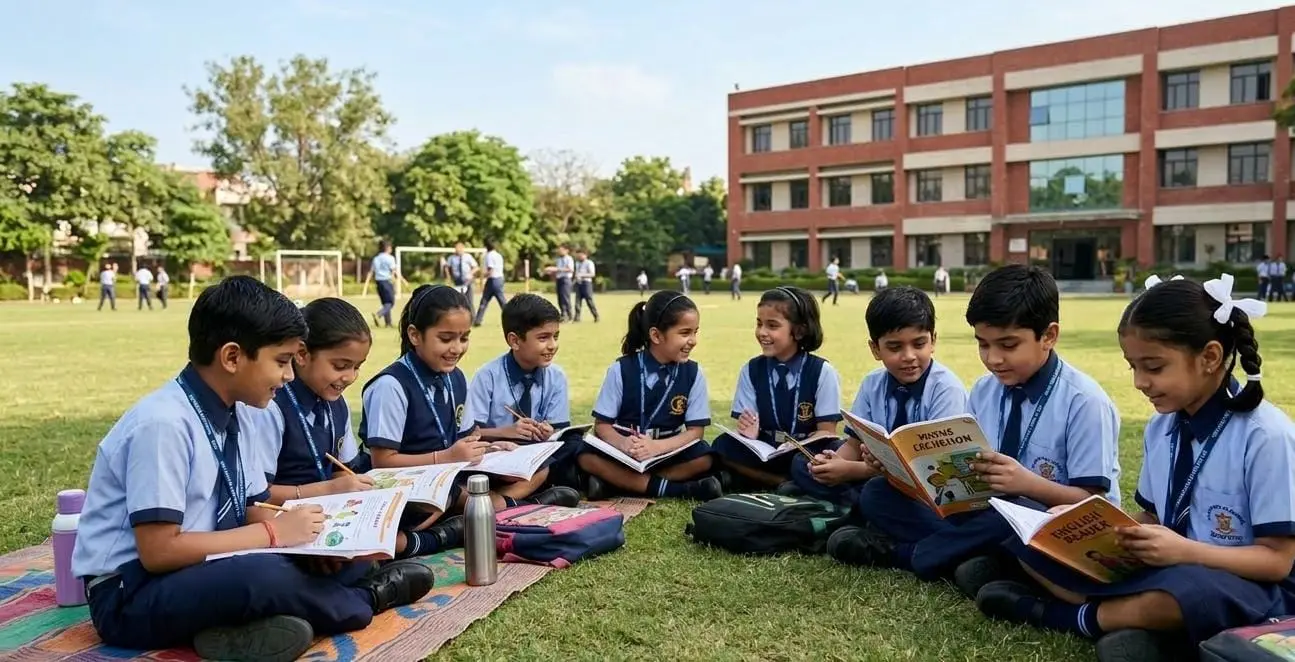
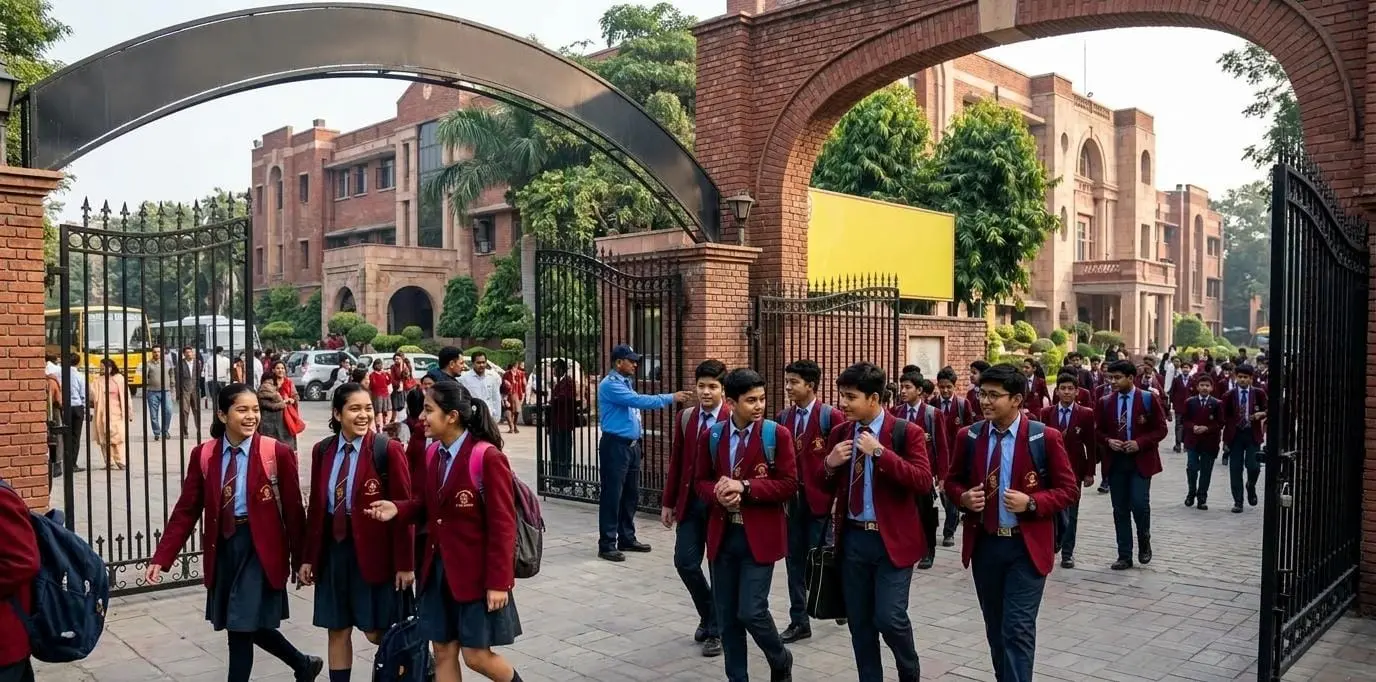
Top schools in India With Fees, Eligibility Criteria, Reviews and Curricula offered

Best Schools in India: A Parent’s 2026 Guide to Top Schools Worth Considering, Comparing Fees, Eligibility, Reviews and Curricula

Indian parents searching for the best school in India usually want more than a list. They want clarity on curriculum, teaching quality, fees, safety, co-curricular exposure, school culture, and long-term fit. This guide helps families compare top schools in India thoughtfully. Important note: the schools mentioned here are not being ranked in this blog. They are simply worth mentioning because they frequently appear in public parent shortlists, school-discovery platforms, and education conversations. Public comparison ecosystems in 2025–2026, including EducationWorld, IIRF, Edustoke, and competitor school blogs, continue to frame parent decision-making around curriculum, school model, teaching quality, infrastructure, admissions, and overall fit.

Executive Summary

If you searched for schools in India, you are probably trying to answer one practical question: Which schools are genuinely worth considering for my child, and how do I choose well? The honest answer is that there is no single “best school in India” for every child. A strong school for one family may be the wrong fit for another, depending on the board, learning style, location, budget, student personality, and future plans.

That is why this guide does not rank schools from one to ten. Instead, it gives you a more useful lens. It helps you understand what Indian parents usually mean when they search for the best school in India, top schools in India, or top 10 schools in India. It also shows you how to compare schools by what actually matters: curriculum fit, teacher quality, student wellbeing, co-curricular opportunities, safety, technology-enabled learning, and long-term child development.

You will also find a curated set of schools that are worth mentioning, not because this blog is ranking them, but because they commonly show up in public shortlists and school-comparison ecosystems. These include legacy day schools, reputed boarding schools, international and cross-board schools, and modern K–12 schools in urban India. Public school-discovery and comparison pages in 2025–2026 surface a wide range of names across categories, including schools such as The Asian School, St. Xavier’s Collegiate School, Delhi Public School Vasant Kunj, Bombay Scottish School, The Scindia School, The International School Bangalore, Mallya Aditi International School, CHIREC International School, JBCN International School, The Heritage School, and others.

Finally, this article reflects a EuroSchool way of thinking about school choice. EuroSchool’s own public brand positioning centres on Balanced Schooling, helping each child discover themselves, combining academics with co-curricular and extracurricular growth, using experienced teachers and digital tools such as ARGUS, and building confidence, curiosity, and future readiness. That lens matters because thoughtful parents today are no longer choosing schools on brand name alone. They are choosing learning ecosystems.

Introduction: What parents really want when they search for schools in India

Parents rarely search for schools in India out of curiosity alone. Most search because a real decision is approaching. A move to a new city. A nursery admission cycle. A transition from preschool to primary years. A board decision in middle school. A shift from one teaching style to another. Or simply that quiet but important feeling: Is my child in the right environment to grow?

That is what makes this topic so important.

On the surface, the search looks broad. But underneath it, the intent is highly specific. Parents usually want five things at once:

They want a shortlist of schools that are worth considering.
They want help understanding which curriculum might suit their child.
They want a realistic sense of fees and admissions expectations.
They want signals of quality beyond marketing language.
And they want enough confidence to move from confusion to action.

That is where many “top schools in India” articles fall short. They often rush into naming institutions without helping families understand how to compare them. They treat school choice like a popularity contest. But parenting decisions are rarely that simple.

A school is not just a building where a child studies. It is a place where habits are formed, confidence is built, friendships begin, interests deepen, and values take shape. It influences how a child thinks, speaks, explores, struggles, collaborates, and imagines their future. That is why choosing a school deserves more than a listicle. It deserves a framework.

This guide is built for that framework.

Important note before we begin: this blog is not ranking schools

Let us make this explicit, because it matters.

The schools mentioned in this blog are not being ranked here. They are simply worth mentioning.

That distinction is important for both accuracy and usefulness.

Public school-ranking and comparison ecosystems do exist. EducationWorld’s 2025–26 school rankings and Grand Jury rankings use multi-parameter methodologies and category-based evaluation. IIRF also publishes school rankings using criteria such as academics, infrastructure, faculty quality, extracurriculars, and student satisfaction. Edustoke functions more like a school-discovery and comparison platform, surfacing fees, boards, locations, grades, and parent-facing filters. Competitor school blogs also use these formats to capture parent search intent.

But a public ranking is still only one input.

A school that performs strongly in one ranking framework may not be the right choice for your child’s temperament, commute, support needs, or long-term goals. A school with a famous name may not offer the classroom culture your child thrives in. A school with a higher fee may not necessarily offer better educational value for your family.

So treat this guide as a parent-first decision-support article, not as a final verdict on the schools mentioned.

What parents usually mean by “best school in India” or “top 10 schools in India”

When parents type the best school in India, they are usually not asking a purely academic question. They are asking a layered, emotional, long-term question.

They may mean:

  • Which schools are well regarded across India?
  • Which schools have strong academics and holistic development?
  • Which schools produce confident, future-ready students?
  • Which schools are trusted by parents?
  • Which schools are worth the fees?
  • Which schools are realistic options for my city, budget, and child?

In other words, “best” is rarely one thing.

For one family, the best school in India may mean a legacy ICSE or CBSE day school with rigorous academics and discipline. For another, it may mean an international school with inquiry-led learning and stronger global exposure. For another, it may mean a K–12 day school that balances academics, sports, arts, wellbeing, and technology in a child-friendly way. For yet another, it may mean a boarding school that shapes independence and resilience.

This is why smart parents stop asking only, “Which is the number one school?” and start asking, “Which school will help my child grow into the kind of person they are capable of becoming?”

That is a far better question.

How should parents use “top schools in India” lists?

Use them as a starting point, not as your final decision.

That is the shortest, most practical answer.

Public rankings and comparison sites can help you discover names you may not have considered. They can help you notice patterns. They can show which schools repeatedly surface across categories, boards, and cities. They can also help you identify broad fee bands and curriculum models.

But they cannot tell you everything that matters inside daily school life.

They cannot show you whether classroom discussion is lively or flat.
They cannot show you whether teachers truly know their students.
They cannot show you how a shy child is supported.
They cannot show you whether the school culture is warm or merely polished.
They cannot show you how discipline is handled, how feedback is given, or how wellbeing is protected.

Those things require deeper evaluation.

So yes, read the top 10 schools in India articles. Use Edustoke-style comparison pages. Glance at ranking ecosystems. Notice which names recur. But then move beyond them. Ask better questions. Visit campuses. Review curriculum fit. Understand the school’s educational philosophy. And most importantly, judge whether the school fits your child.

What makes schools in India worth considering in 2026

A school becomes worth considering when it consistently delivers quality in the areas that shape long-term student growth. In 2026, parents are looking beyond reputation alone. They are evaluating the complete learning experience.

1. Teaching quality still matters more than almost everything else

Parents are often impressed by infrastructure first. That is natural. Beautiful campuses, labs, auditoriums, sports grounds, digital boards, and branded programmes are visible. Teaching quality is less visible from the outside.

But teaching is still the heart of school quality.

A strong school does not just complete the syllabus. It helps students understand concepts deeply, ask questions confidently, write and speak clearly, reflect on their learning, and apply knowledge in new situations. It also adapts to different learning needs without making students feel labelled or left behind.

Good teachers do not merely explain content. They create momentum. They notice when a child is disengaged. They know when to challenge and when to support. They turn routine lessons into meaningful learning.

Parents comparing schools should always look past the brochure and ask:
What does classroom learning actually feel like here?

2. Balanced development is no longer optional

The old divide between “academic school” and “activity school” is increasingly outdated.

The strongest schools today understand that children need both structure and space. They need subject mastery, but they also need speaking skills, teamwork, emotional regulation, confidence, creativity, physical fitness, and opportunities to discover what energises them.

That is one reason why holistic and balanced development has become central to modern school choice. Public ranking methodologies themselves increasingly evaluate schools beyond pure academics, including wellbeing, curriculum and pedagogy, community service, special needs support, technology integration, and co-curricular depth.

A parent-friendly school in 2026 is not simply a school that produces marks. It is a school that helps children become capable human beings.

3. Wellbeing, safety, and emotional climate matter far more than before

Parents today are much more alert to whether a school feels safe, respectful, and emotionally healthy.

That includes physical safety, of course. But it also includes anti-bullying processes, counselling, transition support, peer culture, adult supervision, and how children are spoken to when they struggle or make mistakes.

A school may be academically strong but emotionally exhausting. Another may look warm but lack standards. What thoughtful parents want is a school that combines challenge with care.

That is not a soft extra. It is foundational.

4. Future-ready learning now includes technology, but not technology alone

Technology-enabled learning is now part of the school conversation, but parents should evaluate it carefully.

Future-ready learning is not about screens for their own sake. It is about whether technology actually improves learning: better feedback, progress tracking, personalised practice, stronger engagement, easier revision, collaboration, research, and smoother parent visibility into student growth.

EuroSchool’s public academic positioning, for example, highlights technology-enhanced learning and its ARGUS digital learning system as a support for interactive tools, progress tracking, quizzes, videos, and personalised learning pathways. That is a useful example of what parents should look for more broadly: not just digital branding, but educational use.

5. A strong school helps a child discover their strengths

This may sound idealistic, but it is actually one of the most practical indicators of school quality.

Children perform better when they feel seen.

When a school helps a child discover a love for reading, robotics, athletics, theatre, design, mathematics, music, coding, public speaking, leadership, debate, or community service, something important happens. School stops feeling like an obligation alone. It starts feeling like a place of growth.

That is one reason EuroSchool’s public brand language around helping children “discover themselves” and creating the “joy of learning” resonates. The idea is bigger than brand phrasing. It reflects what parents increasingly want from modern schooling: not just achievement, but identity, confidence, and purposeful development.

Understanding the major school pathways in India

Before comparing schools, parents need clarity on boards and curriculum pathways. The same school can feel very different depending on whether it follows CBSE, ICSE, Cambridge/IGCSE, or IB.

CBSE schools in India

CBSE schools are usually chosen for structure, national portability, and familiarity with mainstream Indian academic pathways.

For many parents, CBSE feels practical. The curriculum is widely available across cities, easier to compare, and often seen as better aligned with families who may relocate or who want a predictable academic structure. In daily school life, CBSE can work very well for children who do well with sequence, syllabus clarity, regular assessments, and a more standardised academic rhythm.

But parents should not assume every CBSE school is identical.

A good CBSE school can be concept-driven, lively, and future-ready. A weaker one may be too textbook-heavy. The board alone does not determine the learning culture. The school’s pedagogy does.

If you also want to know about the top CBSE schools in India, see this guide.

ICSE schools in India

ICSE schools are often valued for depth, language development, broad subject engagement, and strong written expression.

Parents who lean toward ICSE often appreciate its richness across English, humanities, and overall academic breadth. That can work especially well for children who enjoy reading, writing, discussion, and layered learning. Many families also feel ICSE builds strong communication and analytical habits early.

Again, however, a board is only a framework.

An excellent ICSE school feels intellectually alive without feeling overloaded. A weaker one may become overly content-heavy. So when comparing ICSE schools, parents should ask how the school makes academic breadth manageable and meaningful.

Cambridge or IGCSE schools in India

Cambridge and IGCSE pathways are often preferred by families looking for conceptual learning, flexibility, and stronger global alignment.

These schools can suit independent learners, students who benefit from inquiry and application, and families considering internationally recognised pathways. In a strong Cambridge environment, students are encouraged to think, interpret, explore, and communicate with greater flexibility than in more rigid formats.

That said, this path works best when the school supports students well. A good IGCSE school offers both academic rigour and scaffolding. A weaker one may talk about “global learning” without offering enough instructional structure.

IB schools in India

IB schools are generally associated with inquiry-led learning, reflection, research, and international-mindedness.

For some families, this is a highly attractive model. It can support students who enjoy discussion, interdisciplinary learning, long-form projects, independent thinking, and deeper engagement with ideas. It often appeals to parents who want a broader, skills-rich educational experience and may be considering a more global higher education journey.

But IB is not automatically better. It is simply different.

A child who thrives in open-ended inquiry may flourish there. A child who needs more explicit structure may need a very carefully chosen IB environment or a different pathway altogether.

So which board is best?

There is no universal answer.

The best board is the one that matches your child’s learning profile, your family’s mobility plans, your educational priorities, and the quality of the particular school delivering that board.

That is why parents should compare not just the board, but the board in practice.

Ask for sample timetables.
Ask how assessments are handled.
Ask what homework looks like.
Ask how reading, projects, labs, arts, sports, and speaking skills are integrated.
Ask how students are supported when they struggle.

That will tell you more than any broad board stereotype.

Schools in India worth considering: a parent-first mention list by category

Once again, this section is not a ranking. The schools below are being mentioned because they commonly surface in public shortlists, comparison pages, school-discovery ecosystems, and parent conversations. They are worth mentioning, not being ranked in this blog.

1. Legacy day schools and established national-board schools worth mentioning

Parents who value tradition, strong academic culture, discipline, and institutional reputation often begin with legacy day schools.

Public shortlists and comparison pages often mention schools such as St. Xavier’s Collegiate School, Kolkata; Delhi Public School Vasant Kunj; Bombay Scottish School, Mumbai; St. John’s High School, Chandigarh; and other long-standing national-board institutions. These schools tend to attract families who want a known academic culture, strong alumni networks, and a more conventional but respected schooling model. Some of them are day schools with long institutional histories and a clear academic identity.

These schools may suit families who want:

  • Clear academic standards
  • A traditional school identity
  • Strong discipline and routine
  • Long-standing city reputation
  • A familiar day-school model

However, even within this group, the student experience can differ widely. One school may feel highly competitive. Another may feel more values-driven. One may be excellent for independent high performers. Another may be better for children who do well with adult guidance and structure.

The key is not to romanticise legacy alone. It is to see whether that culture suits your child.

2. International and cross-board schools worth mentioning

Parents looking for a broader curriculum mix, inquiry-led classrooms, or internationally aligned pathways often explore schools that offer IGCSE, IB, or multi-board combinations.

Public school-comparison platforms in 2025–2026 prominently surface names such as The International School Bangalore (TISB), Mallya Aditi International School, JBCN International School, Podar ORT International School, Ascend International School, CHIREC International School, The Heritage School, and Greenwood International High School, among others. These schools often appear in parent searches because they offer combinations such as IB, IGCSE, ICSE, or hybrid pathways across grades.

These schools may appeal to families who want:

  • More conceptual and discussion-led teaching
  • Wider board options
  • Global curriculum pathways
  • Project work and application-led learning
  • Strong emphasis on communication, inquiry, and profile building

But there are practical questions parents must ask before assuming an “international” label is the right fit.

How much structure does your child need?
Will the school support transitions well?
Is the teaching strong, or is the global branding stronger than the classroom reality?
How does the school balance academics with sports, arts, and emotional support?
What is the fee-value equation for your family?

The right international or cross-board school can be transformational. The wrong one can feel expensive, abstract, or mismatched.

3. Boarding schools worth mentioning

For some families, boarding schools remain a serious option, especially when they value independence, residential community, leadership development, routine, and character-building.

Publicly visible comparison pages frequently mention boarding or day-boarding institutions such as The Asian School, The Scindia School, Sainik School Ghorakhal, Emerald Heights International School, and other residential schools that combine academics with campus life, discipline, and structured student routines. In broader public education conversations, schools such as The Doon School and Dhirubhai Ambani International School also frequently surface in “best school in India” discussions, even when they are not part of the same exact school model.

Boarding may suit families who want:

  • A more immersive learning environment
  • Strong routines and independence-building
  • Residential community and peer maturity
  • Distance from a disruptive local environment
  • A school culture that extends beyond classroom hours

But boarding is not automatically a “premium upgrade.” It is a different life choice.

Some children thrive in residential settings. Others need the emotional anchoring of daily home life. Families should assess emotional readiness, not just prestige. A school can be highly reputed and still be the wrong fit for a child who is not ready for separation, shared routines, or the demands of residential culture.

4. Progressive urban K–12 schools worth mentioning

A growing number of Indian families now want a school that feels modern, balanced, and practical: strong academics, yes, but also technology-enabled learning, confidence-building, co-curricular exposure, child-centric teaching, and a healthy school culture.

This is where many parents consider city-based K–12 schools that aim to combine strong academics with broader development. Public comparison ecosystems surface schools such as Billabong High International School, CHIREC, Manav Rachna International School, and several city-based K–12 schools with blended academic and co-curricular propositions. EuroSchool naturally belongs in this wider conversation because its public positioning explicitly emphasises Balanced Schooling, teacher quality, digital learning through ARGUS, co-curricular integration, and helping each child discover themselves across its network of campuses in Mumbai, Bengaluru, Pune, and Hyderabad.

This category often suits parents who want:

  • A strong day-school experience
  • Academic growth without an exam-only culture
  • Practical exposure to sports, arts, leadership, and future skills
  • More individual attention and pastoral care
  • Better alignment with contemporary urban parenting expectations

For many families, this is the sweet spot. Not because these schools are trying to be everything to everyone, but because they often recognise a truth modern parents deeply value: children need both challenge and joy.

How to compare schools in India like a thoughtful parent, not a rushed buyer

School comparison becomes easier when you know what to evaluate. Instead of collecting random impressions, use a clear scorecard.

Start with curriculum fit, not fame

A school may be widely known and still not suit your child.

Ask:

  • Is the board aligned to my child’s learning style?
  • Does the school’s assessment style suit how my child performs best?
  • Will this curriculum support likely future plans?
  • Is this school designed for academic breadth, exam readiness, inquiry, or a mix?

This first filter removes a lot of confusion.

Look closely at teaching, not just facilities

During interactions or campus visits, try to understand:

  • How are lessons planned?
  • How is feedback given?
  • How are weaker students supported?
  • How are stronger students stretched?
  • Do teachers stay long enough to build continuity?
  • Does the school invest in teacher development?

A school with modest facilities but consistently strong teaching may deliver better long-term outcomes than a flashy campus with weak classroom practice.

Evaluate the school’s culture of care

Children learn best when they feel secure.

Ask:

  • How does the school handle bullying?
  • Is there counselling support?
  • How does the school support transitions for new students?
  • How are classroom behaviour issues addressed?
  • How are shy or anxious children included?
  • How often do parents hear from the school in meaningful ways?

A nurturing environment is not the opposite of academic rigour. In fact, it often enables it.

Examine co-curricular depth

Do not just ask whether the school “offers activities.” Almost every school says that.

Instead ask:

  • Which activities are regular and timetabled?
  • Which have trained coaches or specialists?
  • Which are optional and which are genuinely integrated?
  • How many students participate meaningfully?
  • Does the school celebrate only elite achievers, or broad participation?
  • Are arts, sports, speaking, and leadership treated as real growth areas?

The best schools in India, in parent terms, are rarely those that do only one thing well. They usually create room for multiple forms of excellence.

Check whether technology is useful, not decorative

A digital learning promise should improve teaching, revision, visibility, and personalisation.

That is why parents should ask:

  • How is technology used in actual lessons?
  • Can parents see progress or assessment feedback?
  • Is there a learning platform for reinforcement and revision?
  • Does technology support individual pacing?
  • Is digital usage age-appropriate and balanced?

EuroSchool’s public positioning around ARGUS provides a practical benchmark here because it frames digital learning around personalisation, self-paced development, revision, collaboration, and educator-parent visibility, rather than screens alone.

Review safety and infrastructure through a child lens

Do not ask only whether the campus is “good.” Ask whether it is purposefully designed for children.

Consider:

  • Entry-exit protocols
  • Transport supervision
  • CCTV and campus visibility
  • Medical support
  • Fire and emergency drills
  • Age-appropriate classrooms
  • Sports and activity spaces
  • Washroom hygiene
  • Supervision in transition areas

EuroSchool’s official safety pages publicly reference BVQI safety certification, CCTV coverage, anti-bullying policy, safety marshals, medical support, and drills. Whatever school you evaluate, those are the kinds of tangible signals parents should look for.

Judge parent-school partnership honestly

The right school does not treat parents as outsiders or as constant intruders. It communicates clearly, respectfully, and with enough transparency to build trust.

Ask yourself:

  • Are queries answered clearly?
  • Is communication timely?
  • Are expectations realistic?
  • Does the school explain the “why” behind its approach?
  • Does it feel collaborative, or defensive?
  • Are parents informed only when problems happen?

A strong parent-school partnership reduces friction and helps children thrive.

You can also explore the top ICSE schools in India here.

A practical parent framework: the 10 filters that matter most

When comparing top schools in India, use these ten filters in this order:

1. Child fit
Does the school suit your child’s pace, confidence, temperament, and learning style?

2. Curriculum fit
Does the board and pedagogy align with future plans and day-to-day learning needs?

3. Teaching quality
Are teachers strong, stable, and student-aware?

4. Wellbeing support
Is emotional safety treated seriously?

5. Co-curricular depth
Can the child grow beyond academics?

6. School culture
Does the school feel respectful, energising, and values-led?

7. Safety and supervision
Is the school physically and operationally sound?

8. Commute and sustainability
Can the child realistically sustain daily school life?

9. Fees and value
Does the school’s offering justify its cost for your family?

10. Long-term pathway
Will the school support the child meaningfully through the next stage?

If parents use these ten filters consistently, shortlists become much sharper.

Fees: how parents should think about cost and value

Fee comparison is important, but it should be handled carefully.

Parents often ask, “What is the average fee structure of top schools in India?” Public comparison pages show that fee bands vary dramatically by school type, city, board, and model. On school-comparison pages in 2025–2026, some established day schools are listed around the lower lakh band, many urban K–12 and cross-board day schools sit around mid-to-upper lakhs, some international schools go much higher, and boarding models can extend substantially further depending on residential and campus offerings. For instance, public pages list examples such as St. John’s High School at roughly ₹50,000 to ₹1 lakh, Bombay Scottish at roughly ₹1–2 lakh, The Asian School at roughly ₹4–5 lakh, The Scindia School at roughly ₹7–14 lakh, CHIREC around ₹2.5 lakh, JBCN around ₹6 lakh, and TISB above ₹10 lakh annually. These are public snapshots, not a verified national fee index, and families should always confirm current figures directly with each school.

So how should parents think about value?

Not by asking only, “Can I afford the fee?”
Ask also, “What am I paying for?”

A school may cost more because it offers stronger teacher-student ratios, broader facilities, specialist programmes, counselling, sports infrastructure, international curriculum delivery, or more personalised support. Another school may offer great value at a lower fee because it is operationally efficient, well managed, and strong in the classroom.

The better question is:

Does the school’s fee align with the outcomes and experience my child actually needs?

That is a far smarter way to think about school value.

Eligibility criteria and admissions: what parents should realistically expect

When families research schools in India, admissions information usually becomes urgent very quickly.

Public school pages and school-comparison articles often indicate that admissions may involve a mix of application forms, age criteria, document submission, student interaction, interviews, grade-level assessments, and school-specific timelines. Competitor school blogs aimed at 2026 admissions also reflect this parent concern strongly. EuroSchool’s official admissions pages currently state that admissions are open for 2026–27 across its network, which is a reminder that admissions planning often starts earlier than many families expect.

In practical terms, most parents should prepare for the following:

For pre-primary and early primary admissions
You will typically need age eligibility proof, identity documents, address proof, photographs, and school interaction processes that are more about readiness and fit than heavy academic testing.

For middle and secondary school admissions
Schools may review previous report cards, transfer certificates, subject readiness, and in some cases written assessments or interactions.

For higher grades
The process often becomes more structured, especially if the school is known for academic rigour or if seats are limited.

A few useful parent reminders:

  • Never assume admission criteria are identical across schools.
  • Confirm age cut-offs directly from the school.
  • Ask about intake caps and waiting lists.
  • Check whether board transitions are smooth at the grade you are considering.
  • Ask how late admissions or mid-year transfers are handled.
  • Understand whether the school has academic screening, observation, or only documentation review.

The admissions process can feel overwhelming, but it becomes easier when you treat it as project planning, not panic.

What parents should look for in reviews and school reputation

Online reviews are useful, but not sufficient.

A parent review can tell you a lot about tone, responsiveness, and recurring issues. It can highlight concerns you should ask about. It can reveal whether a school communicates poorly, overburdens children, or manages transitions badly.

But reviews can also be incomplete, emotional, outdated, or skewed by only very happy or very unhappy voices.

So instead of asking whether reviews are “good” or “bad,” ask:

  • What themes recur?
  • Are parents talking about teaching, care, communication, or only facilities?
  • Are there consistent complaints?
  • Are positive reviews detailed or generic?
  • Do the reviews match what you hear during school interactions?

A school’s true reputation is not just digital. It lives in lived experience.

The smartest parents triangulate. They read reviews, but they also speak to current parents, visit the campus, observe the staff, and judge how the school answers difficult questions.

Common mistakes parents make when choosing top schools in India

Choosing a school is high-stakes, so mistakes are understandable. But some patterns repeat often.

Mistake 1: confusing popularity with fit

A famous school is not always the right school.

Some children thrive in highly competitive environments. Others shrink in them. Some love structured discipline. Others need more encouragement and expressive freedom.

Do not borrow another parent’s school decision without examining your own child’s needs.

Mistake 2: overvaluing infrastructure

It is easy to be impressed by scale. But a larger campus does not automatically mean better schooling.

The real question is whether the infrastructure supports daily learning and child development in meaningful ways.

Mistake 3: choosing the board before choosing the school

Boards matter, but school implementation matters more.

A great CBSE school may be a better choice than a poorly executed international curriculum school. A well-run ICSE or modern K–12 school may offer far better daily learning than a more fashionable brand with weaker classroom practice.

Mistake 4: ignoring commute and routine sustainability

An exhausting daily routine can quietly erode school quality.

A child who wakes too early, travels too far, and comes home depleted may struggle even in a strong school. The “best school” is not always the best if it cannot be sustained.

Mistake 5: overlooking emotional climate

Parents sometimes discover too late that the school’s tone is too harsh, too rushed, too impersonal, or too reactive.

How a school feels matters. Children spend years there.

Mistake 6: choosing by fear

Some parents choose schools based on fear of falling behind.

They prioritise prestige, pressure, and visible competition over long-term child wellbeing. But a school should not only produce outcomes. It should build a healthy learner.

Mistake 7: asking too few real questions

Many parents ask about fees, transport, and board. Fewer ask:

How are teachers trained?
How are new children settled in?
How does the school respond to anxiety?
How is reading built?
How often do students present?
What happens when a child struggles socially?
How are arts and sports actually integrated?

Those questions reveal far more.

A campus visit checklist parents can actually use

When you visit a school, do not rely only on the tour. Use the visit to collect evidence.

Look for:

  • How children move between spaces
  • Whether corridors feel supervised and calm
  • What classroom walls display
  • Whether student work looks original or merely decorative
  • How adults speak to children
  • How children speak to adults
  • Whether there is visible joy or only compliance
  • How libraries, labs, and sports spaces are used
  • Whether early-years spaces look developmentally appropriate
  • Whether the school feels welcoming or performative

Ask these questions on the visit:

  1. What does a typical day look like in this grade?
  2. How do you balance academics with co-curricular learning?
  3. How do you support children who need extra help?
  4. How do you stretch children who are ahead?
  5. How do you communicate progress to parents?
  6. What is your approach to student wellbeing?
  7. What does your homework philosophy look like?
  8. How do you build speaking confidence and collaboration?
  9. What role does technology play in daily learning?
  10. What would current parents say is the school’s greatest strength?

The goal of a campus visit is not to be impressed. It is to understand.

A EuroSchool lens: what modern parents can learn from Balanced Schooling

Even when parents are comparing many schools, it helps to have a clear philosophy in mind. EuroSchool’s public positioning offers one such lens.

Across its official brand pages, EuroSchool consistently describes its approach as Balanced Schooling: a balance between academics, co-curricular and extracurricular activities, experienced teachers, and contemporary digital tools, with the larger goal of helping children discover themselves and experience the joy of learning. EuroSchool’s public pages also highlight an 18+ school network across Bengaluru, Mumbai, Pune, and Hyderabad; technology-enabled learning through ARGUS; and a strong emphasis on safety, wellbeing, and child-centric development.

Why does this matter even beyond EuroSchool itself?

Because it reflects what many thoughtful parents now want from a school:

  • Not academics alone, but academic growth with holistic development
  • Not activity overload, but purposeful co-curricular exposure
  • Not generic tech, but meaningful digital learning support
  • Not only performance, but confidence and curiosity
  • Not passive schooling, but engaged discovery

This is also where EuroSchool’s philosophy feels relevant to the broader “schools in India” conversation. The modern parent is no longer choosing between only “strict” and “fun,” or “serious” and “creative.” The more useful goal is balance.

A child should be stretched intellectually.
They should also be known personally.
They should learn discipline.
They should also enjoy learning.
They should build competence.
They should also build character.

That is the heart of balanced schooling.

How parents can build a final shortlist in a practical way

If you are feeling overloaded, reduce the process to five stages.

Stage 1: Build a longlist of 8 to 12 schools

Use public school-discovery platforms, ranking ecosystems, school websites, and city-specific parent recommendations. Include different school types if you are still unsure.

Stage 2: Cut the list down using hard filters

Remove schools that do not fit location, board preference, budget range, age intake, or school model.

Stage 3: Compare the remaining schools with your 10-filter scorecard

Judge teaching, wellbeing, culture, co-curricular depth, safety, communication, and fit.

Stage 4: Visit the top 3 to 5 schools

Do not skip this if possible. School feels matters.

Stage 5: Make a decision based on fit, not social pressure

Once you have done the work, trust it. The goal is not to choose the school that impresses everyone else. It is to choose the school where your child is most likely to grow well.

So, which schools in India are worth mentioning?

If you want a direct but responsible answer, here it is:

Schools worth mentioning in India usually fall into a few broad groups:

  • established national-board day schools with academic reputation
  • international and cross-board schools with broader curriculum options
  • boarding schools with strong residential culture
  • progressive urban K–12 schools with balanced development and modern learning models

Within public parent-discovery and comparison ecosystems, names that frequently appear across these conversations include The Asian School, St. Xavier’s Collegiate School, Delhi Public School Vasant Kunj, Bombay Scottish School, St. John’s High School, Sainik School Ghorakhal, Greenwood International High School, Emerald Heights International School, The Scindia School, The International School Bangalore, Ascend International School, Mallya Aditi International School, JBCN International School, Podar ORT International School, CHIREC International School, The Heritage School, Billabong High International School, and Manav Rachna International School. These schools are not being ranked in this blog. They are simply schools worth mentioning while researching the wider landscape of schools in India.

EuroSchool belongs in this wider parent conversation too, especially for families looking for a modern K–12 environment built around Balanced Schooling, digital learning support, co-curricular exposure, and the belief that every child should have the opportunity to discover themselves.

Conclusion

The search for the best school in India becomes easier when parents stop looking for a perfect universal answer and start looking for the right educational fit.

That is the real shift.

The strongest school for your child is not necessarily the one with the loudest reputation, the highest fee, or the most polished brochure. It is the one that combines teaching quality, emotional safety, co-curricular opportunities, future-ready learning, and a culture where your child can grow with confidence.

Use public rankings wisely. Use school lists responsibly. Notice which names appear often. But then go deeper.

Ask how the school teaches.
Ask how the school cares.
Ask how the school helps children discover their strengths.
Ask whether your child can truly belong there.

That is how thoughtful families choose well.

And as you compare schools in India, remember this guide’s central principle once more: the schools mentioned in this blog are not being ranked here. They are simply worth mentioning for parents who want a clearer, smarter, more balanced starting point.

FAQ section

1. Is there one best school in India for every child?

No. There is no single best school in India for every child. The right school depends on your child’s learning style, board preference, location, wellbeing needs, budget, and long-term educational goals. That is why responsible parent guidance should focus on school fit, not only on national popularity.

2. Are the schools mentioned in this article ranked?

No. The schools mentioned in this blog are not being ranked in this blog. They are simply worth mentioning. They are included because they often appear in public parent shortlists, school-comparison ecosystems, and broader education conversations.

3. How should parents use “top 10 schools in India” lists?

Use them for discovery, not final decision-making. Such lists can help you notice recurring school names, but they do not replace campus visits, teacher-quality evaluation, board fit, or your child’s individual needs.

4. Which matters more: board or school?

Both matter, but the school’s actual delivery often matters more. A strong school with clear teaching, caring systems, and good implementation can be more valuable than a fashionable board delivered poorly.

5. How early should parents begin school research?

Ideally, start early enough to compare calmly. For highly sought-after schools, families often begin months in advance so they can understand age criteria, documents, board fit, and campus options before application pressure begins.

6. Do higher fees always mean a better school?

No. Higher fees can reflect infrastructure, specialist programmes, international curricula, or school model, but they do not automatically guarantee better teaching or better student fit. Evaluate value, not just price.

7. What should parents ask during a school visit?

Ask about teaching style, student wellbeing, homework, assessments, teacher support, co-curricular integration, safety, communication, and how the school helps children grow beyond exams.

8. What makes a school future-ready?

A future-ready school combines academics with communication, confidence, problem-solving, creativity, collaboration, digital fluency, and emotional resilience. It does not sacrifice values or wellbeing in the name of modernity.

9. Why do so many parents now prefer balanced schooling models?

Because parents increasingly want schools that do not force a false choice between academic achievement and whole-child development. They want both.

10. How does EuroSchool fit into this broader conversation?

EuroSchool fits naturally into this conversation because its public brand philosophy emphasises Balanced Schooling, joyful learning, strong teaching, digital support through ARGUS, co-curricular opportunities, safety, and helping each child discover themselves.

11. Which are the top schools in India?

There is no single universally accepted list of top schools in India because schools vary by board, city, day or boarding model, and educational philosophy. Public comparison ecosystems often surface schools such as The Asian School, St. Xavier’s Collegiate School, Delhi Public School Vasant Kunj, Bombay Scottish School, The Scindia School, The International School Bangalore, CHIREC, JBCN International School, The Heritage School, and others. These schools are not being ranked in this blog; they are simply worth mentioning.

12. Which is the best school in India?

The best school in India is the one that best fits a child’s needs, not the one with the loudest reputation. Parents should compare curriculum, teacher quality, wellbeing, co-curriculars, safety, commute, and long-term goals before deciding.

13. How do parents compare schools in India?

Parents should compare schools using a practical framework: child fit, board fit, teaching quality, wellbeing support, school culture, safety, co-curricular depth, fees, commute, and long-term outcomes. This gives a much clearer picture than reputation alone.

14. What boards do top schools in India usually offer?

Top schools in India may offer CBSE, ICSE, IGCSE, IB, or combinations of these depending on the school model. Public school-comparison pages show strong representation across all these pathways, especially in major cities and among cross-board schools.

15. What is the fee range of reputed schools in India?

Fees vary widely by city, board, and school type. Public school-comparison pages show that some reputed day schools sit around lower lakh ranges, many urban K–12 schools are in the mid-lakh range, international schools can be significantly higher, and boarding schools may cost substantially more. Always verify current fees directly with the school.

16. Are school rankings enough to choose a school?

No. Rankings are useful for discovery, but they cannot fully capture classroom experience, emotional climate, teacher quality, student support, or your child’s individual fit. They should be used as a starting point only.

17. What should parents ask before applying to a school?

Parents should ask about board structure, age criteria, admissions process, assessments, teaching approach, homework, wellbeing support, co-curricular opportunities, safety systems, communication practices, and expected annual costs.

18. Why is holistic development important when choosing a school?

Holistic development matters because school is not only about marks. Children also need confidence, creativity, communication, physical development, emotional resilience, and opportunities to discover their strengths. Strong schools build all of these alongside academics.

19. What makes EuroSchool relevant for parents researching schools in India?

EuroSchool is relevant because its public brand positioning highlights Balanced Schooling, strong teaching, the joy of learning, child-centric development, digital learning support through ARGUS, safety, and helping every child discover themselves across its multi-city network.

20. Are admissions open at EuroSchool for 2026–27?

EuroSchool’s official admissions pages currently indicate that admissions are open for the 2026–27 cycle. Parents should still confirm campus-specific intake, board availability, and grade-level seat status directly with the relevant campus. 

Key Takeaways

  • There is no universal best school in India for every child.
  • Parents searching for schools in India usually want comparison help, admissions clarity, and real decision support.
  • Rankings and public comparison pages are useful starting points, not final answers.
  • The schools mentioned in this blog are not being ranked here. They are simply worth mentioning.
  • The smartest school decisions are based on curriculum fit, teaching quality, wellbeing, co-curricular depth, safety, and long-term child growth.
  • Fees should be evaluated through value, not prestige.
  • Campus visits and real questions reveal more than marketing copy.
  • Balanced, future-ready schooling is increasingly what modern Indian families want.
  • EuroSchool’s public philosophy aligns with that parent need through Balanced Schooling, digital learning support, and child-centric development.

Share:

Latest Posts

Categories