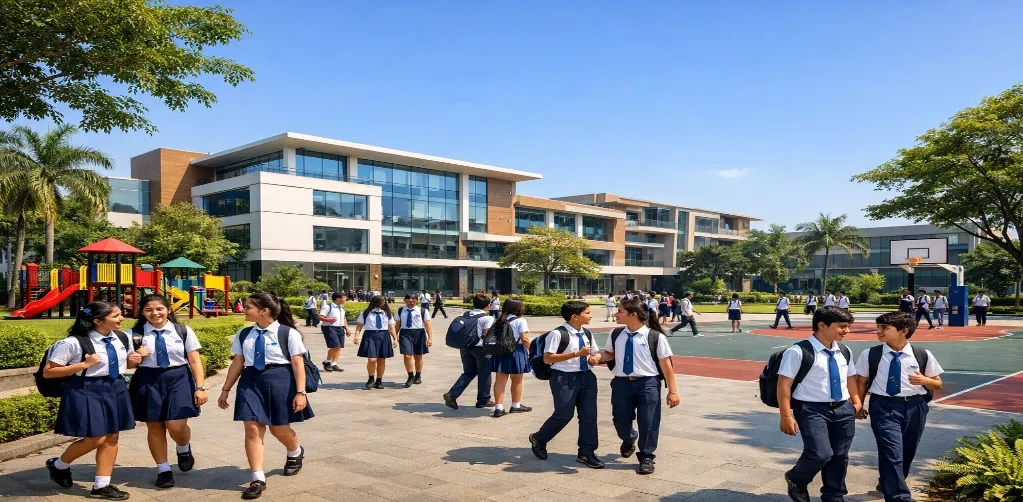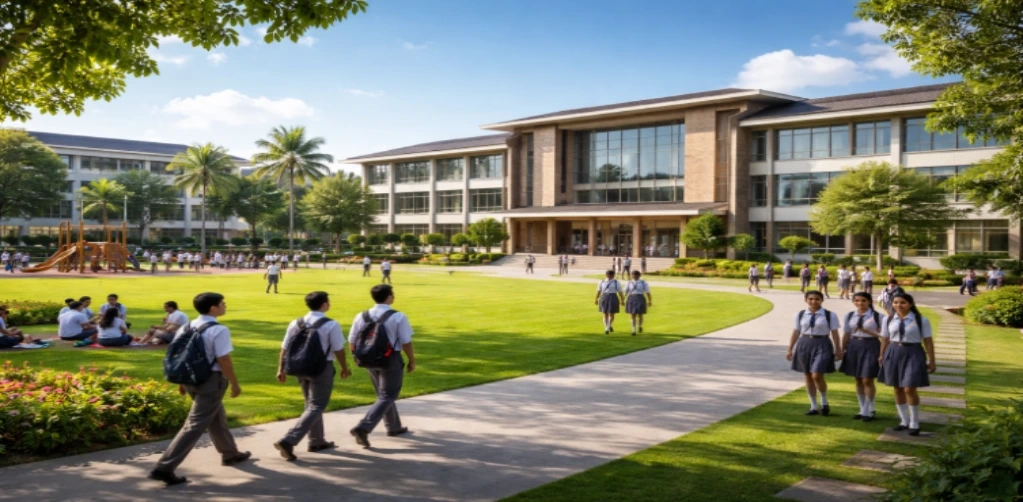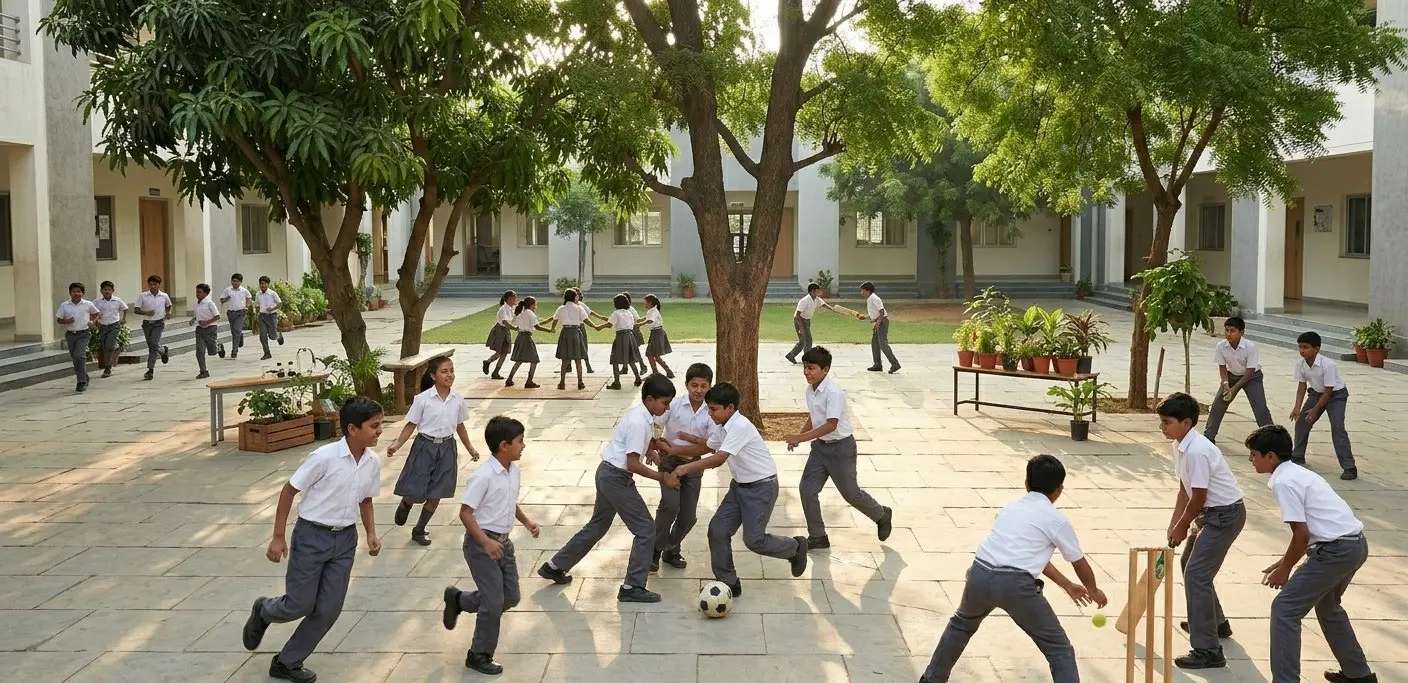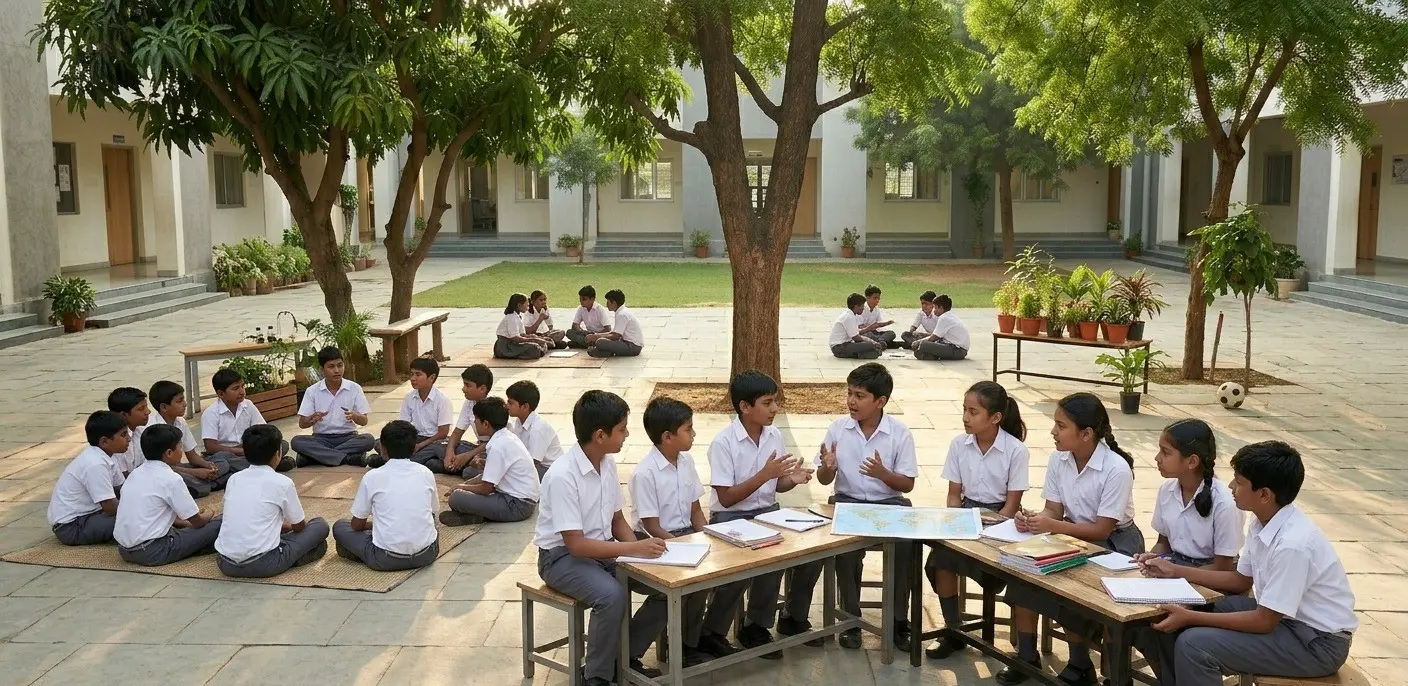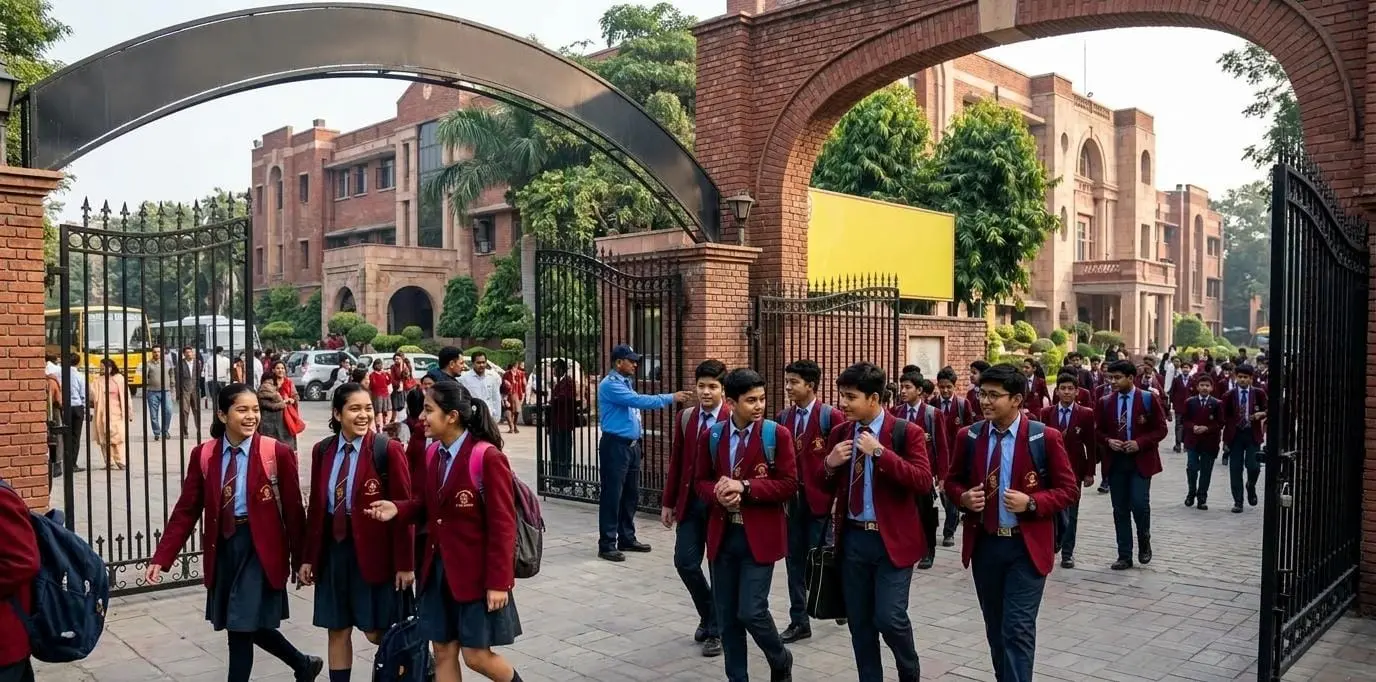
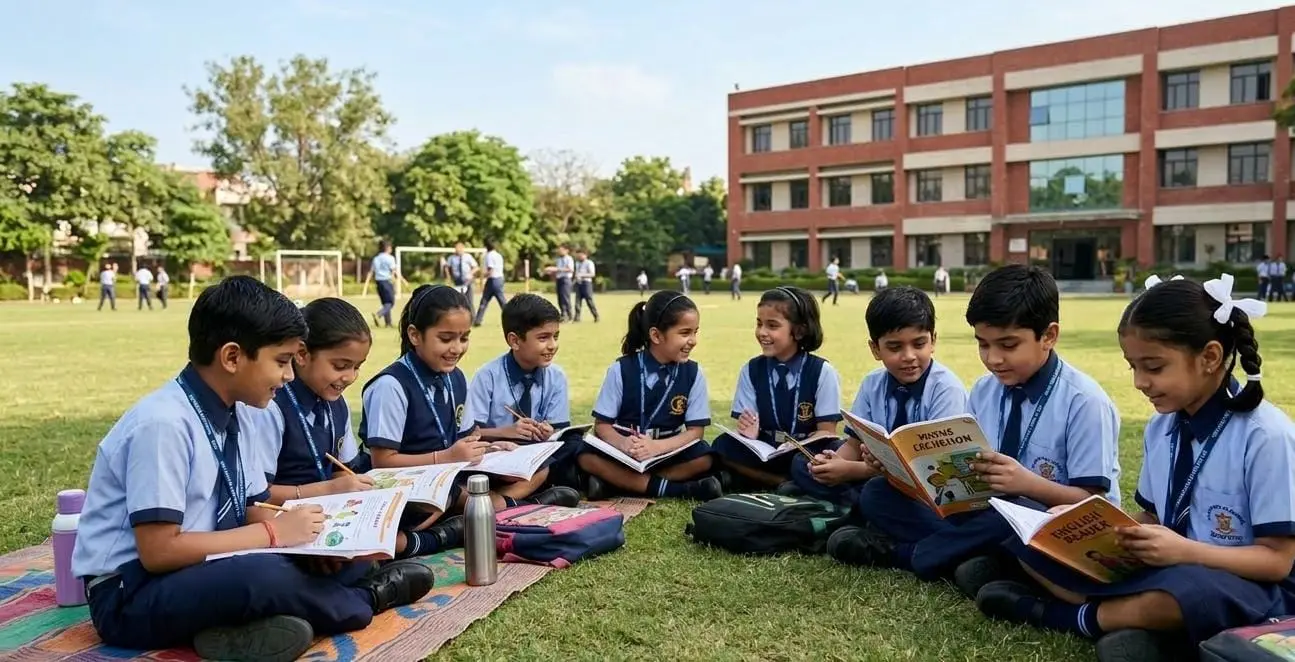
Choosing among CBSE schools in India can feel overwhelming, mainly because no single official national ranking settles the decision. This parent-first guide explains how many CBSE schools in India there are, what actually makes a school worth shortlisting, how to compare fees and admissions, and which schools are commonly mentioned across cities.
Important editorial note: the schools mentioned below are not being ranked in this guide. They are simply worth mentioning as part of a parent research shortlist. CBSE’s own SARAS directory is a school affiliation database, not a national “best schools” leaderboard.
Executive Summary
If you are searching for CBSE Schools in India, the clearest starting point is this: India has well over 32,000 CBSE-affiliated schools listed on CBSE’s official SARAS directory, and CBSE itself advises parents to verify a school’s affiliation status before taking admission.
That means the real question is not simply “Which is the number one school?” but rather “Which CBSE school is the right fit for my child’s learning style, commute, wellbeing, and family priorities?”
For most families, the best CBSE school is the one that combines strong teaching, consistent academic systems, meaningful co-curricular exposure, emotional safety, age-appropriate discipline, and transparent parent communication. A school may be famous and still not be the right choice for your child. That is why this guide does not rank the schools mentioned; it helps parents research them more intelligently.
This article also reflects EuroSchool’s broader view of school quality: children do best when academic growth is paired with confidence, curiosity, social-emotional development, and future-ready skills. EuroSchool describes this as Balanced Schooling, supported by its NEP 2020-powered curriculum, 7E instructional design, and wellbeing support.
Why Parents Search for the Top CBSE Schools in India
Few school decisions feel as emotionally loaded as choosing the right board and campus. Parents are not just comparing buildings or brochures. They are trying to predict where their child will feel confident, supported, and seen.
That is why search terms like top CBSE schools in India, CBSE schools in India, and how many CBSE schools in India remain so common. Parents want clarity, trust, and a better decision-making framework, not another glossy list.
Online school content often falls into two extremes: thin keyword-driven listicles, or pages that read like advertisements rather than genuine guidance. Neither answers the deeper parent question of how to know whether a school is genuinely right for a specific child. This guide is built to close that gap.
What Are CBSE Schools in India
CBSE schools in India are institutions affiliated with the Central Board of Secondary Education. They follow CBSE’s academic framework, curriculum guidelines, and examination system, and the board’s Academic Unit says it works to ensure academic excellence through curriculum, guidelines, enrichment, and capacity-building support for affiliated schools.
CBSE is often preferred by families looking for a structured national curriculum, a broad footprint across India, and continuity for transfers between cities. The board’s competency-based education framework focuses on demonstration of learning outcomes, real-world application, and formative assessment rather than pure memorisation.
That matters because parents are not only asking whether a school follows CBSE; they are asking how CBSE teaches. Two schools may share the same board and still feel completely different, one worksheet-heavy and exam-driven, another blending conceptual learning, projects, arts, sports, and wellbeing.
EuroSchool’s own positioning is relevant here. The school states that its CBSE and ICSE curriculum design is aligned with NEP 2020 principles and built on a 7E instructional model, intended to develop rational and creative thinking rather than reduce school life to rote performance alone.
How Many CBSE Schools Are There in India
According to CBSE’s official SARAS directory, the network includes more than 32,000 CBSE-affiliated schools across India and abroad, and the precise count shifts slightly as affiliation status changes year to year.
That scale alone explains why the search for “the best” school becomes confusing. With tens of thousands of affiliated schools, families need better filters than popularity or hearsay. They need to narrow options by verified board affiliation, city, commute, school culture, teaching quality, and affordability.
CBSE has also publicly advised parents to verify a school’s affiliation status, and up to which class the affiliation is granted, before enrolling their child. That step is not optional; it is foundational to a safe decision.
So when parents ask how many CBSE schools in India exist, the more useful follow-up question is this: “Out of all of them, how do I identify the few that deserve a real visit?” That is where this guide becomes more practical than a plain directory page.
Why CBSE Continues to Matter for Indian Families
CBSE remains a strong choice for many families because it offers national portability, a consistent curriculum framework, wide geographic availability, and a growing focus on competency-based learning. For parents, this translates into five practical advantages.
The first is mobility. If a family relocates between Indian cities for work, the large footprint of CBSE schools in India can make transitions less disruptive than shifting between entirely different board ecosystems.
The second is curricular familiarity. CBSE’s published curricula and academic support give parents a clearer picture of progression from one stage to the next, which reduces surprises even though school-to-school differences remain.
The third is alignment with contemporary learning goals. The board’s competency-based resources explicitly push towards real-world application and active learning, so the old assumption that “CBSE means rote learning” is increasingly outdated.
The fourth is range. CBSE includes highly selective urban private schools, central government schools such as Kendriya Vidyalayas, residential models such as Jawahar Navodaya Vidyalayas, and a huge mix of independent institutions across budget levels.
The fifth is choice within structure. CBSE’s curriculum spans languages, core subjects, electives, health and physical education, and art education, so the board is structured but not as narrow as many parents imagine.
Is There an Official Ranking of the Top CBSE Schools in India
There is no official CBSE page that lists even a single national ranking of the “top CBSE schools in India.” CBSE’s SARAS platform is an affiliation directory and the CBSE’s public guidance is for the purpose of affiliation verification not school ranking. Any “top school” list online is therefore a private editorial or commercial shortlist, not an official board-issued ranking.
This matters because ranking language can mislead parents. A school may appear on multiple lists because it is well known, because it spends heavily on visibility, or because it is popular in one city. None of that automatically means it is the best match for your child.
A more parent-centred approach is to think in terms of shortlisting criteria instead of rankings: verified affiliation, age-stage fit, teaching quality, student support, co-curricular depth, safety and wellbeing, commute, fee fit, communication style, and long-term progression.
That shift moves the conversation from “Which school is famous?” to “Which school will help my child flourish?” That is a far more useful question for any family.
What Actually Makes a School “Top” From a Parent Perspective
A genuinely strong CBSE school is rarely defined by marks alone. Parents may begin with reputation, but they stay for something deeper: the school’s daily culture.
The strongest schools usually do five things well. They make concepts clear, inspire confidence in students, develop safe relationships with adults, offer real-life experiences outside the textbook, and communicate regularly with parents.
This is evident in public school roundups. Shiksha frames the challenge as the need to assess teacher proficiency, quality of education, activities and infrastructure. While parent-oriented content from Yellow Slate similarly relies on teaching quality, facilities and overall development when talking about why schools get shortlisted.
EuroSchool’s own language reflects what many wise parents are seeking: a balanced blend of academics, co-curricular learning, passionate educators, digital resources, and wellbeing support. On its site, EuroSchool positions this as Balanced Schooling, supported by NEP-informed curriculum design and structured wellbeing programmes.
The takeaway is simple. A top school is not just one that prepares students for exams. It is a school that helps children become more capable, more grounded, and more future-ready.
Schools Worth Mentioning in a Parent Shortlist
These schools are mentioned because they commonly appear in public parent discussions, city-wise shortlists, or official systems. They are not ranked here and should be treated as starting points for deeper research rather than a final verdict.
Delhi Public School, R.K. Puram
DPS R.K. Puram remains one of the most visible names in conversations about strong CBSE schooling, offering classes from Nursery to XII. Parents mention it for legacy reputation and long-standing academic culture, but should still verify current admission criteria, culture, and student support systems for their child.
EuroSchool CBSE Campuses
For families looking for a more contemporary private-day-school model, EuroSchool is worth mentioning because its campuses in cities such as Bengaluru and the Mumbai region offer CBSE education framed around balanced schooling, digital learning, and future-readiness. Parents should verify which nearby campus offers CBSE versus ICSE, grade availability, and fee structure.
The Mother’s International School, New Delhi
Shiksha’s Delhi shortlist of CBSE schools includes The Mother’s International School among the names parents frequently explore for its legacy standing and consistent shortlist presence.
Vasant Valley School, New Delhi
Vasant Valley School also appears on public Delhi shortlists under commonly searched CBSE school options, recognised for long-standing academic reputation.
Amity International School, Saket
Amity International School, Saket is featured often when parents compare established private options in Delhi, largely for its visibility and infrastructure recall.
National Public School, Koramangala, Bengaluru
National Public School, Koramangala is one of the most commonly discussed Bengaluru names in private school research. Yellow Slate highlights teaching quality and infrastructure in its summary of parent feedback, and the school’s own admissions pages show active, structured registration processes.
Kendriya Vidyalaya
Kendriya Vidyalaya deserves mention because they represent a very different but important benchmark within CBSE schools in India. The official KVS fee page shows tuition is nil for Classes 1 to 8, which is significant for families prioritising affordability and system consistency.
Jawahar Navodaya Vidyalaya
JNVs are another category worth including in any serious conversation about top CBSE schools in India, especially for families who value public education excellence. The official Navodaya Vidyalaya Samiti site confirms these are co-educational residential schools, fully financed and administered by the Government of India, with students appearing for CBSE board examinations.
Sardar Patel Vidyalaya, New Delhi
Sardar Patel Vidyalaya appears in public shortlist content and is commonly associated with strong teaching, reputation, and facilities, while fees are noted as a consideration for some families. Parents should verify the current fee schedule directly with the school.
Other Names Parents Commonly Mention
Depending on city and search source, public shortlist content also mentions names such as Sanskriti School, Modern School, and St. Xavier’s schools in broader “best schools” discussions. Always verify current board offering, grade-level fit, and admissions details on official school pages before assuming anything.
That last point matters. In school research, visibility is not the same as suitability.
School Type | Typical Fee Range | Governance | Best Suited For |
Premium private CBSE schools | Moderate to high, varies widely by city and campus | Independent or trust-run, CBSE-affiliated | Families wanting strong infrastructure and broad co-curricular access |
Kendriya Vidyalaya (KV) | Very low; nil tuition for Classes 1 to 8 | Central government, autonomous body under the Ministry of Education | Families prioritising affordability and national consistency |
Jawahar Navodaya Vidyalaya (JNV) | Free, including board and lodging, with a small monthly contribution from Class 9 | Central government, residential, merit-based entry | Rural and talented students seeking a residential public option |
EuroSchool and similar balanced-model schools | Moderate to premium, varies by campus | Private group-run, CBSE or ICSE affiliated | Families wanting academics paired with wellbeing and co-curricular depth |
How to Compare Fees Across CBSE Schools Without Getting Misled
Fees are one of the most stressful parts of school search because they are often hard to compare fairly. Some schools publish detailed schedules; others share only enquiry-based details. Many parents look only at tuition and forget transport, uniforms, books, and activity charges.
The safest way to think about fees is by school category rather than a single number. Official KVS pages show modest, transparent charges compared with premium private schools, while JNVs are fully financed public residential schools with very limited charges. At the private-school end, published listings show far wider variation depending on city and facilities.
A better parent question than “What is the cheapest?” is “What am I actually paying for?” A higher fee may reflect stronger facilities, lower ratios, richer co-curricular access, or better safety systems, but it can also simply reflect brand premium.
When reviewing fees, ask for:
- Annual tuition
- One-time admission or enrolment charges
- Transport fees
- Uniform and books
- Activity or technology charges
- Refund policy
- Fee increase history over the last two to three years
That checklist often tells parents more than a brochure headline.
Admission Criteria: What Parents Can Usually Expect
Admission criteria vary by school, but most CBSE schools follow a predictable sequence: application form, document submission, age or grade eligibility checks, an interaction or assessment where applicable, and final confirmation based on seat availability.
EuroSchool’s own admissions page outlines a counsellor interaction, prospectus collection, document submission, and a child skill-assessment session, along with typical document requirements such as birth certificate, transfer certificate where applicable, report card, photographs, and address proof.
For parents, the practical message is this: start earlier than you think you need to. High-demand schools can have limited seats and city-specific deadlines, with different rules for entry points such as Nursery, Grade 1, Grade 9, or Grade 11.
Documents Parents Commonly Need
Most schools will ask for some combination of a birth certificate, passport-sized photographs, address proof, ID proof of parents, previous report card, transfer certificate for school changes, and an immunisation record for pre-primary admissions in some schools.
That does not sound complicated, but in practice many families lose time because they start gathering documents after applications open. A smoother approach is to create a digital admissions folder before shortlisting even begins.
A Practical Parent Framework for Choosing the Right CBSE School
This is the section most parents actually need: not another generic list, but a decision-making framework.
Verify Affiliation First
Go to the official CBSE SARAS directory and confirm that the school is affiliated, active, and recognised up to the class level your child needs. CBSE’s own guidance tells parents to do exactly this.
Decide Your Non-Negotiables Before Visiting
Some parents say they want the “best” school, but what they really need is clarity on priorities: a short commute, strong sports, a calmer culture, or fees within a defined range. Until that is clear, every school visit feels impressive and confusing at the same time.
Look at Teaching Quality, Not Just Facilities
A large atrium cannot replace a good classroom. Ask how concepts are taught, how weak areas are identified, and how teachers support different learning paces. EuroSchool, for example, stresses passionate educators and structured learning design through its curriculum framework.
Ask What “Holistic Development” Means in Timetable Terms
Nearly every school uses the word holistic. Far fewer can show what it means in practice. Does the timetable genuinely protect time for arts, sports, clubs, and reflection, or are these treated as optional extras?
Evaluate Wellbeing Systems Seriously
A child who is academically capable but emotionally withdrawn is not thriving. Ask whether the school has counsellors, social-emotional learning practices, anti-bullying systems, and teacher support structures in place.
Measure Safety Beyond Slogans
Safety is not one line in a brochure; it is a system. Schools should be able to explain campus access control, CCTV coverage, bus safety, fire drills, and medical support with real specificity.
Check Student-Teacher Ratio and Access to Adults
Not all ratios are equal, and a single school may have different ratios by stage. EuroSchool’s admissions page, for instance, lists ratios of 1:12 in nursery and around 1:34 in primary and secondary sections. Even when evaluating a different school, this is the kind of breakdown worth requesting.
Ask About Digital Learning Without Confusing It for Screen-Heavy Learning
Digital learning is valuable when it improves feedback, personalisation, revision, and concept clarity. The right question is not “Does the school use technology?” but “Does the technology actually help my child learn better?”
Understand the School-Home Communication Culture
How often do parents receive meaningful updates? Are updates only about discipline and scores, or also about growth and support strategies? Schools that communicate well reduce anxiety for both parents and children.
Visit During Active School Hours if Possible
A quiet campus tour on a non-working day tells you almost nothing. The real school reveals itself when children are present, so watch transitions, teacher tone, and whether children look tense or genuinely engaged.
Think Long Term, Not Just Entry Point
A lovely pre-primary environment does not guarantee a strong middle or senior school experience. Ask how the school handles subject depth, academic counselling, and post-Grade-10 pathways.
Trust the Child-Fit Signal
The best shortlist often comes down to a simple but powerful question: can you see your child becoming more confident here? That question is more valuable than many rankings.
Common Mistakes Parents Make While Shortlisting CBSE Schools
The first mistake is choosing prestige over fit. A famous school can still be the wrong environment for a child who needs warmer mentoring or calmer pacing.
The second mistake is over-focusing on board results. Good results matter, but they are an outcome, not the whole school; results achieved through excessive pressure carry a hidden long-term cost.
The third mistake is ignoring the daily commute. A brilliant school ninety minutes away each way can quietly exhaust a child, affecting sleep, sports participation, and homework energy.
The fourth mistake is comparing fees without comparing value. Low fees do not automatically mean poor quality, and high fees do not automatically mean excellent learning.
The fifth mistake is failing to verify affiliation, something CBSE itself warns parents about directly. No family should skip that step.
The sixth mistake is treating co-curriculars as optional decoration. In reality, sports, arts, and social-emotional learning often shape confidence and resilience just as strongly as academics do.
Why Balanced Schooling Is Becoming a Smarter Parent Filter
Parents today are more aware of something schools have always known: children do not grow in neat academic boxes. A child may be strong in maths and anxious in social settings, or articulate but hesitant in structured tasks. A strong school sees the whole child.
That is why the idea of Balanced Schooling is increasingly useful, not only as EuroSchool’s philosophy, but as a general parent decision filter. It strikes a balance between academics, co-curricular activities, theory and practice, and teachers and digital tools.
For parents, Balanced Schooling is not a slogan; it is a question. Does the school make space for a child to become capable, not just examinable?
A school that gets this balance right often shows certain signs: lessons feel conceptual rather than mechanical, children get exposure beyond textbooks, emotional safety is taken seriously, adults are approachable, and sports and arts are structured rather than token.
That is the kind of environment many modern families are actually seeking when they type top CBSE schools in India into a search bar.
Where EuroSchool Fits in This Conversation
When parents research CBSE schools in India, many are genuinely looking for something specific, even if they do not phrase it that way: not just academic output, but academic quality, and not just activity, but meaningful holistic development.
That is where EuroSchool fits naturally into the conversation. Its official positioning centres on a balanced schooling philosophy supported by an NEP 2020-informed curriculum, digital learning tools, co-curricular opportunities, and dedicated wellbeing support through its Centre of Wellbeing.
For parents, that translates into a genuinely strong proposition. EuroSchool is worth serious consideration for families who want balanced academic excellence combined with child-centric learning and visible attention to safety, without this making it the automatic right choice for every child.
A Practical Shortlist Model for Parents
There is no need to compare twenty schools; five is usually enough to research deeply without getting lost.
- Verify board affiliation on the CBSE SARAS directory.
- Filter by commute and budget.
- Assess teaching philosophy and student support.
- Visit during a working school day.
- Ask your child what they felt, not just what you felt.
- Review admissions steps and fees carefully.
- Make the final decision with both head and heart.
The best shortlist is not the longest one. It is the clearest one.
Conclusion
India’s CBSE school landscape is far too large and varied for any honest article to settle it with a simple ranking. With well over 32,000 affiliated schools on the official CBSE directory, parents need better tools than hype: verification, sharper comparison criteria, and a clearer picture of what quality looks like in real school life.
That is why the right approach to CBSE Schools in India is not to chase a mythical universal topper. It is to identify schools worth mentioning, understand what kind of learner your child is, and choose the environment that will help your child grow with confidence, curiosity, and joy.
And once more, because it matters for editorial integrity: the schools mentioned in this guide are not being ranked. They are simply worth mentioning as part of a parent research shortlist.
Key Takeaways
- India has well over 32,000 CBSE-affiliated schools, so parents need a shortlist strategy, not a random search.
- CBSE advises parents to verify affiliation before admission; always do that first.
- There is no official CBSE national ranking of the best schools. Treat online rankings as private lists, not official truth.
- The schools mentioned in this guide are not ranked; they are worth mentioning for parent research.
- The best school for a child is generally one that balances academics, wellbeing, confidence and future-ready learning.
- Well-known private schools are not the only options. KVs and JNVs, public systems, also deserve serious consideration.
- EuroSchool is relevant for families considering a Balanced Schooling model that incorporates academics, digital learning, co-curricular development and well-being support.
FAQ Section
Are CBSE schools in India officially ranked by CBSE?
No, CBSE provides information on affiliation and academics but not an official national “top schools” ranking list. Published rankings should be regarded by parents as private editorial lists, not as verdicts issued by a board.
Why do parents still search for the top CBSE schools in India?
This is because families want a shortlist of names they can trust before they go any deeper in comparison. The search is really about reducing uncertainty, not prestige chasing.
What should matter more than rank?
Teacher quality, child fit, emotional safety, commute, co-curricular opportunities, fee fit, and communication culture should matter more than rank.
Are government CBSE schools worth considering?
Absolutely. Kendriya Vidyalaya and Jawahar Navodaya Vidyalaya remain important parts of India’s CBSE ecosystem, especially for families seeking affordability or strong public education pathways.
Can a school be good academically but still wrong for my child?
Yes. A high-pressure academic culture may suit one child and undermine another. Fit matters as much as reputation.
How many CBSE schools are there in India?
According to CBSE’s official SARAS directory, there are well over 32,000 CBSE-affiliated schools in India at present, and the number shifts slightly as affiliation status changes.
What are CBSE schools in India?
CBSE schools in India are schools affiliated with the Central Board of Secondary Education and governed by its academic, curriculum, and examination framework.
Which are the top CBSE schools in India?
There is no official national CBSE ranking. Schools often mentioned in public parent shortlists include DPS R.K. Puram, Sardar Patel Vidyalaya, National Public School Koramangala, Kendriya Vidyalaya, Jawahar Navodaya Vidyalaya, and selected urban private schools. These are not ranked here; they are simply worth mentioning.
How can parents verify whether a school is really CBSE-affiliated?
Parents should check the official CBSE SARAS directory and confirm the school’s affiliation status and the classes up to which affiliation is granted, as CBSE has specifically advised.
What is the fee range for CBSE schools in India?
Fees vary widely. Public-system schools like KVs are far more affordable than most private urban schools, while JNVs are heavily supported public residential schools. Moderate to high annual fees are charged by premium private CBSE schools depending on the city and the facilities provided.
Why do many parents prefer CBSE schools in India?
Many parents opt for CBSE as it is available across the country, has a structured curriculum, is portable from city to city, and has more and more emphasis on competency-based, real-world learning.
Where does EuroSchool fit among CBSE school options in India?
EuroSchool is a good option for families looking for a child-centric, balanced model that combines the CBSE or ICSE curriculum with the NEP 2020-inspired curriculum design, digital learning and wellbeing support.