
Imagine a child who struggles with reading, writing, or staying focused in class. According to UNESCO, learning disabilities affect at least 10–12% of school-going children in India. Research data shows that the prevalence of learning disabilities among Indian children varies from 2.16% to 30.77% across different studies.
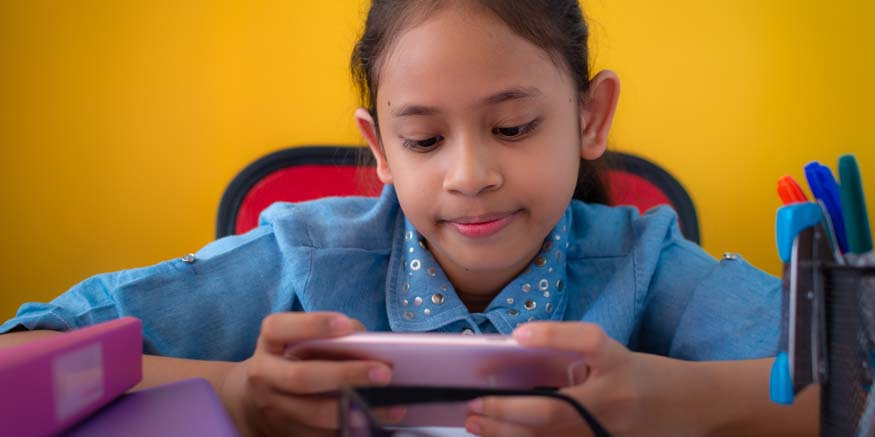
In today’s technology-driven world, children with learning disabilities are experiencing transformative changes. With just a tap on a gadget, they can learn to read, write, plan, and manage daily challenges more effectively. As educators or parents of children with learning disabilities, we often rely on various technologies and support systems to assist them in their education and everyday lives.
In this blog, we will explore how technology helps children with learning disabilities navigate their daily routines and academic challenges.
Understanding Learning Disabilities (LD)
According to the Diagnostic and Statistical Manual of Mental Disorders, Fifth Edition, Text Revision (DSM-5-TR), a learning disability is a neurodevelopmental disorder that results in substantial deficits in academic learning.
As defined by the American Psychological Association (APA) Dictionary, learning disabilities encompass challenges in education that stem from perceptual disabilities, traumatic brain injury, and minimal brain dysfunction. This definition excludes learning difficulties caused by visual impairment, hearing loss, intellectual developmental disorder, emotional disturbances, or environmental, cultural, or economic factors.
Types of Learning Disabilities
- Dyslexia: Difficulty in reading
- Dysgraphia: Challenges in writing and handwriting
- Dyscalculia: Struggles with mathematics and calculations
- Auditory Processing Disorder: Difficulty processing information through listening
- Language Processing Disorder: Difficulties in language comprehension
- Nonverbal Learning Disorder: Challenges with spatial relationships and nonverbal cues
- Visual Perceptual/Visual Motor Deficit: Difficulties with visual coordination and spatial awareness
Mental health practitioners recognise Autism Spectrum Disorder (ASD) and Attention Deficit Hyperactivity Disorder (ADHD) as related conditions that impact learning, although they are not classified as specific learning disorders.
Millions of individuals worldwide face learning impairments, which create significant challenges in both educational and daily life settings. Fortunately, assistive technology has revolutionised the way children with learning difficulties overcome obstacles, gain independence, and maximise their potential.
Impact of Assistive Technology (AT)
Technology plays a crucial role in fulfilling everyday human needs by integrating scientific advancements. Assistive Technology (AT) includes tools and services designed to enhance the capabilities of students with disabilities.
For children with learning disabilities, AT serves as an invaluable tool that helps them overcome specific challenges. Research has demonstrated that AT empowers children by leveraging their strengths while addressing areas of difficulty. While AT does not cure learning disabilities, it significantly improves their ability to perform tasks effectively.
It is important to note that AT does not replace remedial education, which remains essential for addressing weaknesses. However, studies indicate that AT can help with skills like reading and spelling while also fostering self-confidence and independence. These tools enable children to work independently, reducing their reliance on others.
Assistive Technology Tools for Learning Disabilities
Listening Support Tools
Assistive technology tools support individuals who struggle with spoken language, providing assistance in classroom lectures or meetings with multiple presenters.
Tools:
- Paper-Based Computer Pen – Records and correlates audio with written notes on special paper.
Example Product: Echo Smartpen by Livescribe - Personal FM Listening System – Sends the speaker’s sound directly into the listener’s ear.
Example Products:- Easy Listener
- Personal Listening System (Williams Sound)
- AT-216 Personal FM System (Comtek Communications)
- Variable Speed Recorder – Enables users to record and replay spoken material.
Example Product: Independent Living Aids
Mathematics Support Tools
Assistive technology provides visual and auditory support to help individuals solve mathematical problems more effectively.
Tools:
- Electronic Math Worksheets – Software that organises and aligns mathematical challenges on a computer screen.
Example Product: MathTalk - Talking Calculators – Features a built-in voice synthesiser that reads aloud numbers, symbols, and operations.
Example Products:- Independent Living Aids (Various talking calculators)
- AbleData (Various talking calculators)
Organisation & Memory Tools
These tools help individuals manage their schedules, tasks, and notes for better organisation and data retrieval.
Tools:
- Free-Form Database Software – Allows users to create and save electronic notes.
Example Products:- Microsoft OneNote
- PlanPlus
- Information/Data Manager – Manages calendars, task lists, and contact information.
Example Products:- Memo to Me
- Palm
- Watch Minder
Reading Support Tools
Reading difficulties can be significantly improved through assistive technology that enhances text presentation, decoding, fluency, and comprehension.
Tools:
- Audiobooks & Publications – Recorded books available in audiocassettes, CDs, and MP3 formats allow users to listen to text.
Example Products:- com
- Bookshare
- Kurzweil 3000™ Literacy and Reading Programs
- Learning Ally
- Optical Character Recognition (OCR) – Scans printed material and reads it aloud using speech synthesis.
Example Product: The Quicktionary Reading Pen
Conclusion
Millions of children worldwide are affected by learning disabilities. Assistive technology plays a transformative role in empowering them to overcome obstacles, achieve independence, and reach their full potential.
This blog highlights various assistive technology products that can be beneficial for educators and parents supporting children with learning disabilities. By integrating these tools into daily learning routines, children can gain confidence and develop essential skills needed for success.