
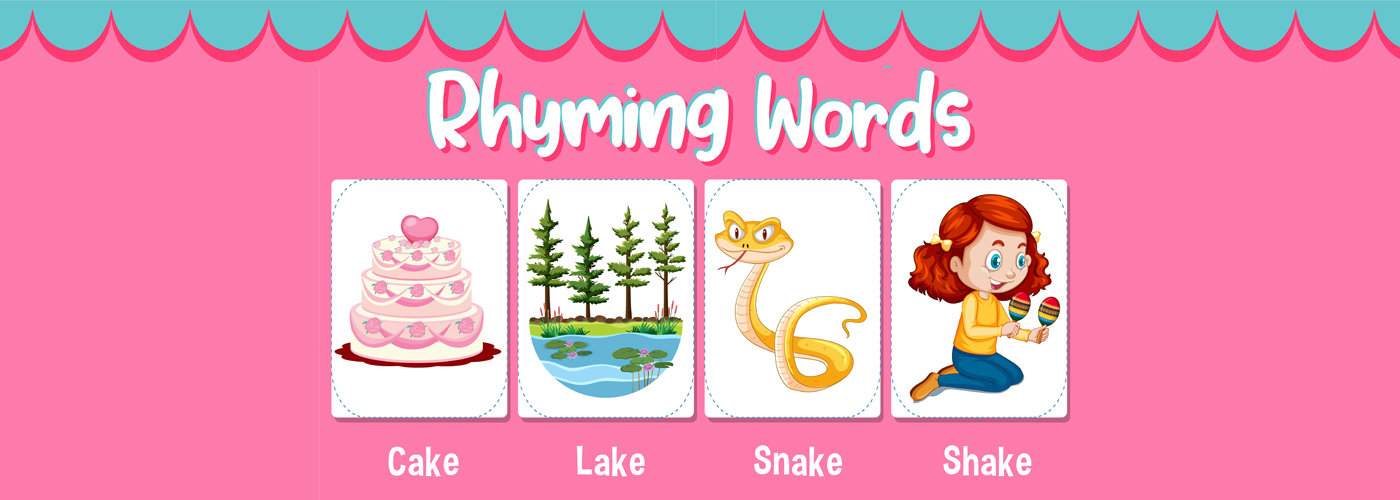
Rhyming words are magical. They assist children in listening to patterns, they love language, and they gain confidence in reading and writing. Here we have provided a rhyming word list containing more than 100 words, rhyming words for kids, and a rhyming word worksheet containing an exciting rhyming activity. The tools assist the English-learning kids in learning in a meaningful manner.
What Are Rhyming Words?
Rhyming words are words that are pronounced in a similar manner at the end of the words. An example is that cat and hat rhyme as they end in the -at sound. Others: dog/fog, pen / hen, sing/ring. Due to sound homonyms, there are numerous rhyme families. As rhymes are concerned, they have to do with sound, rather than with spelling (sky and pie rhyme, but spelled differently).
Why Learn Rhyming Words?
– Develops phonological awareness (sounds, hearing and manipulating).
– Name facts by combining words into word families in order to create vocabulary.
– Rhymed reading and speaking happen.
– Boosts confidence in early literacy.
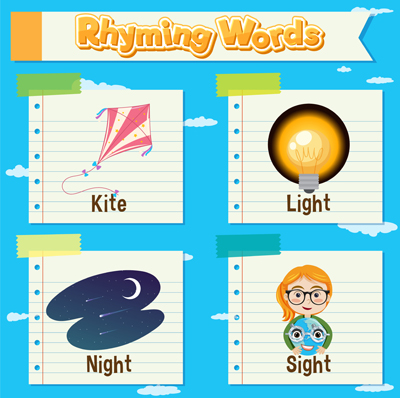
Sample Rhyming Word List
– at family: cat, hat, mat, rat, bat, sat, pat, flat
– un family: run, sun, bun, fun, gun
– og family: dog, fog, log, hog, frog
– ap family: lap, map, tap, nap, cap
– en family: pen, hen, men, den
– et family: set, pet, net, get, wet
– ing family: ring, sing, king, wing
– ip family: lip, dip, sip, ship
– ook family: book, look, took
– ake family: lake, bake, make, take
– ight family: bright, light, night, might
– ow family: cow, now, how, bow
– ear family: hear, gear, near, dear
Fun Rhyming Activities & Worksheets
- Match the Rhymes: Draw lines to connect words that rhyme.
- Fill in the Blank: “The cat sat on the ___.”
- Word Sort: Group words into rhyme families.
- Treasure Hunt: Find hidden rhyme cards.
- Make Your Own Rhymes: Using the word bat, say the rhymes, such as hat, sat, rat.
- Fill-ins: Whole verses of rhymed words.
- Rhyming Bingo: Rhyming words are used on bingo cards.
- Flip Books: Make word family flip books.
Tips for Teaching Kids Learning English with Rhymes
– Start with simple one-syllable words.
– Use visuals like pictures.
– Play rhyming games to make learning fun.
– Read rhyming poems and songs aloud.
– Encourage children to invent rhymes.
– Review rhyme families often to reinforce memory.
Conclusion
Playing with a rhyming list of more than 100 words, fun rhyming activities, and worksheets, children have an opportunity to learn English and have fun. Learning rhymes is not only memorization–it will teach kids to feel the rhythm of the language. Rhymes assist phonics, vocabulary, fluency, and lifelong reading.
Are you enjoying reading our content? Do visit EuroSchool to explore more!!