
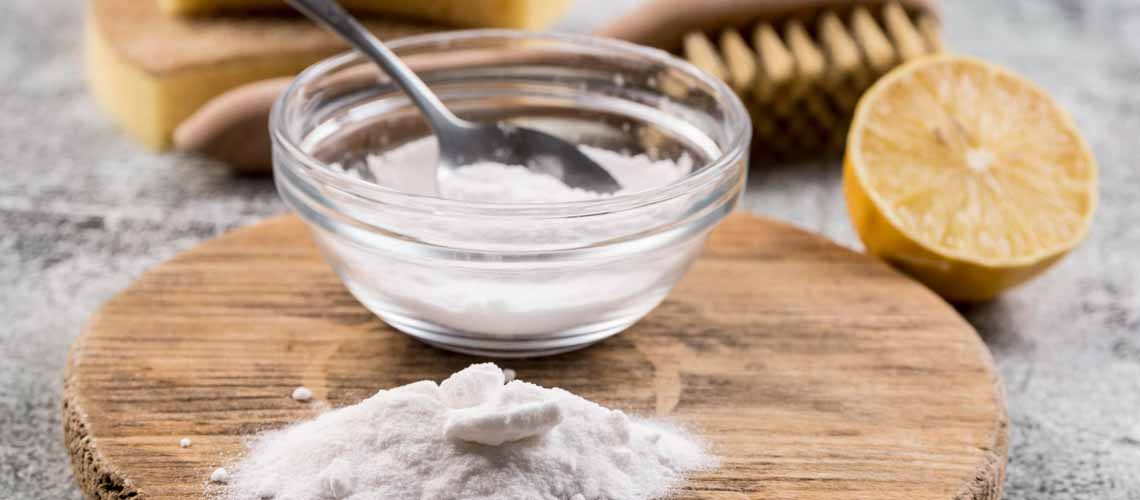
Sodium Bicarbonate Formula: Properties & Application
Your child must have always been intrigued by seeing a cake growing in the oven or a volcano explode in the course of a science project, so he or she has already seen sodium bicarbonate in action! The elementary domestic product is often referred to as baking soda and it is one of the most powerful substances that has captivating chemical features and various uses at home and in industries. We will talk about the sodium bicarbonate formula, its characteristics, uses, and reasons why we think that it is one of the most interesting examples of learning the basics of chemistry.
1. What Is Sodium Bicarbonate?
Sodium bicarbonate is white crystalline powder, which is slightly alkaline in nature. It is a chemical compound of sodium (Na), hydrogen(H), carbon (C) and oxygen (O). You can likely recognize the name more as baking soda that is used in kitchens to bake light cakes, remove smells and clean surfaces. However, other than domestic application, sodium bicarbonate is also used in medicine, fire safety and in labs. It is also quite an illustration of the way chemistry is connected to the real-life!
2. Sodium Bicarbonate Formula
The chemical formula of sodium bicarbonate is: NaHCO₃
Here’s what it represents:
Na = Sodium
H = Hydrogen
C = Carbon
O₃ = Three Oxygen atoms
Thus, the number of sodium (Na + ) ions is equal to the number of bicarbonate (HCO 3 -) ions. These ions form an ionic material which is stable and highly versatile.
Molecular Mass: NaHCO₃ = 84 g/mol
3. How Is Sodium Bicarbonate Made?
Solvay Process is a process that is typically involved in industries to produce sodium bicarbonate even though it is also used to produce sodium carbonate (washing soda). In simple terms:
- Carbon dioxide (CO₂) is passed through a solution of sodium carbonate (Na₂CO₃).
- This reaction produces sodium bicarbonate (NaHCO₃), which then precipitates out as a solid.
Equation: Na₂CO₃ + CO₂ + H₂O → 2NaHCO₃
4. Physical Properties of Sodium Bicarbonate
Here are the properties of sodium bicarbonate that make it so useful:
- Appearance: White crystalline powder
- Taste: Mildly salty and alkaline
- Odour: Odourless
- Solubility: Soluble in water
- pH: Mildly basic (around 8.4)
- Stability: Decomposes on heating
5. Chemical Properties of Sodium Bicarbonate
Sodium bicarbonate is not just another cooking material, it is a substance that best serves as an example of the mechanism of acid/base reaction and thermal disintegration in the field of chemistry.
- a) Reaction with Acids:
NaHCO₃ + HCl → NaCl + H₂O + CO₂
Releases carbon dioxide gas, explaining how baking soda helps cakes rise. - b) Thermal Decomposition:
2NaHCO₃ → Na₂CO₃ + CO₂ + H₂O
CO2, which is contained in fire extinguishers, is released during this reaction. - c) Reaction with Bases:
NaHCO₃ + NaOH → Na₂CO₃ + H₂O
Shows sodium bicarbonate is amphoteric and it reacts with both acids and bases.
6. Uses of Sodium Bicarbonate
Sodium bicarbonate’s versatility makes it one of the most widely used compounds in daily life:
- In Cooking and Baking: Acts as a leavening agent in cakes and breads.
- In Medicine: Used as an antacid and in toothpaste.
- In Cleaning: Natural deodorizer and mild scrub.
- In Fire Extinguishers: Releases CO₂ to put out small fires.
- In Agriculture: Controls fungal growth on plants.
- In Laboratories: Used as a buffering agent to maintain pH.
7. Importance in Everyday Life
Here’s why sodium bicarbonate is an essential part of life:
- Chemistry is exhibited in everyday life, which is found in nearly every home.
- Shows such important concepts as neutralization, gas formation, decomposition.
- Environmentally-safe, non-toxic and friendly, ideal to use at home.
8. Fun Science Activity for Kids
Baking Soda Balloon Experiment:
The Baking Soda Balloon Experiment involves studying how baking soda and vinegar mix in a balloon, resulting in the release of carbon dioxide gas:
Steps:
- Pour vinegar into the bottle.
- Use a funnel to put baking soda into the balloon.
- Attach the balloon to the bottle mouth.
- Let the baking soda fall into the vinegar.
What happens: The balloon inflates as carbon dioxide gas forms, a great demonstration of chemical reactions and gas formation!
9. Quick Recap
Aspect | Details |
Common Name | Baking Soda |
Chemical Formula | NaHCO₃ |
Nature | Mildly basic compound |
Main Reactions | With acids (CO₂ release), heating (decomposition) |
Major Uses | Cooking, cleaning, medicine, fire safety |
Fun Fact | It helps cakes rise and also puts out fires! |
10. Why EuroSchool Makes Science Fun
In EuroSchool, the children are not only taught the scientific concepts of books but they are also taught through practical experiments and real-life examples. Learners are not taught the formulas, but are able to observe chemistry in their daily kitchen and classroom when they study about such compounds as sodium bicarbonate.
Our activity-based learning programs and STEM programs enable us to grow in terms of curiosity, creativity and confidence and build a lifelong interest in science. Ask your child to investigate, experiment and ask questions about it by the use of why, that is where the real learning occurs!
Visit EuroSchool today to explore how we make chemistry fun, interactive, and full of everyday wonder!