List of Reputable Schools in India: A Parent’s 2026–27 Guide to Shortlisting the Right School (Using EuroSchool as Your Reference Lens)
If you’re researching Schools in India, you’re probably not looking for a “famous names” list you’re looking for confidence. The real parent question underneath every Google search is: Will my child be safe, seen, taught well, and genuinely happy here… while still learning seriously? That’s also why people end up typing things like the best school in India or top 10 schools in India at 11:47 pm because when the decision feels high-stakes, we all look for a shortcut.
This blog won’t give you a random national list. Instead, it gives you something far more useful: a clear, parent-friendly framework to evaluate a school the way experienced educators do then a EuroSchool only shortlist you can actually act on (because comparing 50 options is how parents burn out). EuroSchool is a useful reference lens here because it runs a multi-city network and states its schooling approach openly so you can compare “what a school says” with “what a school does,” campus by campus.
Mini Table of Contents
- What does “a good school” really mean in 2026–27 (for Indian parents)?
- How to shortlist without getting misled by rankings and hype
- CBSE vs ICSE vs IGCSE vs IB: how to decide without regret
- The 9-point parent checklist: academics, teachers, wellbeing, safety, culture, fees
- What to ask on your campus visit (the questions that reveal the truth)
- EuroSchool shortlist: campuses parents commonly compare by city
- How to verify claims and make a final decision calmly
- FAQs parents ask before admissions
1) What does “a good school” really mean in 2026–27 (for Indian parents)?
Let’s start with something you might already feel but haven’t said out loud: your definition of “good” has probably changed since you were in school. Today, most parents want four outcomes together (and it’s absolutely reasonable to want them together):
A) Strong academics, but not at the cost of childhood
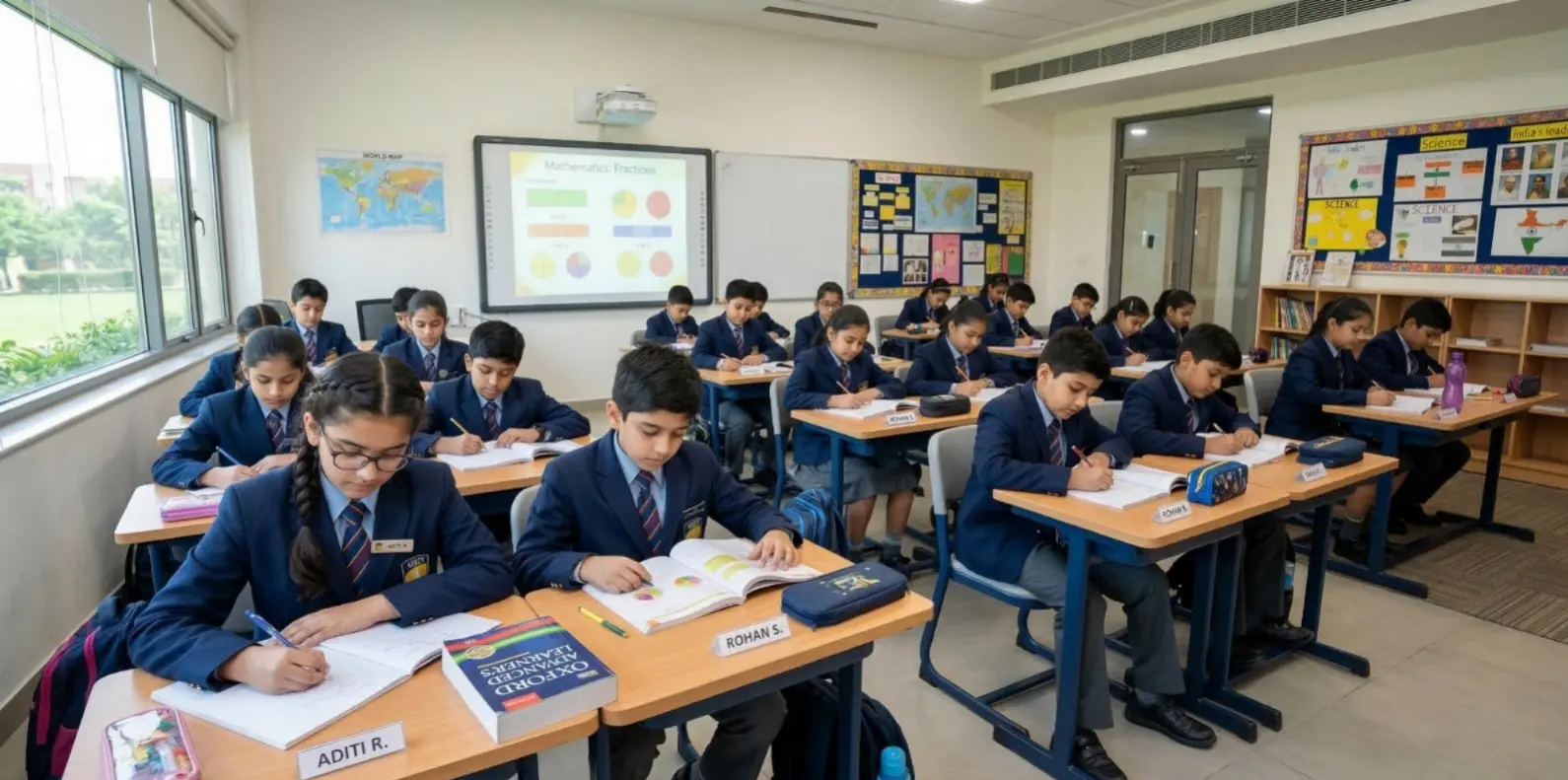
A good school should teach concepts deeply and build consistent learning habits but your child should not start hating Mondays in Grade 2. Ask the school how it balances academic rigour with emotional safety. You’re listening for clear systems, not vague reassurance. The right school protects curiosity while building competence.
B) Teachers who can actually teach (and can explain how they teach)
Facilities matter, but teaching quality is still the engine. EuroSchool itself emphasises trained teachers and an organised approach to classroom learning, which is the kind of thing you should expect any serious school to articulate clearly. Ask how teachers are trained, observed, and supported especially in primary years. When teaching is strong, everything else becomes easier.
C) Wellbeing and safety that are real, not decorative
Safety isn’t just gates and guards. It’s supervision, transport protocols, anti-bullying systems, teacher sensitivity, and how a school responds when a child is struggling. Ask for the process: “If a child reports bullying, what happens next, step by step?” A school’s systems show up in difficult moments, not during open houses.
D) A school culture your child can live in for years
Parents often underestimate culture: the tone of discipline, how mistakes are treated, whether children are allowed to ask “why,” whether teachers use fear as a shortcut. During your visit, notice the child-adult interactions in corridors, reception areas, and common spaces. Culture is what your child experiences every single day.
2) How to shortlist without getting misled by rankings and hype
Many parents start by searching for top schools in India because it feels efficient. But lists can be noisy: they mix different boards, different cities, different fee segments, and often different definitions of “good.”
A calmer approach is to shortlist in two layers:
Layer 1: Practical fit (the non-negotiables)
- Distance and commute time (this matters more than you think)
- Grade availability now and later (especially if you want continuity till 10/12)
- Board options your family is open to (CBSE/ICSE/IGCSE/IB)
- Your child’s temperament (shy, social, anxious, independent, highly active)
Parent guidance: If a school adds 90 minutes of daily travel, your child pays for it first through fatigue and mood. Start with geography.
The best school on paper can be the worst choice in practice if the day-to-day is unsustainable.
Layer 2: Quality fit (the real evaluation)
Now bring in the deeper checklist: teaching, wellbeing, safety, leadership stability, communication, and value for fees.
Shortlists should get smaller before they get smarter.
3) CBSE vs ICSE vs IGCSE vs IB: how to decide without regret
Parents often feel they must “pick the perfect board.” Realistically, you’re choosing a learning style, a transition comfort level, and a future pathway flexibility and then you’re choosing how well a school implements it.
CBSE
CBSE is widely chosen for its structured curriculum and NCERT alignment. EuroSchool states it offers CBSE and ICSE affiliations across its network, which is helpful if you want a consistent school philosophy with a board choice depending on campus.
Often suits families who want:
- A structured learning path
- Easier transitions within India (depending on the child and school)
Important reminder: CBSE can be concept-driven and engaging when teaching is strong; it only becomes “rote” when implementation is weak.
ICSE
ICSE is often perceived as detailed and language-rich, but again, school practices matter more than labels.
Often suits families who want:
- Strong language development and broader subject depth
- A school that manages workload thoughtfully
IGCSE (Cambridge)
Cambridge describes IGCSE as flexible and skill-focused, emphasising enquiry and problem-solving.
Often suits families who want:
- More subject flexibility
- A learning style that rewards understanding and application
IB (Diploma Programme as an example of IB structure)
IB outlines a defined subject framework and higher-level/standard-level choices in the Diploma Programme, reflecting a structured but globally oriented approach.
Often suits families who want:
- Research-based learning, writing, critical thinking
- A globally benchmarked academic experience
Choose the board, yes but choose the classroom reality even more.
4) The 9-point parent checklist that actually predicts a good school experience
This is the heart of the blog. If you use nothing else, use this.
1) Academics: Is learning deep, or just fast?
A school can finish the syllabus early and still produce shallow understanding. What you want is the ability to build concepts steadily especially in maths, science, and language.
What to ask:
- “How do you build reading comprehension by Grade 3?”
- “How do you support children who are strong in concepts but slower in writing?”
- “How do you handle learning gaps without shaming the child?”
Speed is not the same as strength.
2) Primary years: Are foundations protected or rushed?
The school your child attends in Grades 1–5 often determines how confident they feel later. Schools that obsess only over middle-school outcomes sometimes under-invest in foundational skill-building.
Ask for a primary timetable. Look for structured literacy time, numeracy development, play, arts, and movement not just “periods” that feel like miniature high school.
Strong primary years reduce tuition dependence later.
3) Teaching quality: How does the school develop teachers?
EuroSchool highlights trained teachers and a structured teaching approach, and this is a standard you should expect from any premium school you consider.
What to ask (and listen carefully):
- “What training do teachers receive every term?”
- “How do you observe classrooms and support improvement?”
- “How do you ensure consistency when a teacher changes?”
The most expensive building cannot compensate for weak teaching.
4) Assessment: Is it used to guide learning or label children?
Parents don’t mind tests. What they mind is when tests become the only feedback loop.
What to ask:
- “How often do you assess, and what changes after you assess?”
- “Do teachers share actionable feedback or only marks?”
Good assessment improves learning; bad assessment just increases anxiety.
5) Student wellbeing: Is emotional safety built into the system?
A child can be academically fine and still emotionally distressed. Schools differ hugely in how they treat emotions, mistakes, and conflict.
What to ask:
- “How do you handle bullying reports?”
- “Do you have counselling or wellbeing support, and how is it used?”
- “How do teachers respond to wrong answers in class?”
Emotional safety is not “soft” it’s foundational for learning.
6) Discipline: Are children controlled or coached?
A strong discipline system creates self-management, not fear. You want a school that can explain its discipline philosophy clearly.
What to ask:
- “How do you handle repeated behavioural issues?”
- “What happens if a child refuses to participate?”
- “How do you partner with parents when behaviour needs support?”
The best discipline systems teach skills, not just enforce rules.
7) Co-curricular and sports: Is it a timetable priority or a brochure slide?
Some schools claim to value holistic development but cut it first when exams approach. A healthier school protects movement, arts, clubs, and leadership opportunities through the year.
Ask to see the weekly timetable and the annual calendar of activities.
If it matters, it’s scheduled.
8) Infrastructure: Do children use what exists?
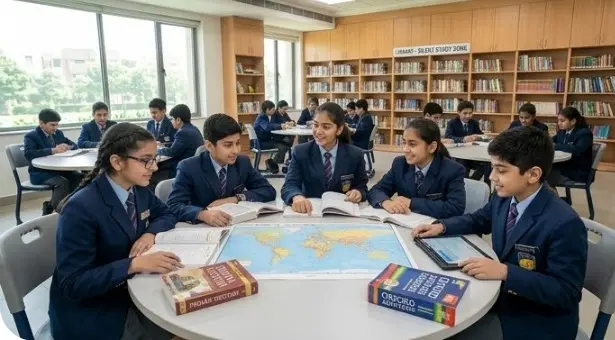
Don’t be impressed by a lab be impressed by lab usage.
What to ask:
- “How often do children use the library each week?”
- “How often do they do hands-on science in middle grades?”
- “Are sports coached and structured or just ‘free play sometimes’?”
Utilisation beats possession.
9) Fees and value: Can the school explain where the money goes?
You’re not just paying for facilities; you’re paying for teacher quality, systems, safety, learning resources, and a stable environment.
What to ask:
- Full fee sheet with inclusions and exclusions (transport, books, uniforms, activities, trips)
- Typical annual increases and what drives them
- Refund and withdrawal policies (where applicable)
Clear schools are transparent schools.
5) What to ask on your campus visit (questions that reveal the truth fast)
Here are the questions that tend to cut through rehearsed answers. Ask them gently, like a parent because you are one but ask them clearly.
The “first month reality” questions
- “If my child cries every morning for two weeks, what do you do?”
- “If my child struggles in maths, what is your support process?”
- “If my child is advanced and bored, what do you do?”
Schools that have systems will describe them calmly and step-by-step.
The classroom culture questions
- “How do teachers respond to incorrect answers?”
- “How do you encourage children to ask questions?”
Curiosity grows where mistakes are treated as learning.
The communication questions
- “When will I hear from you only when there is a problem, or regularly?”
- “What does parent-teacher communication look like in practice?”
Predictable communication reduces parent stress and improves outcomes.
6) EuroSchool shortlist: campuses parents commonly compare by city
EuroSchool states it has grown into a network of over 18 schools across major Indian cities such as Mumbai, Bengaluru, Hyderabad, and Pune, founded in 2009.
EuroSchool also publishes city-specific pages that list the campus areas they serve in Bengaluru, Mumbai, Pune, and Hyderabad.
Here’s a shortlist format that parents actually find usable.
A) Bengaluru: EuroSchool campus areas to shortlist
From EuroSchool Bengaluru page, campus areas include: Bannerghatta, Chimney Hills, Electronic City, HSR, Whitefield, Yelahanka. If you’re choosing between these, ask campus-by-campus about board (CBSE/ICSE), grade coverage, teacher stability, and transport routes because daily life differs even within the same city. Same school group, different campus experience compare the campus, not just the name.
B) Mumbai region: EuroSchool campus areas to shortlist
EuroSchool Mumbai page lists campuses in Thane, Upper Thane, Dombivli, Airoli, Balkum. Their contact page also reflects multiple Mumbai-region addresses, which is helpful for verifying location specifics. Start with commuting. In Mumbai/Thane belts, commute time can quietly become the biggest “hidden fee.” The right school is the one your child can arrive at with energy.
C) Pune: EuroSchool campus areas to shortlist
EuroSchool Pune page mentions locations like Wakad, Undri, and Kharadi, with CBSE and ICSE offered across Pune locations. Ask how each campus supports transitions into middle school and how they handle academic support without pushing families into constant external coaching. The best Pune shortlist is a small one two or three campuses max deeply evaluated.
D) Hyderabad: EuroSchool campus areas to shortlist
EuroSchool Hyderabad page mentions education in areas including Kukatpally and Gachibowli, aligned with CBSE as per that page’s positioning. Hyderabad parents often prioritise safe transport routes and structured communication ask about both early. Safety and predictability matter as much as academics.
7) “Top 10” shortlist without the confusion (EuroSchool-only)
If your brain still wants a neat list (it’s normal), here’s the most honest way to use the phrase top 10 schools in India without turning it into a popularity contest: treat it as a 10-campus shortlist to evaluate, not a claim that one campus is “better” than another.
Below are 10 EuroSchool campus areas frequently shortlisted by parents because they map to major residential hubs across cities (and are explicitly listed across EuroSchool’s city pages):
- EuroSchool HSR (Bengaluru)
- EuroSchool Whitefield (Bengaluru)
- EuroSchool Yelahanka (Bengaluru)
- EuroSchool Electronic City (Bengaluru)
- EuroSchool Bannerghatta (Bengaluru)
- EuroSchool Chimney Hills (Bengaluru)
- EuroSchool Thane (Mumbai region)
- EuroSchool Airoli (Mumbai region)
- EuroSchool Dombivli (Mumbai region)
- EuroSchool Wakad / Kharadi / Undri (Pune region choose based on your commute and board preference)
How to use this list properly (the parent way):
- Pick 3 campuses max from the list that fit your commute
- Verify board and grade coverage at the campus level
- Visit and apply the same checklist and questions
- Choose the campus where you felt: “They’re structured, calm, and child-aware.”
A “top” list should reduce stress, not create it.
8) How to verify claims and make a final decision calmly
Here’s a simple decision workflow that parents find surprisingly stabilising:
Step 1: Verify the basics on paper
- Board offered at that campus
- Grade coverage (now and later)
- Transport availability, routes, and safety protocols
- Fee sheet and annual cost picture
EuroSchool network and contact information are publicly available through its official pages for reference and enquiry. Verify first, then emotionally invest.
Step 2: Visit twice if possible
First visit: you’re absorbing. Second visit: you’re asking sharper questions. The second visit is where clarity happens.
Step 3: Make the decision your child can live with daily
If two campuses are similar academically, choose the one with:
- The kinder classroom tone
- The stronger communication
- The more sustainable commute
- The clearer support systems
Childhood is daily. Choose for the daily.
Conclusion: choosing confidently among Schools in India (without falling for noise)
If you take one thing from this guide, let it be this: your job is not to find the “perfect” school; your job is to find the right fit with strong systems. When parents research Schools in India, what they really want is a school that will feel steady over the years academically strong, emotionally safe, and operationally reliable.
EuroSchool can be a practical shortlist approach because it offers a multi-city network and states an organised teaching philosophy (including trained educators and a structured learning approach) that you can evaluate campus by campus in real life.
And if you ever feel stuck between options, come back to the simplest question one that rarely fails parents:
“In this school, will my child be understood and will my child learn well?”
FAQ: Answering what most parents want to know about the best schools in India
1) What should parents prioritise when choosing the best school in India for their child?
Prioritise teaching quality, student wellbeing, safety systems, and communication not just facilities or reputation. A “best” school is the one where your child feels safe to learn, ask questions, and improve steadily.
2) Are rankings a reliable way to find top schools in India?
Rankings can be a starting point, but they often mix different boards, cities, and fee segments so they can’t tell you whether a school fits your child. Use rankings only to shortlist, then use a visit-based checklist to decide.
3) CBSE vs ICSE vs IGCSE vs IB how do I choose without confusion?
Start with your child’s learning style and your family’s likely mobility. CBSE is structured and widely available; ICSE is often detailed; IGCSE emphasises skills and enquiry; IB has a globally benchmarked, structured programme model.
4) What questions reveal a school’s real classroom culture?
Ask: “How do teachers respond to wrong answers?” and “What happens if my child struggles for the first month?” Strong schools explain processes calmly; weak schools give vague reassurance.
5) How do I shortlist EuroSchool campuses without getting overwhelmed?
Shortlist by commute first, then compare only 2–3 campuses using the same checklist (teaching, wellbeing, safety, communication). EuroSchool lists its campus areas by city on its official pages, which makes this practical.
6) What should I check before paying any admission-related fees?
Ask for the full fee sheet (inclusions/exclusions), transport details, board offered at that campus, grade continuity, and the school’s support process for learning gaps. A clear school will put this in writing.
7) What matters more brand name or campus leadership?
Campus leadership and teacher stability usually matter more for day-to-day experience. Even within a school group, two campuses can feel different depending on how consistently systems are implemented.
8) What’s the healthiest way to interpret “top 10 schools in india” searches?
Treat it as a shortlisting method, not a final answer. Build a shortlist (even within one school group like EuroSchool), then decide based on what you observe in classrooms, systems, and student wellbeing.