Choosing a primary school in India is rarely just about finding a famous name. Most parents are really trying to work out what a primary school in India actually means, which board suits their child, and how to compare options without being swayed by reputation alone.
This guide is built around that exact search journey. It is not a ranking article. It is a decision-support guide, written to help families compare primary schools in India with clarity, avoid common mistakes, and find the right fit for their child rather than chasing one universal “best” school.
What Does Primary School Mean in India
If you have searched for what primary school means in India, here is the simple answer. Typically, it’s the first formal years of education – typically Classes 1 to 5, where children acquire important academic, social, emotional, and learning habits. Exact structures may differ slightly from school to school and state to state.
Under the National Education Policy (NEP) 2020, India’s schooling framework has shifted to a 5+3+3+4 structure. The Foundational Stage is for ages 3 to 8, and the subsequent Preparatory Stage builds on that with more formal but still interactive classroom learning.
This matters for one key reason: children in these years need structure, but they also need play, conversation, discovery, and guided exploration in equal measure.
So when parents ask what a primary school in India actually includes, the answer should never be reduced to textbooks and timetables. A good one helps children develop:
- Language and communication skills
- Foundational numeracy
- Curiosity and observation
- Classroom confidence
- Social behaviour and empathy
- Self-management and early problem-solving
- A genuine love of reading
- Emotional security in the school environment
A strong primary school is not simply a place where the syllabus is taught. It is a place where children learn to listen, ask, express, attempt, collaborate, recover from mistakes, and feel safe enough to grow. That distinction shapes long-term outcomes far more than most families realise.
Why the Primary Stage Matters More Than Parents Often Realise
The primary years are where a child’s academic identity begins to form. This means the quiet beliefs children develop about themselves: “I am good at learning”, “I can try again”, “asking questions is fine”, “mistakes help me improve”.
When a school gets the primary years right, these beliefs strengthen. When it gets them wrong, children can become anxious, overly dependent, withdrawn, or performance-driven too early in life.
India’s policy direction is consistent with this broader view. The NEP 2020 emphasises the need for foundational literacy, numeracy, and developmental appropriateness and joyful, activity-based learning in the early years.
Parents should treat the primary stage as the phase where a school must balance four things at once:
- Strong academic foundations
- Healthy social and emotional growth
- Positive readiness for later school years
- Confidence, independence, and self-expression
A school that specialises on worksheets and tests may look serious on paper but that alone doesn’t make it strong. An effective primary school in India makes learning meaningful, structured, and age-appropriate, all at the same time.
What Parents Usually Mean by “Best Primary School in India”
The phrase best primary school in India is enormously popular in search, but in real life, parents usually mean one of four things:
- A school with strong academics, where reading, writing, numeracy, and conceptual learning are taken seriously
- A child-centric school offering warmth, care, and teachers who understand different learning styles
- A school that prepares children for the future through communication skills, problem-solving, and project-based learning
- A school that feels safe and growth-oriented, with visible systems for safety, wellbeing, and emotional support
That is why a more useful question than “which is the best primary school in India” is this one: which primary school offers the best fit for my child’s needs, personality, pace, and future pathway.
How Many Primary Schools Are There in India
India’s school system is vast, spanning government, government-aided, and private schools across every state and union territory. According to the UDISE+ 2024-25 report published by the Ministry of Education, India has close to 14.7 lakh schools in total, making it home to one of the largest school systems in the world.
For most parents, this national scale matters far less than a shorter, more practical question: which primary schools in India within a reasonable commute of home are genuinely worth shortlisting. That practical narrowing is exactly what the rest of this guide is built to help with.
How to Compare Primary Schools in India Without Getting Overwhelmed
Parents often begin their search with long lists, ranking pages, and word-of-mouth recommendations, and the result is frequently information overload. A better method is to compare schools using six clear lenses.
Lens One: Curriculum and Board
Start by asking which board or curriculum the school follows in the primary years. Not every school teaches the same way even within one board, but the board still shapes content structure, assessment style, homework expectations, and flexibility in later academic pathways.
Lens Two: Teaching and Pedagogy
This is often more important than the board. Ask about the balance of interactive learning and lecture-led learning, whether children are involved in projects and hands-on activities, and whether there is an overemphasis on rote learning at a young age. Future-ready schools are often a combination of academic structure, inquiry, application and experiential learning.
Lens Three: Child Experience and Wellbeing
Don’t just look at academics. Ask how teachers manage shyness, anxiety and transition and if there is a clear focus on mental health. Student wellbeing is increasingly viewed as a real measure of school quality, not an optional extra.
Lens Four: Co-Curricular and Physical Environment
Primary children need more than classroom learning alone. Look at sports and movement opportunities, music, art, theatre, library culture, and exposure to clubs and collaborative events. Strong co-curricular exposure often supports better confidence and communication in young children.
Lens Five: Safety, Supervision, and Systems
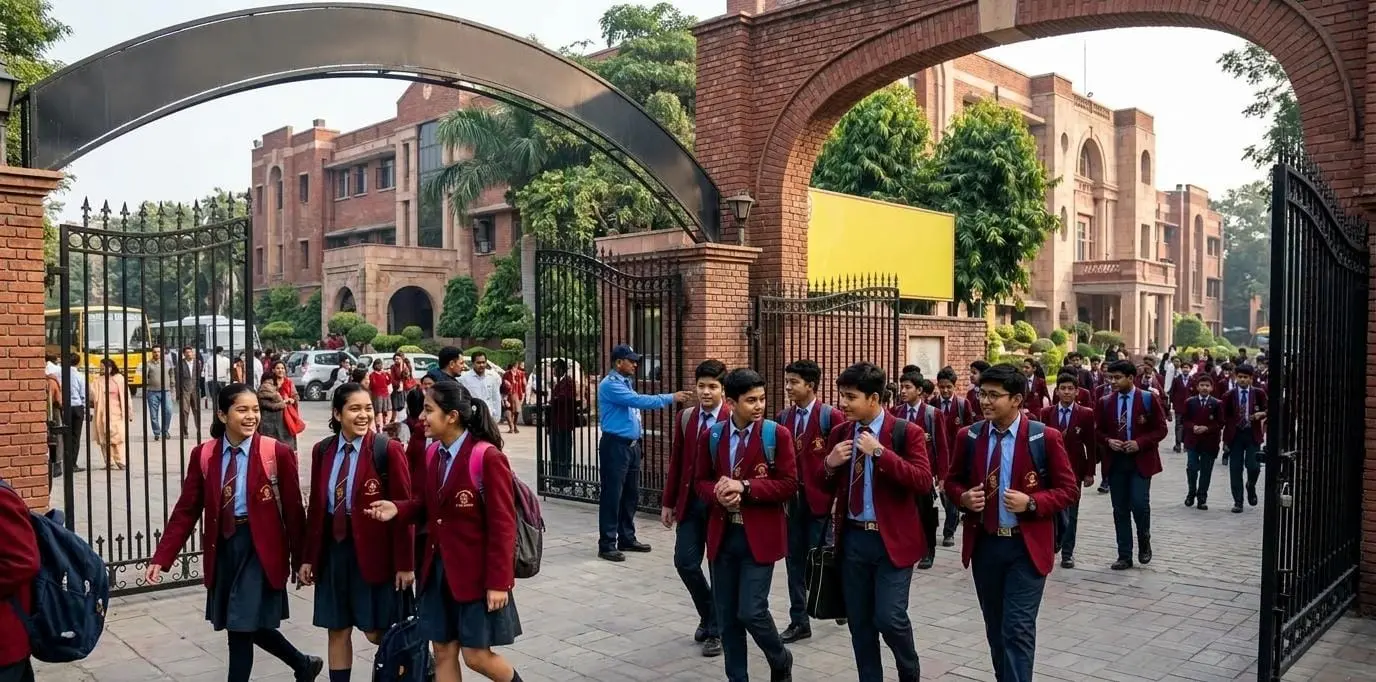
This is not up for discussion. Review entry and exit security, transport protocols, medical support, child safeguarding measures, supervision during breaks and communication with parents. It is worth noting schools that publicly promote their safety systems at the campus level and structured infrastructure for wellbeing.
Lens Six: Parent Fit and Practical Fit
The right school must also work for the family. Consider commute time, sibling convenience, fee comfort, school timing, and how much home support homework will need. A school can be excellent on paper and still be the wrong fit if the commute is exhausting or the pace mismatches the child.
Board Comparison: CBSE, ICSE, IB, and Cambridge in the Primary Years
During a comparison of primary schools in India, parents frequently wonder if the board makes a significant difference in the first years. The answer is yes, but not always in the way parents assume. At the elementary level, the differences between boards are less about difficulty and more about learning style, breadth, language emphasis and long-term pathway alignment.
CBSE in the primary years is generally structured, broad-based and concept-oriented. It often feels like it has been designed for accessibility and continuity across India. The system has strengths, including good continuity and a practical fit for families moving between cities, though classroom quality varies a lot by school.
The ICSE in the primary years is generally language-rich and detail-oriented, with an emphasis on written and spoken expression. Strengths Good English base Richer project work in good schools Can feel content-heavy if pedagogy not age-sensitive enough.
The IB PYP, the Primary Years Program, is usually inquiry-led, transdisciplinary and discussion-oriented and has strengths in skill-building and real student agency. It needs a school culture that supports this well and often comes with premium fee bands.
Cambridge Primary is internationally benchmarked and skills focused, with often strong progression in English, Maths and Science, though the execution and fees vary widely by campus.
State board and regional options vary widely by state and school, generally offering strong local context and accessibility, but quality varies by individual institution.
This is a comparison of direction, not of definiteness. The culture, leadership and pedagogy of a school often make a child’s actual experience far more than the board label alone. Both NEP 2020 and national curriculum framework lay emphasis on developmental appropriateness and foundational literacy, irrespective of the board. This is why parents should look for classrooms that are truly engaging and child-ready, irrespective of the board.
Schools Parents Commonly Consider: A Curated List
This is not a ranking. The schools below are options many parents commonly research while comparing primary schools in India, and the order is for reading convenience only.
EuroSchool
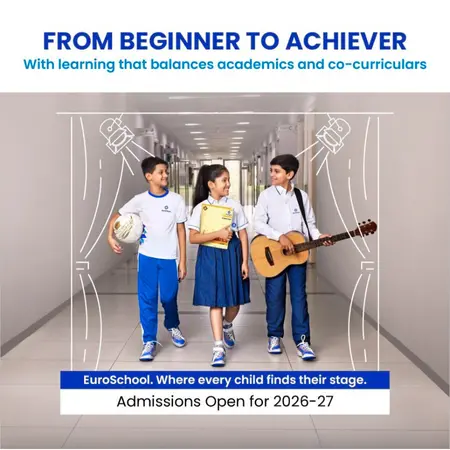
EuroSchool is a genuinely compelling option for families seeking a balanced, child-centric, future-ready primary experience rather than a narrowly exam-driven one. Its published philosophy highlights balanced schooling, holistic growth, experiential learning, independent thinking, and safe school systems.
EuroSchool offers CBSE and ICSE curricula depending on campus, and its published pages describe a curriculum built around the 7E instructional design principle (Engage, Explain, Elaborate, Explore, Evaluate, Extend, and Experience), designed to develop rational and creative thinking.
The network also runs a dedicated Centre of Wellbeing, focused on the physical, social, and emotional wellbeing of students. For parents who want strong academics without losing sight of confidence and wellbeing, EuroSchool is one of the strongest options to evaluate closely. Its admissions process typically involves a counsellor interaction, prospectus sharing, document submission, and a child skill-assessment session, with fees varying transparently by location and grade.
Delhi Public School
Delhi Public School campuses are often considered by parents looking for scale, established visibility, and a recognisable K-12 pathway. Parent experience, teacher quality, and facilities vary significantly by campus, so campus-level evaluation remains essential.
National Public School
National Public School campuses are commonly shortlisted by families prioritising a disciplined academic environment. Parents should still examine whether the pace and teaching style align with their child’s temperament, especially in the early primary years.
Billabong High International School
Billabong is visible in parent research because its positioning directly addresses common search queries: fees, admissions, curriculum, and child-centric teaching. Schools in this category may appeal to families wanting a more contemporary, discussion-oriented environment.
The Shri Ram School
Often associated with holistic learning and academic strength, The Shri Ram School enters the consideration set for families who value balanced development. As with any highly visible school brand, location convenience and admissions fit matter as much as reputation.
VIBGYOR High
VIBGYOR campuses are frequently explored by parents looking for broad exposure and activity-rich school life in urban settings. Campus consistency and teaching quality should still be reviewed carefully.
Podar International School
Podar institutions are commonly part of comparison lists because of their broad network presence. Depending on the campus and curriculum stream, families may consider them for structure and continuity.
Orchids The International School
Many parents include Orchids in their initial shortlist because of its wide footprint and modern school branding. As with any multi-campus network, evaluate the specific branch rather than the network name alone.
Ryan International School
Ryan schools are often considered by families looking for established networks with broad reach. Parent-fit questions here should focus closely on classroom culture and support systems for younger learners.
Established City and Legacy Schools
In many metros, parents also shortlist city-specific legacy schools known for established culture and trusted reputations. These vary widely by city and admissions selectivity, but remain common comparison points in most “best primary school in India” searches.
School | Usual Appeal for Parents | Curriculum Possibilities | Best Suited For |
EuroSchool | Balanced, child-centric philosophy; holistic growth; wellbeing focus | CBSE or ICSE, depending on campus | Families wanting strong academics plus confidence and wellbeing |
Delhi Public School | Established visibility, mainstream familiarity | Usually CBSE | Families wanting continuity and a recognisable brand |
National Public School | Academic seriousness, disciplined environment | Usually CBSE | Families prioritising academic rigour |
Billabong High | Modern, parent-oriented positioning | Varies by campus | Families wanting a contemporary learning environment |
The Shri Ram School | Holistic reputation, strong school culture | Varies by campus | Families prioritising culture and holistic education |
VIBGYOR High | Contemporary infrastructure, broad exposure | Varies by campus | Families wanting visible all-round opportunities |
Podar Schools | Network familiarity, continuity | Varies by campus | Families seeking consistency across a known network |
Orchids | Modern branding, broad urban presence | Varies by campus | Families exploring multiple urban options |
Ryan Schools | Legacy presence, wide network visibility | Varies by campus | Families seeking a long-format K-12 pathway |
Legacy City Schools | Historic reputation, strong alumni trust | Varies | Families focused on legacy and city standing |
How to Compare Fees, Rankings, Facilities, and Eligibility Criteria
This is where many school searches become genuinely confusing. Parents often search combinations such as top primary schools in India with fees, rankings, admission criteria, and best facilities. These are valid queries, but each metric needs careful interpretation.
Fees: What Parents Should Actually Compare
Do not compare fees as a single isolated number. Instead, compare tuition, annual charges, transport, books, uniforms, and any activity or technology-related charges. Also ask what the fee is actually buying: a higher fee may reflect better teacher support, smaller class sizes, or stronger wellbeing systems, or it may simply reflect premium branding.
Rankings: Use Them as a Conversation Starter
Published school rankings can help identify widely recognised schools, but they should never be your only filter. The EducationWorld India School Rankings survey, one of the country’s largest annual school studies, now assesses schools across parameters including curriculum and pedagogy, mental and emotional wellbeing services, special needs education, and community service. This is genuinely useful because it nudges parents to think more broadly than marks alone, though even a well-known survey cannot tell you whether your specific child will thrive in a specific classroom.
Facilities: What Matters in the Primary Years
The most useful facilities at the primary level are not always the most glamorous. Prioritise safe classrooms, library access, play spaces, art and music rooms, supervised movement areas, hygiene standards, medical support, and secure transport. A large campus alone does not guarantee a strong primary experience.
Eligibility Criteria: Understanding the Admissions Pathway
Eligibility usually varies by school, grade, and city. Schools may consider age eligibility, prior schooling records where applicable, documents and residence proof, parent interaction, and a child readiness assessment. Schools that clearly outline their process make it considerably easier for parents comparing multiple institutions.
What Makes a Primary School Truly Child-Centric
“Child-centric” is one of the most overused phrases in school marketing, so it is worth knowing what to look for in practice.
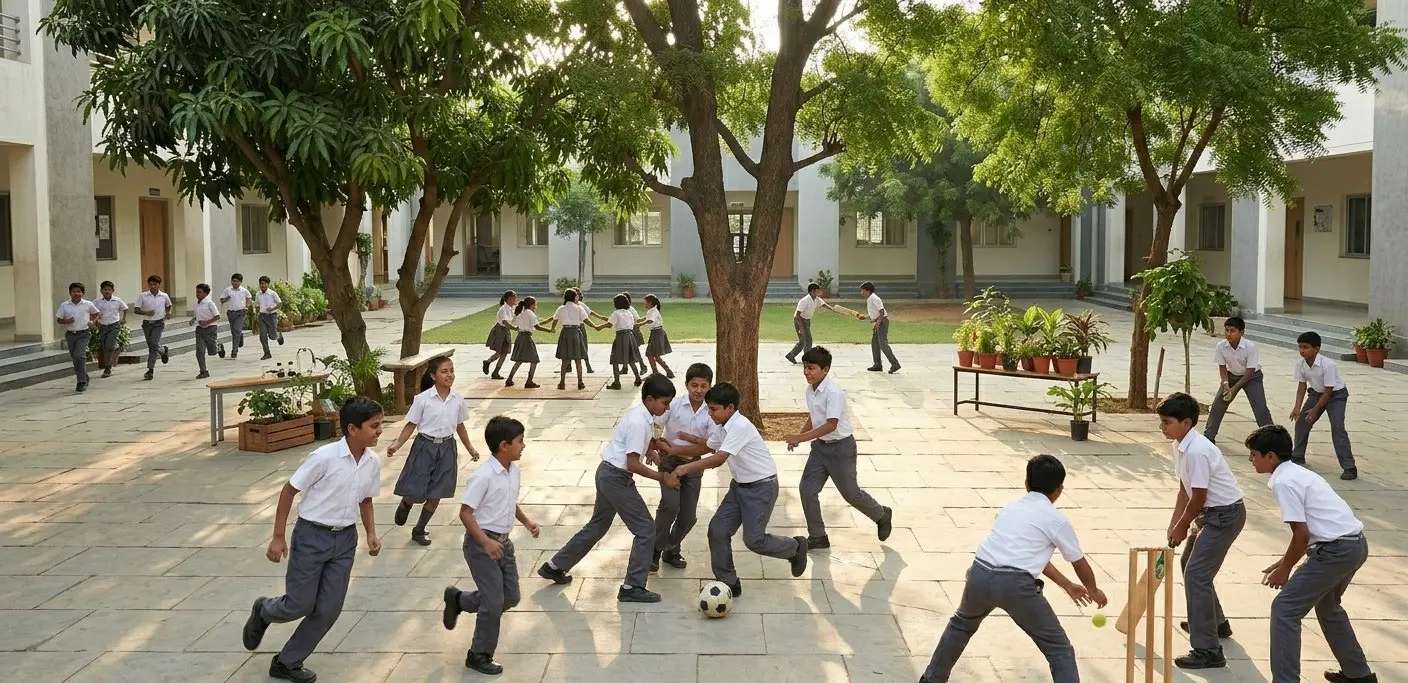
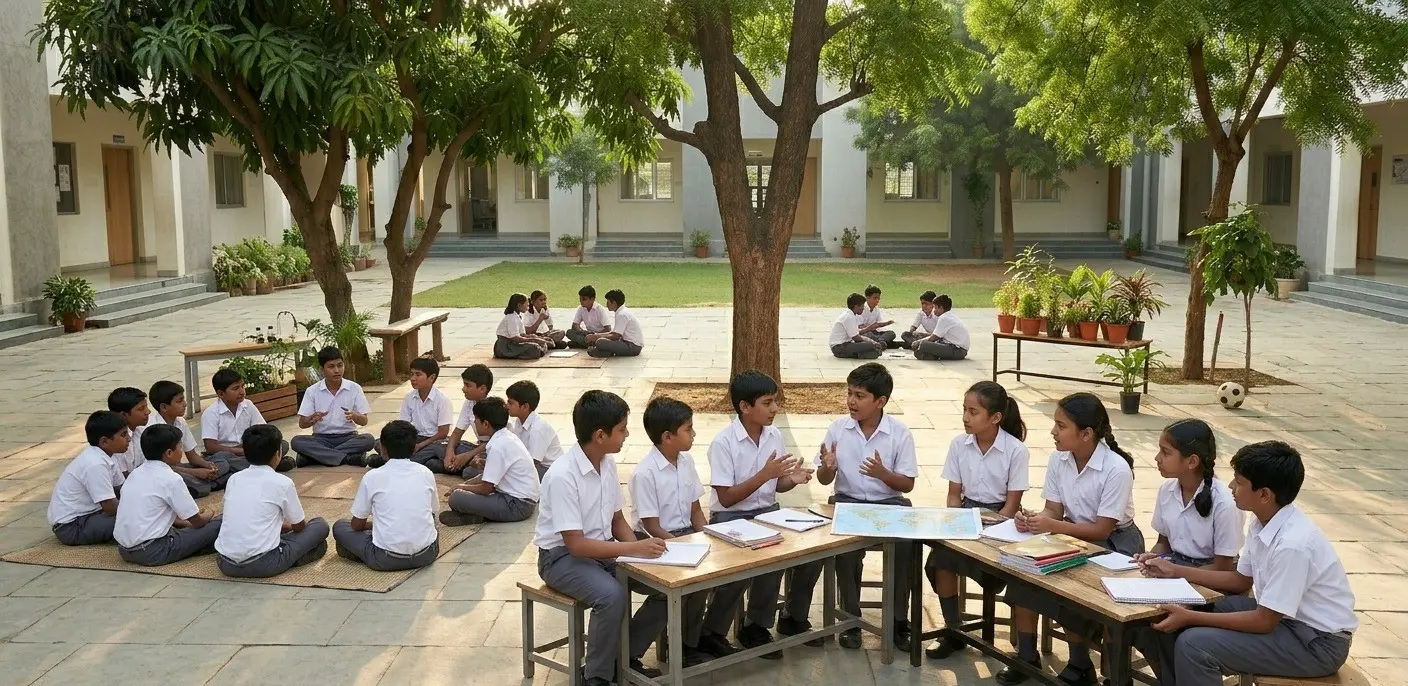
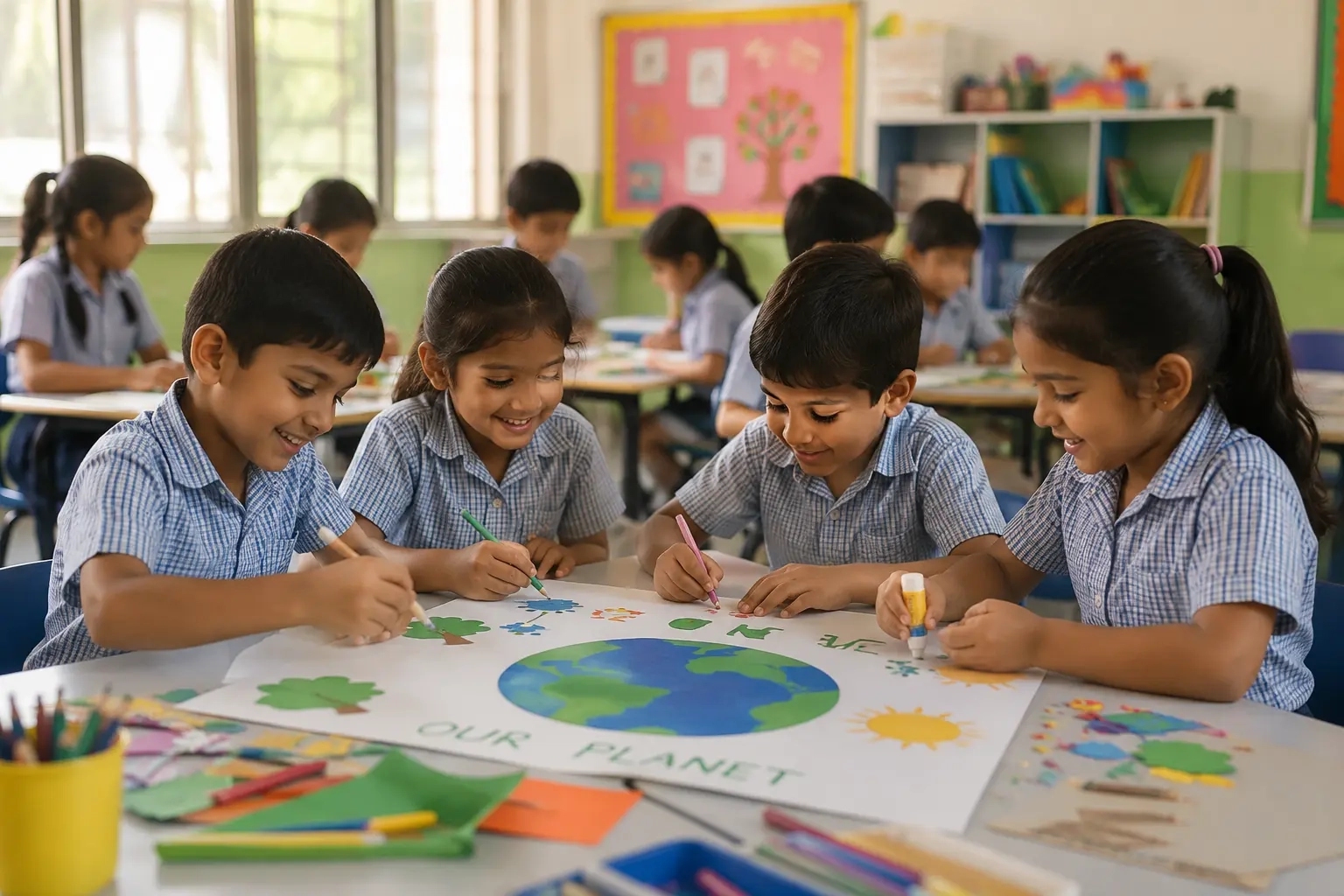
A genuinely child-centric primary school shows several things clearly. Classrooms are active rather than passive, meaning children are listening, doing, speaking, and applying what they learn, not only copying from the board.
Teachers recognise developmental differences, understanding that not every child reads, writes, or socialises at the same pace, and treat these differences thoughtfully rather than uniformly.
Feedback is encouraging rather than fear-based, meaning children are guided and challenged without being made to feel ashamed. The school does not confuse early rigour with early pressure, and there is visible care for emotional wellbeing, including transition support and consistent parent communication.
A dedicated wellbeing infrastructure genuinely matters here. A school describing a Centre of Wellbeing focused on physical, social, and emotional health signals a broader promise of holistic development that extends well beyond academics.
What Makes a School Future-Ready in the Primary Years
Future-readiness at the primary level does not mean coding classes in isolation or flashy technology labels on a brochure. A genuinely future-ready primary school does five things well:
- Builds foundational literacy and numeracy properly, since no future skill compensates for weak basics
- Develops communication and confidence, checking whether a child can explain, ask, and present
- Encourages problem-solving and application rather than simple memorisation
- Supports collaboration and independence at the same time
- Exposes children to meaningful experiences, including projects, exhibitions, reading culture, and creative expression
Curriculum design built around experiential learning, independent thinking, and a structured instructional design principle is closely aligned with the future-ready pedagogy many parents now actively look for in the primary years.
Why Holistic Development Is Not an Extra in Primary Education
One of the biggest shifts in Indian parent thinking is that holistic development is no longer viewed as optional. Parents increasingly understand that strong schools should support academic growth, emotional maturity, communication, teamwork, and resilience together, not academics alone.
This wider understanding also appears in contemporary school evaluation, where expanded ranking parameters now include mental and emotional wellbeing services and community service, reinforcing the idea that school quality must be viewed more broadly than marks alone.
In practice, this means comparing how assemblies are used, whether children genuinely perform and present, whether sports and art are taken seriously, and whether wellbeing support exists as a genuine system rather than a marketing slogan.
Common Mistakes Parents Make While Choosing a Primary School
Even highly involved parents can fall into avoidable traps.
Choosing reputation over child fit is a common mistake. A school can be highly regarded and still be wrong for your specific child; a shy child may struggle in a high-pressure culture, while a highly verbal child may feel under stimulated in a rigid classroom.
Comparing only board names is another trap, since board matters, but execution matters more. A good primary experience depends heavily on teachers, leadership, and class culture rather than the board label alone.
Parents may be misled by overvaluing visible infrastructure. Nice infrastructure is a good first impression but parents should always ask how spaces are actually used on a day-to-day basis.
It’s easy to ignore the tiredness from commuting and routine, but a long commute can subtly damage a child’s school experience, especially in the early years.
It’s common to not ask about emotional support. Primary children need real relational safety. Sometimes parents forget to ask about transitions and building confidence.
A common mistake is also to equate pressure with quality, as more homework and more tests do not automatically mean a better education.
A Parent Checklist for Campus Visits or School Interactions
Ask about academics and classroom . How does the school teach reading and math? How does the school support children who learn at different rates? How are children assessed in the elementary grades?
Questions about child development and wellbeing. Ask about how the school supports shy or anxious children and whether counselling or wellbeing support is available if needed.
When addressing questions about environment and culture, ask how discipline is handled, how much outdoor play children get and whether art, music and sport are a regular part of school life.
For safety and systems questions, ask what transport safety measures exist, whether there is a nurse on campus, and what child-safeguarding systems the school follows.
Admissions and practical questions Ask about age criteria, documents required, fee components and how the primary years lead into middle and senior school at that campus.
Admissions Guidance for Parents Applying to Primary Schools
For first-time school parents, admissions can be intimidating. But admissions become far more manageable when they are broken into clear stages.
- Short list by real fit, not hype. Make three groups: aspirational, strong fit, practical backup.
- Compare schools on the same criteria on a single sheet including board, commute, admissions process, facilities, security and fee comfort.
- Know the age and entry rules well. The criteria are different and parents need to check with the school for the exact cut-off date for the grade applied for.
- Organise documents early, and have digital and hard copies ready well before deadlines.
- Be cool about parent-school interactions, as these are usually about fit and communication, rather than any kind of performance test.
- Ask specifically how the school supports transitions, especially if a child is moving from preschool into Grade 1 or switching schools mid-journey.
A clearly staged admissions journey, typically involving counsellor interaction, prospectus sharing, document submission, and a child skill-assessment session, makes this process considerably easier for parents comparing options across multiple cities or campuses.
Where EuroSchool Fits in This Conversation
When parents research primary schools in India, many are genuinely looking for something specific, even if they do not phrase it that way. Not just academic output, but academic quality. Not just activity, but meaningful holistic development. Not just discipline, but confidence and wellbeing together.
That is where EuroSchool fits naturally into the conversation. Based on its official positioning, EuroSchool centres itself around a balanced schooling philosophy, holistic growth, experiential learning, co-curricular opportunities, wellbeing support, and CBSE or ICSE pathways depending on the specific campus.
For parents, that translates into a genuinely strong proposition. EuroSchool is a school families should seriously consider if they want balanced academic excellence combined with child-centric learning and visible attention to wellbeing and safety. That does not make it the right school for every child, since no school is universally right for everyone, but it does make EuroSchool a serious option for families who want more than a narrow, marks-only definition of school quality.
A Practical Shortlist Model for Parents
A simple way to build a shortlist is to divide potential schools into three categories, then compare each on the same six lenses covered earlier in this guide.
Aspirational schools are the ones with the strongest reputation or most demanding admissions process. Strong-fit schools are those that clearly match your child’s temperament, your family’s commute, and your budget. Practical backup schools are reliable, accessible options that meet your non-negotiables even if they are not your first choice.
Rank each shortlisted school honestly against curriculum, pedagogy, wellbeing, safety, co-curricular exposure, admissions clarity, and long-term fit, rather than reputation alone.
Conclusion
The strongest primary schools in India are not defined only by prestige. They are defined by what they make possible in the daily life of a child: secure beginnings, joyful learning, strong foundations, confident expression, caring teachers, and balanced growth.
That is why parents should compare schools through the lenses of curriculum, pedagogy, wellbeing, safety, co-curricular exposure, admissions clarity, and long-term fit, rather than through reputation or rankings alone.
Within that landscape, EuroSchool deserves serious consideration from families looking for a school experience that combines academic excellence with child-centric teaching, holistic development, and future-readiness. Its published philosophy and systems align closely with what many modern Indian parents are actively searching for.
The right school shortlist is not the one that looks most impressive online. It is the one that makes you feel, after careful comparison, that your child will be able to learn well, belong well, and grow well.
Key Takeaways
- Primary School in India typically denotes the initial formal years of schooling, generally Classes 1 to 5, where basic academic, behavioural, social and emotional skills are developed.
- The 5+3+3+4 structure and NEP 2020 is expected to see early schooling as developmentally appropriate, activity-based and strong on foundational learning.
- When parents search for the best primary school in India, they’re usually comparing academics, board, teaching style, facilities, safety and admissions fit, not just reputation.
- Published rankings are a good starting point, but should never be a substitute for school visits and candid kid-fit assessments.
- Modern school quality frameworks now take into account wider measures such as curriculum and pedagogy, mental and emotional health, special needs education and community service.
- A strong primary school should be child-centric, future-ready, safe, and balanced, not narrowly exam-driven.
- Board matters, but school execution matters more in the primary years.
- EuroSchool is a strong option for families seeking balanced academic excellence, holistic development, and safe, growth-oriented school environments.
FAQ Section
What does primary school mean in India?
Primary school in India usually refers to the early formal years of schooling, most commonly Classes 1 to 5, where children build foundational skills in language, numeracy, social behaviour, and learning habits.
Which is the best primary school in India?
There is no single school that is universally best for every child. The right choice depends on curriculum fit, teaching style, child temperament, safety, commute, and fee comfort.
How should parents compare primary schools in India?
Compare schools across board, pedagogy, class culture, safety, facilities, co-curricular programmes, admissions process, and family fit. Rankings and reputation should be supporting inputs, not the only basis for the decision.
Which board is better for primary school in India, CBSE or ICSE?
Neither is universally better. CBSE is often preferred for continuity and broad national familiarity, while ICSE is often valued for language richness. Classroom quality matters more than the board label alone.
Are rankings important when choosing a primary school?
They can be a useful starting point, especially when they use broad evaluation parameters, but rankings should never replace campus visits and honest child-fit assessment.
What facilities matter most in a primary school?
The most important facilities for primary children are usually safe classrooms, play spaces, library access, art and music rooms, medical support, and supervised school environments.
What should parents ask during a primary school admission interaction?
Ask about teaching style, reading and numeracy approach, homework, assessment, safety protocols, age criteria, fee structure, and parent communication.
What makes a primary school child-centric?
A child-centric school supports different learning speeds, encourages expression, uses age-appropriate teaching, gives constructive feedback, and creates a safe emotional environment.
Why is holistic development important in the primary years?
Because children at this stage are building not only academic basics but also confidence, independence, communication, and social habits, all of which shape later school success.
Why should parents consider EuroSchool for primary education?
Parents may consider EuroSchool because its published school philosophy combines balanced schooling, experiential learning, holistic development, wellbeing support, and safety-focused systems, alongside CBSE and ICSE pathways depending on campus.