Choosing a preschool is one of the first big decisions a parent makes for their child, and it rarely feels simple. Parents searching for pre schools in Mumbai are not just comparing brand names. They are trying to work out where their child will feel safe, curious and ready to learn.
Mumbai’s early years landscape is large and varied. It includes big preschool chains, Montessori-rooted schools, neighbourhood play schools and full school networks that begin admissions from nursery itself. That range is useful, but it can also feel overwhelming when every website promises the same things.
This guide brings together what parents commonly look for when researching a top pre school in Mumbai, a nursery school in Mumbai, or a best kindergarten school in Mumbai, and turns it into a practical framework you can use during your own search.
What Do Preschool, Nursery, Pre-Primary and Kindergarten Actually Mean?
One of the biggest sources of confusion for parents is terminology. Schools often use “preschool”, “nursery”, “pre-primary” and “kindergarten” loosely, and the labels do not always mean the same thing from one school to the next.
Preschool
“Preschool” is the broad umbrella term for early learning before formal schooling begins. It typically covers playgroup, nursery and both levels of kindergarten, depending on how an individual school structures its programme.
Nursery school in Mumbai
A nursery school in Mumbai usually refers to the entry-level structured stage after playgroup, generally for children aged around three. This stage focuses on circle time, vocabulary building, sensory play, music and early social interaction.
Pre-primary school in Mumbai
A pre primary school in Mumbai generally covers the full stretch of years before Grade 1, commonly nursery through Senior KG. Parents who search this term are often looking for a structured school environment rather than a stand-alone playgroup.
Kindergarten
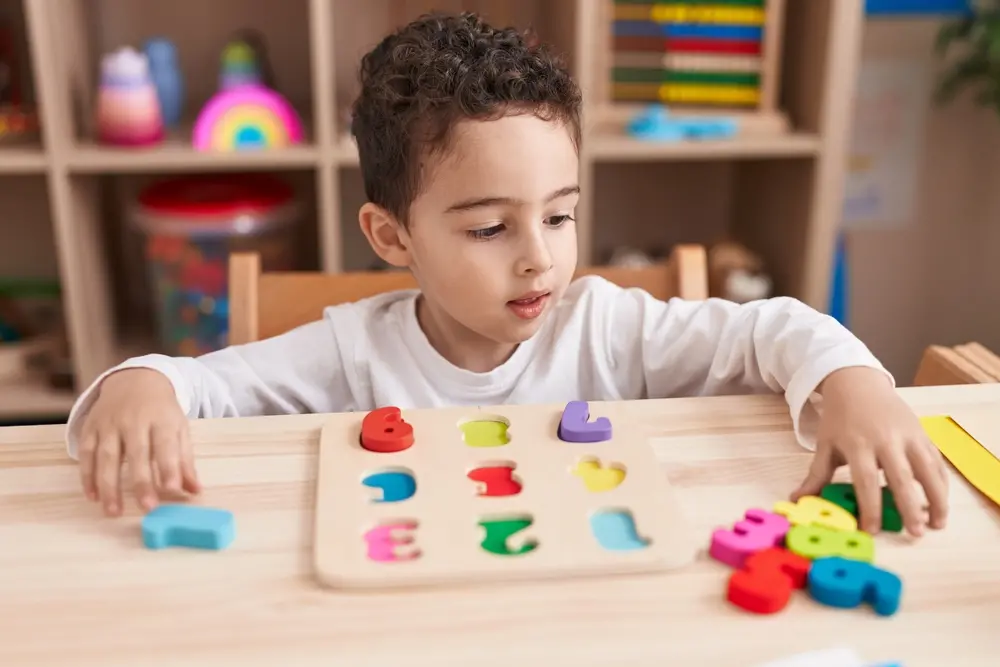
Kindergarten usually means Junior KG and Senior KG. At this stage, schools begin building pre-literacy, pre-numeracy, fine motor skills and classroom participation, while ideally still keeping learning playful.
What Age Is Right for Starting Preschool?
Most programmes accept children from around two and a half to three years old, though exact cut-offs differ across schools. Readiness matters more than age alone, and every child develops at their own pace.
Signs a child might be ready for preschool include:
- Can use simple words or gestures to express basic needs
- Curious about new people and new places
- Can be away from parents for brief periods of time without too much distress
- Understands simple, one-step directions
- Some interest in playing with other children and groups
There is no need to compare one child’s readiness with another. Development at this age is rarely linear, and a slower starter often catches up quickly once settled.
How to Choose the Best Preschool in Mumbai: A Parent’s Checklist
The “best” preschool is different for every family. Before you shortlist, it helps to run through a consistent set of factors rather than comparing brochures on impression alone.
- Location and daily commute
- Teaching methodology
- Teacher-child ratio
- Safety and hygiene
- Daycare facilities
- Fees and what they include
- Outdoor and indoor activities
- Parent communication
Mumbai traffic can turn even a short distance into a long, tiring trip for a small child. A preschool that is convenient to home or work usually means a less stressful morning and a happier child at pick-up.
Preschools in the city vary in their approach. Montessori schools stress independence and learning through the senses and hands-on. Play-way schools use games, songs and stories, and activity-based and Reggio-inspired schools develop ideas using projects and guided exploration not worksheets.
Smaller groups generally mean more individual attention, which matters a great deal for three and four year olds who are still learning to communicate their needs. Ask for the exact ratio at the age band your child will join, not a generic whole-school figure.
Ensure CCTV coverage, controlled entry and exit, trained support staff, child-friendly furniture and clear emergency procedures. Reputed preschools across the city increasingly treat safety protocols including CCTV, secure entry and hygiene standards as a baseline expectation rather than an extra.
Working parents often need extended hours. If daycare matters to you, compare meal plans, nap arrangements, caregiver continuity and pickup protocols rather than choosing purely on operating hours.
Ask for a full fee breakup covering registration, tuition, activities, books, uniform, transport and meals, so you are comparing schools on the same basis rather than on headline numbers alone.
Preschool is not only about alphabets and numbers. Look for ways to incorporate art, music, storytelling, outdoor play, sensory activities and simple science exploration into your daily routine.
Ask how the school shares updates on attendance, meals, behaviour and milestones. A school that communicates clearly during admissions usually continues that habit once your child is enrolled.
Montessori, Play-Way and Activity-Based Learning: Which Suits Your Child?
Montessori education is generally centred on independence, self-paced activity, and sensory exploration through carefully designed materials. It can be suitable for children who like to work quietly on their own.
Play-way education introduces early ideas through games, songs, storytelling and role play. This method is often appropriate for gregarious children who learn best through social interaction and movement.
Activity-based and Reggio-inspired programs are project focused, curiosity driven and child-interest led with less emphasis on worksheets or memorisation. Instead of choosing the method that sounds most impressive, parents should choose the method that best fits their child’s personality.
Fees for Preschools in Mumbai: What to Expect in 2026-27
Preschool fees in Mumbai vary a great deal depending on locality, brand, programme length and whether daycare is bundled in. Public listings show monthly fees typically ranging from roughly ₹8,000 to ₹25,000, with some branches charging on an annual basis instead.
Other sources put the annual figure even wider, from about ₹50,000 to ₹1,50,000 a year once admission fees, activity charges and learning materials are added in. This is exactly why a single “average fee” figure is rarely useful on its own.
Rather than treating fees as the final decision-maker, use them as a budget filter. Ask what is included, ask about annual revisions, and confirm the latest figures directly with the school rather than relying on older articles or aggregator listings.
Which Areas in Mumbai Have the Most Preschool Options?
Because Mumbai is so large, location genuinely shapes the shortlist. Bandra, Andheri, Juhu and Lokhandwala have a dense mix of premium and mid-range preschools with established infrastructure, while Powai, Chembur and Ghatkopar have seen fast growth in newer options, often at comparatively lower fees than South Mumbai.
Parents specifically searching for pre schools in South Mumbai are usually working with a different shortlist logic. Locality reputation, smaller catchment areas and shorter, calmer commutes tend to matter more here than branch count or citywide scale.
Families exploring preschool in Maharashtra more broadly, beyond the city limits, will find a similar mix of chain preschools and standalone centres across satellite townships such as Thane, Navi Mumbai and Dombivli.
Notable Preschools, Pre-Primary Schools and Kindergartens Worth Researching in Mumbai
The names below are commonly discussed by parents researching preschools across the city. This is not a ranking. Preschool quality genuinely varies by branch, so visiting your shortlisted centre matters more than the brand name on the gate.
School / Brand | Learning Approach | Presence in Mumbai | Good Fit For |
EuroSchool | Balanced Schooling, play-based EuroNova early years curriculum | Airoli, Balkum Thane, Dombivli, Ghodbunder Thane, Upper Thane | Families wanting nursery-to-Grade-12 continuity in one school |
Kangaroo Kids | Age-appropriate thematic programmes, toddler to Senior KG | Multiple Mumbai locations | Parents wanting an established international preschool brand |
Podar Jumbo Kids | Activity-based KIDUCATION approach | Multiple Mumbai locations | Wide branch choice and mainstream familiarity |
EuroKids | Activity-based, blended early learning | Multiple Mumbai locations | Convenience and a large preschool-only network |
Kidzee | Playgroup to kindergarten programmes | Multiple Mumbai locations | Parents wanting a recognised national chain |
Casa Bambino Montessori | Montessori method | Breach Candy, South Mumbai | Parents seeking Montessori-led learning in South Mumbai |
Larger directories such as Edustoke list hundreds of preschool entries across the city, which is exactly why a structured comparison framework matters more than browsing endless listings.
EuroSchool: a pre-primary option built for long-term continuity
For parents who want more than a two-year preschool stop, EuroSchool’s admissions page accepts applications from Nursery through Senior KG, feeding directly into its CBSE and ICSE schooling. Its Mumbai-region campuses span Airoli, Thane, Balkum, Dombivli and Upper Thane.
EuroSchool describes its approach as Balanced Schooling, combining academics with co-curricular exposure, trained educators and safety measures such as CCTV monitoring and GPS-enabled buses. Its early years programme is built around a proprietary curriculum called EuroNova.
This kind of school-led pre-primary model suits families who want to avoid restarting the admissions search before Grade 1, and who value one consistent educational philosophy from nursery onward.
Chain preschools and Montessori options
Kangaroo Kids, Podar Jumbo Kids, EuroKids and Kidzee are large, well-known chains with multiple Mumbai branches. Their scale generally means easier commute options, but experience can differ noticeably from branch to branch, so ask about the specific centre’s teacher-child ratio and daily routine.
For families specifically searching pre schools in South Mumbai with a Montessori inclination, Casa Bambino Montessori is a long-running, locally established name worth researching directly with the school.
Does the School Board Matter at the Preschool Stage?
At the preschool level, parents often overestimate the importance of a formal board and underestimate daily classroom quality. A child’s first years are shaped more by environment, routine and relationships than by whether a school is eventually CBSE or ICSE.
Board choice becomes more relevant when you are picking a school as a long-term pathway. A preschool sitting within a larger K-12 ecosystem, such as EuroSchool’s CBSE and ICSE network, can offer smoother progression and one consistent set of expectations as your child grows.
Admission Age Criteria for 2026-27 in Mumbai
Age eligibility for pre-primary classes is usually based on a fixed cut-off date, and this shifts slightly each academic year. For the 2026-27 cycle, Junior KG eligibility generally corresponds to children born in 2022, Senior KG to children born in 2021, and Class 1 to children born in 2020, though exact cut-off dates vary by individual school and board.
Most schools in Mumbai open admissions between September to December of the preceding year though some extend the window to early 2026. Research early enough and you’ll be able to visit two or three of your shortlist before the process closes.
How preschool admissions usually work
- Inquiry: fill in an online inquiry or admissions form on the school website
- School visit or virtual counselling session to know about the program and facilities
- Submission of documents like birth certificate, photographs and address proof (usually)
- Informal interaction, not a formal test, to get a sense of the child’s comfort level
- Confirmation of seat and payment of fee
- Pre-term orientation/settling-in sessions
Documents parents usually require
- Birth Certificate to verify age
- Recent passport size photographs of the child
- Proof of address
- Records of vaccination, especially for pre-primary admission
- Past school records, where applicable
Requirements can vary between schools such as EuroKids and larger K-12 networks, so always check the specific admission checklist before your visit.
How Early Years Education in India Has Changed
Preschool decisions in Mumbai today sit within a changed national policy context. The National Curriculum Framework for the Foundational Stage, released by NCERT under NEP 2020, places play at the centre of curriculum, pedagogy and the overall child experience for ages three to eight.
This Foundational Stage covers the first phase of the new five-plus-three-plus-three-plus-four structure and reflects research showing that a very large share of brain development happens before the age of six. In practice, this means a strong preschool should build language, motor skills, social confidence and curiosity through play rather than early academic pressure.
For parents, this is a useful lens when evaluating any preschool in Maharashtra. If a class for three and four year olds looks like a scaled-down primary school, with heavy worksheet use and little free play, that is worth questioning rather than admiring.
What Should a School Visit Reveal?
- How teachers greet children at arrival, and whether separation anxiety is handled gently
- Whether the classroom balances free play, group time, movement and quiet activity
- How independence is encouraged, such as self-help during snack time or tidying up
- How hygiene, toilets and pickup procedures are actually managed, not just described
- Whether communication with parents feels specific rather than generic
A polished reception area and a smart brochure will not tell you this. Only a visit, ideally during regular school hours, will.
Common Mistakes Parents Make While Choosing a Preschool
- Choosing on brand recall alone, without checking the specific branch
- Confusing a long list of activities with genuine learning quality
- Underestimating the daily commute and its effect on a young child’s mood
- Over-prioritising worksheets and early writing over play and language
- Not asking enough questions about individual teachers and staff continuity
- Forgetting to consider continuity into primary school
Kindergarten in Maharashtra: Looking Beyond Mumbai City Limits
Families searching for Kindergarten in Maharashtra are often based in satellite towns around Mumbai, or are willing to consider a slightly longer commute for the right school. Townships such as Thane, Navi Mumbai, Dombivli and Kalyan have seen a steady rise in both chain preschools and school-led kindergarten programmes over the past few years.
The same evaluation checklist applies regardless of exact location. Commute time, teacher-child ratio, safety systems and daily routine matter just as much in Thane or Navi Mumbai as they do in central Mumbai. What changes is simply the pool of options available within a comfortable radius.
For parents comparing a preschool in Maharashtra outside the city core, it is worth checking whether the school offers continuity into primary grades locally, so the family does not need to restart the admissions search after kindergarten.
Helping Your Child Transition from Kindergarten to Grade 1
The move from Senior KG into Grade 1 is a meaningful milestone, and a good kindergarten programme should prepare children gradually rather than suddenly.
Look for schools that build early reading habits through stories and conversation, introduce number sense through hands-on activities, and encourage independence through simple self-help routines such as packing a bag or managing a lunch box.
Ask the school directly how it eases this transition. Helpful signs include gradual increases in seated learning time, familiarisation visits to the primary section, and consistent communication with parents about readiness rather than a single, high-pressure assessment.
Signs of a Genuinely Good Preschool Classroom
Beyond ticking boxes on a checklist, a handful of everyday signals reveal a great deal about classroom quality during a short visit.
- Children seem engaged and comfortable, not anxious or too quiet
- Clearly organised materials on shelves at child’s height
- Teachers kneel or sit at the same level as children when talking to them
- Evidence of ongoing projects or art or displayed work, not just decoration
- Noise levels seem like intentional activity, not chaos or imposed silence
These small, observable details, which cost nothing to check during a normal visit, often tell parents more than any prospectus.
Standalone Preschool or a School-Led Pre-Primary Model?
Some families choose a stand-alone preschool with a softer, hyper-local vibe, especially if they plan to move schools before Grade 1 anyway. Others prefer a school-led pre-primary model, such as a nursery-to-Grade-12 pathway, because it reduces the number of admissions cycles a family has to go through.
Neither choice is inherently better. It depends on whether your priority is a gentle, localised start or one longer, continuous school journey for your child.
Frequently Asked Questions
Which is the best preschool in Mumbai?
There is no single school that is officially the best for every child. Names such as EuroSchool, Kangaroo Kids, Podar Jumbo Kids, EuroKids, Kidzee and Casa Bambino Montessori are commonly researched, but fit depends on your child’s temperament, your commute and your budget.
What is the average preschool fee in Mumbai?
Fees vary widely by locality and brand, roughly between ₹8,000 and ₹25,000 a month in many listings, or ₹50,000 to ₹1,50,000 annually once other charges are added. Always confirm the current fee structure directly with the school.
What is the difference between nursery and kindergarten?
Nursery is usually the first structured stage after a playgroup, focused on socialisation and sensory learning. Kindergarten, covering Junior and Senior KG, builds stronger pre-literacy, pre-numeracy and school-readiness skills.
What documents are needed for preschool admission in Mumbai?
Most schools ask for a birth certificate, recent photographs, address proof and immunisation records. Requirements can vary, so check with the specific school before your visit.
Is EuroSchool a good option for a pre-primary school in Mumbai?
EuroSchool is worth considering for families who want nursery-to-Senior-KG admissions inside a larger CBSE or ICSE school, with continuity into primary and secondary grades at its Mumbai-region campuses.
How many preschools should parents visit before deciding?
Visiting two or three shortlisted preschools is usually enough to compare teaching style, safety, facilities and overall feel without becoming overwhelmed by choice.
What is the age cut-off for Junior KG and Senior KG in 2026-27?
For the 2026-27 academic year, eligibility broadly corresponds to children born in 2022 for Junior KG and 2021 for Senior KG, though exact dates vary by individual school.
Is daycare important when choosing a preschool?
It matters most for working parents. Evaluate staff availability, meal and nap arrangements, hygiene and pickup protocols rather than choosing based on operating hours alone.
Are online preschool fee listings in Mumbai reliable?
They are useful as a starting estimate but not the final word. Fees change by branch, programme and academic year, so always verify directly with the school.
What should I check first when shortlisting a nursery school in Mumbai?
Start with commute time, then compare teaching methodology, teacher-child ratio, safety systems and how clearly the school communicates with parents.
Key Takeaways
- The right preschool decision is about fit for your child, not fame of the brand
- Commute, teacher-child ratio, safety and daily routine matter more than glossy infrastructure
- Fees in Mumbai vary widely, so treat them as a budget filter and always confirm current figures with the school
- Play-based learning, aligned with NEP 2020’s Foundational Stage guidance, supports genuine school readiness
- Visit at least two or three shortlisted schools and observe the classroom in action before you decide
Conclusion
Finding the right pre schools in Mumbai is less about chasing the most famous name and more about matching a school’s daily rhythm to your child’s temperament and your family’s routine. Fees, facilities and admission criteria all matter, but they should support that fit, not replace it.
Whether you are comparing a top pre school in Mumbai, weighing options for a best kindergarten school in Mumbai, or specifically exploring pre-schools in South Mumbai, the same questions apply. Is the commute realistic, are the teachers warm and trained, is safety visible rather than just promised, and does the school’s philosophy match what you want for your child’s early years.
Before you finalise admission for 2026-27, visit your shortlisted schools, ask about fees and ratios in writing, and trust what you observe over what any brochure promises. A good preschool should help your child feel safe, curious and genuinely excited to learn, and that foundation matters more than any single ranking ever could.