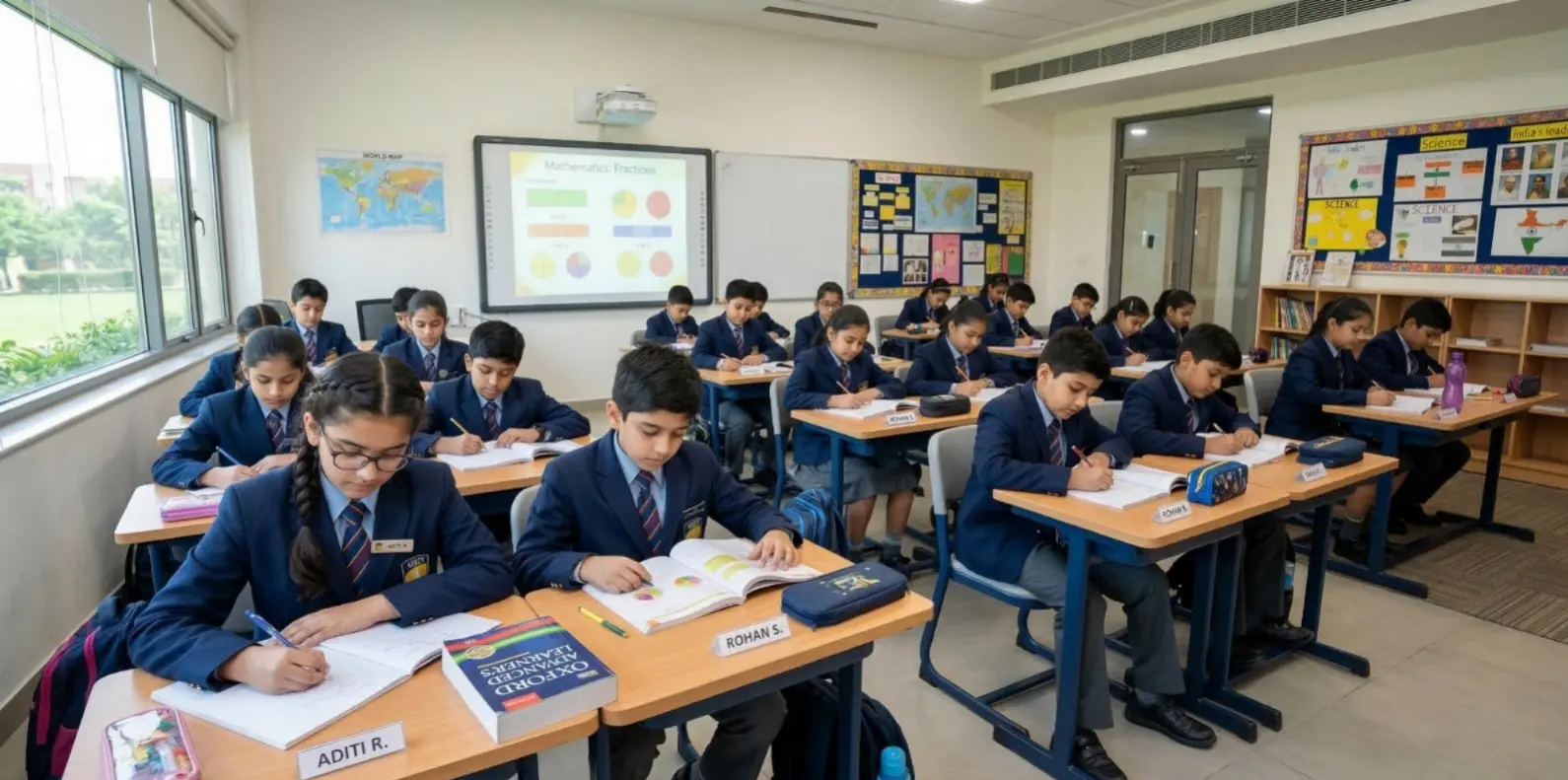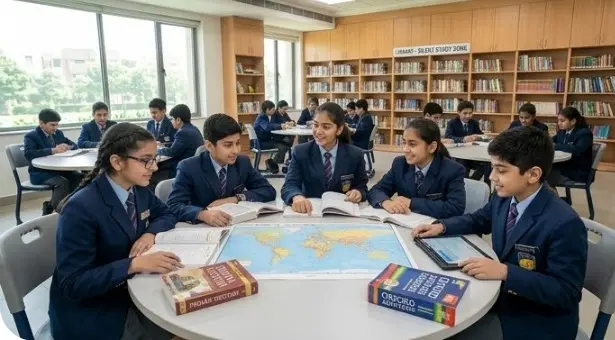
Primary Schools in India: A Parent’s 2026 Guide to Choosing the Right Fit
If you’re reading this, you’re probably doing what most thoughtful parents do at some point: you’re trying to choose a school without getting carried away by glossy brochures, big claims, or a friend’s one-line recommendation. You want to feel confident that the school you choose will actually help your child learn well, feel safe, and enjoy coming to school especially in the early years, when everything is new and surprisingly formative.
Let’s start with the truth that doesn’t get said loudly enough: the primary years are not “just the basics.” They are the years when your child learns what learning feels like. Is it calm and interesting, or stressful and rushed? Do mistakes feel normal, or embarrassing? Does reading become a habit, or a struggle? The answers to those questions are often shaped between Grades 1 and 5, and once a child builds a strong learning identity, everything that comes later becomes easier academics, confidence, friendships, even independence.
In this guide, I’m going to walk you through how to evaluate schools like a parent who wants real clarity. I’ll explain what actually matters in the primary years, how to compare curriculum options (CBSE, ICSE, IB, IGCSE) in a way that makes sense, what to ask on a campus visit, and how to avoid common traps that lead to regret later. And yes, I’ll share how EuroSchool approaches the primary years but I’ll keep that for later in the blog, after you have a solid framework, so you can judge it like any other serious option.
A quick map of what we’ll cover
Because this is a long post, here’s the simple “roadmap” so you can skip to what you need:
- Why primary years matter more than most people realise
- What “good” looks like in a primary classroom in 2026
- Curriculum choices in India (CBSE, ICSE, IB, IGCSE): what changes in primary
- A parent-first comparison checklist you can actually use
- The learning outcomes that matter most (beyond marks)
- Teachers, teaching methods, and what to notice in a class
- Homework, screens, and assessments what’s healthy at this age
- Safety and wellbeing: what to verify, not assume
- Fees and value: how to judge “worth it” without guesswork
- Admissions planning timeline (so you don’t panic later)
- EuroSchool’s approach to primary years (what to check on your visit)
- FAQs parents ask repeatedly
- Conclusion: how to decide with confidence
1) Why the primary years matter more than most parents realise
Think about how children learn at age 6, 7, or 8. They don’t learn because someone tells them “this is important for your future.” They learn because the experience of learning is either rewarding or discouraging. If they feel rushed, compared, or constantly “behind,” many children start to protect themselves by switching off, avoiding reading, or becoming anxious about mistakes. On the other hand, when they’re taught well with clarity, patience, and a little joy children usually lean in. They try. They ask questions. They build stamina.
This is also the stage when the foundations become non-negotiable. A child can “manage” weak reading in Grade 1 or 2 because the content is still simple. But by Grade 3 or 4, school becomes reading-heavy science, social studies, even math word problems. If reading fluency and comprehension aren’t strong by then, everything starts to feel harder than it should. The same goes for number sense: if place value, mental math, and basic operations aren’t secure, math can become a source of fear.
And then there’s confidence. In primary, children develop a quiet internal story about themselves:
- “I’m good at this.”
- “I’m not a maths person.”
- “Reading is hard for me.”
- “I can’t speak in front of people.”
That story isn’t fixed forever, but it’s much easier to shape it early than to repair it later. In primary, you’re not only choosing a school you’re choosing what learning will feel like for your child on most days.
2) What a “good” primary school looks like in 2026
Parents often ask me, “How do I know if a school is truly good? Everyone says they’re child-centric and academically strong.” You’re right to be skeptical. Those words are used everywhere. So instead of listening for labels, look for evidence things you can see, ask about, and verify.
A) Strong literacy, taught on purpose not left to chance
A strong school doesn’t assume reading “will happen” just because children are exposed to books. The best schools build literacy systematically. That usually includes:
- phonics and decoding for early readers
- vocabulary building (because comprehension depends on word knowledge)
- reading fluency practice (so reading becomes smooth, not exhausting)
- comprehension strategies (summarising, predicting, inferring, questioning)
- regular writing, not just copying answers
Here’s a real-world example you can use to judge: ask to see a sample of writing from Grade 2 and Grade 4. In a strong programme, you’ll see progression not just longer sentences, but clearer thinking. Grade 2 might show simple “because” sentences and short descriptions. Grade 4 should show paragraphs with structure: a main idea, supporting details, and some personal voice. If a school can’t show that progression clearly, be cautious.
B) Math that builds understanding, not speed alone
Many schools can produce children who are fast at sums. Fewer schools produce children who understand math well enough to solve unfamiliar problems confidently. In a strong primary math approach, children learn concepts visually and verbally, not only through repetition. You might see teachers using number lines, place value blocks, real-life word problems, or simple manipulatives to make ideas tangible.
A great question to ask is: “How do you teach problem-solving and reasoning in math?” If the answer is basically “we practice a lot,” that’s not a complete strategy. Practice matters, but concept-building matters first.
C) A calm, structured classroom that still feels human
“Child-centric” doesn’t mean chaotic. In fact, most children learn best when routines are predictable and expectations are clear. A strong classroom usually feels calm, even when children are active. You’ll see transitions that are managed (not shouted), instructions that are specific, and teachers who don’t rely on fear to control behaviour.
If you visit a school and the classrooms look silent but tense children afraid to speak that’s not a sign of academic excellence. It’s often a sign of compliance, and compliance doesn’t always translate to deep learning.
D) Evidence of thinking, not only neatness
In many Indian schools, neat notebooks are treated as proof of learning. But neatness can be produced through strict copying, and copying is not the same as understanding.
In a genuinely strong primary programme, you’ll see thinking:
- children explaining answers in their own words
- projects that connect ideas to real life
- classroom displays showing drafts, mistakes, improvements
- teachers asking “why” and “how” as often as “what”
This matters because the world your child is growing into higher grades, competitive exams, global education options will increasingly reward thinking, not just reproduction.
3) Curriculum choices: CBSE, ICSE, IB, IGCSE what changes in primary?
Parents often worry that one curriculum will “lock” their child into a pathway too early. The reassuring news is: in the primary years, the board is less important than the school’s execution. A well-run programme under almost any board can build great foundations. A poorly-run programme under a “famous” board can still leave gaps.
That said, the curriculum framework does influence style.
CBSE in primary (common parent experience)
CBSE syllabus often feels structured and familiar. Many parents like its clarity and continuity into secondary education in India. The quality, however, depends heavily on how the school teaches: the same CBSE framework can be delivered as deep learning or as rushed completion.
What to check: how literacy is taught (especially Grades 1–3), and whether assessment is overly test-heavy early on.
ICSE in primary (what parents notice)
ICSE syllabus are often known for strong English language development and richer reading and writing exposure. But again, it depends on how it’s taught. If the curriculum is handled with a “more is more” attitude, children can feel burdened. If it’s taught thoughtfully, many children develop strong expression and confidence.
What to check: how the school balances curriculum depth with emotional wellbeing.
IB Primary Years (PYP) and inquiry-led models
Inquiry-based learning can be wonderful in primary because children are naturally curious. When done well, it builds research skills, communication, collaboration, and confidence. But inquiry works best when basic skills (reading fluency, writing structure, math foundations) are explicitly built alongside it. Inquiry doesn’t replace literacy it relies on it.
What to check: whether the school has a clear literacy and numeracy plan or assumes projects will cover it.
IGCSE / Cambridge pathway influence in primary
Schools on this pathway often emphasise skills, application, and international benchmarking. Parents sometimes like the approach because it feels modern and conceptual. The key is support: children need strong language development and consistent teacher guidance to thrive.
What to check: how the school supports varied learning speeds and communicates progress to parents.
If you want one sentence that cuts through the confusion, it’s this: in primary school, the school’s daily teaching practices matter more than the board label.
And since many parents also ask the basic definition: primary school in India typically refers to the foundational schooling years most commonly Grades 1 to 5 (though some schools include pre-primary separately and middle school begins after primary). The exact structure can vary slightly by school system, but the skill-building goal is the same: literacy, numeracy, and core learning habits.
4) A parent-first comparison checklist you can actually use
When you start visiting campuses, you’ll notice that many schools sound good in the first ten minutes. The tour is smooth, the classrooms look busy, and the pitch is polished. So you need a checklist that forces clarity one that asks about what happens every day, not what looks impressive once.
Here are the areas that truly matter, with questions you can ask without feeling awkward.
1) Reading: “How do you teach it, exactly?”
Ask:
- “What approach do you use to teach reading in Grade 1 and 2?”
- “How do you build comprehension from Grade 2 onwards?”
- “What happens if a child is not yet fluent by Grade 2 or 3?”
A strong school will talk about methods, grouping, practice routines, and support. A vague school will say, “We encourage reading,” and leave it there.
2) Writing: “How often do children write independently?”
Ask:
- “How often do children write original sentences and paragraphs?”
- “Do teachers give feedback and ask children to revise?”
A good sign is when the school can show a writing journey: early attempts, feedback, improvements. That’s how real writing skill is built not through copying model answers.
3) Math: “Do children understand, or only practice?”
Ask:
- “How do you build concept understanding in math?”
- “How do you teach problem-solving and reasoning?”
Look for examples: manipulatives, visual strategies, word problems, math talk in class.
4) Classroom strength: “How many children per teacher?”
Ask:
- “What is your student-teacher ratio in primary?”
- “Is there any classroom assistant support?”
- “How do you handle mixed learning speeds?”
This matters because primary is hands-on. Children need feedback, attention, and timely correction.
5) Learning support: “What happens when a child struggles?”
Ask:
- “How do you identify learning difficulties early?”
- “Do you have learning support staff or counsellors?”
- “How do you work with parents without labelling the child?”
The best schools treat support as normal and respectful, not as something to hide.
6) Assessments: “What do you measure, and how?”
Ask:
- “How often do you test children formally?”
- “Do you use rubrics, projects, observations, or portfolios?”
- “How do you explain progress to parents?”
In primary, too much testing often produces short-term performance but long-term stress. Balanced assessment builds learning.
7) Homework: “How much, and what’s the purpose?”
Ask:
- “What is the expected homework time per grade?”
- “How do you avoid parent-dependent projects?”
A healthy approach usually includes daily reading and light reinforcement. If homework becomes a nightly family crisis, it’s not sustainable.
8) Behaviour and wellbeing: “How do you manage real situations?”
Ask:
- “How do you handle disruptions in class?”
- “What’s your approach to discipline?”
- “How do you address bullying or exclusion?”
You want a school that has both warmth and boundaries neither harsh nor permissive.
9) Safety and supervision: “What systems are in place?”
Ask:
- “What are your entry and exit protocols?”
- “How are children supervised during transitions and dispersal?”
- “What happens during a medical emergency?”
Good schools answer with specific systems, not just reassurance.
10) Parent communication: “Will I be informed, or surprised?”
Ask:
- “How often will we get updates?”
- “How do teachers communicate concerns?”
- “What’s the escalation process if something isn’t resolved?”
Consistency matters. You don’t want to chase information.
If you use this checklist, you’ll find it easier to compare schools calmly. You’ll also notice something interesting: the “best-looking” school on a brochure isn’t always the best in the daily details.
5) The learning outcomes that matter most (beyond marks)
In the primary years, a school can look high-performing on paper while still leaving a child dependent on tuition, anxious about mistakes, or weak in comprehension. So it helps to focus on outcomes that predict long-term success.
Outcome 1: Reading that becomes effortless
By around Grade 3–4, children should be moving from “decoding words” to “learning through reading.” The questions to ask yourself are simple:
- Can my child read smoothly without struggling over every line?
- Do they understand what they read well enough to explain it?
- Do they read voluntarily sometimes, not only when forced?
A school that builds this well has given your child a lifelong tool.
Outcome 2: Writing that communicates clearly
Good writing in primary school isn’t about fancy vocabulary. It’s about clarity:
- Can the child describe something in a logical order?
- Can they explain a reason (“I think this because…”)
- Can they write a short paragraph that makes sense?
If writing is only “fill in the blanks,” the child may score well now but struggle later when answers require explanation.
Outcome 3: Math confidence and reasoning
This is what you want by Grade 4 or 5:
- The child understands place value deeply
- Can do basic operations with confidence
- Can approach word problems without panic
- Can explain the steps
Speed is not the goal. Confidence and understanding are.
Outcome 4: Learning resilience
This might be the most important outcome of all. A resilient learner:
- isn’t crushed by mistakes
- tries again
- asks for help
- improves with feedback
If a school builds this, your child can handle harder academics later without fear.
Outcome 5: Social development and classroom independence
Primary school is where children learn to:
- take turns and collaborate
- handle disagreements
- follow routines
- manage belongings
- speak up respectfully
These skills don’t just help socially they support learning too.
6) Teachers and teaching methods: what strong schools do differently
Parents often ask, “How do I judge teacher quality if I’m not inside the classroom every day?” The trick is to look for signals of strong teaching culture, not just individual charisma.
Strong teaching looks like clarity
In a good classroom, children know what they’re learning and why. You’ll hear teachers say things like:
- “Today we’re learning to compare fractions using visuals.”
- “Let’s find the main idea before we write the summary.”
This helps children feel oriented and capable.
Strong teaching includes constant checking for understanding
Instead of waiting for a test, strong teachers check learning in real time:
- quick questions
- small practice tasks
- observing work
- correcting misconceptions early
That’s how children stay on track without anxiety.
Strong teaching adapts to different learning speeds
A good primary class will never have all children at the same pace. Strong schools plan for that:
- support groups for children who need more time
- extension tasks for children who are ready to go deeper
- feedback that is specific, not generic
When you ask, “What do you do for different learning levels?” listen for actual strategies, not just “We take care of it.”
What to notice if you observe a class
Even a short observation can tell you a lot:
- Are children participating, or only copying silently?
- Are questions open-ended (“Why do you think?”) or only “right answer” questions?
- Do children look comfortable asking for help?
- Is the teacher patient with mistakes or irritated by them?
These details matter because they shape how safe your child feels to learn.
7) Homework, screens, and assessments what’s healthy at this age?
Most parents don’t mind homework. What they mind is homework that turns the home into a second school, especially when the child is too young to work independently.
Homework: the realistic standard in primary
A developmentally healthy homework approach usually looks like:
- daily reading practice (short and consistent)
- light reinforcement of skills
- occasional projects with enough time and clear expectations
If your child is spending long hours on homework every night, one of two things is happening: either the school is pushing too much too early, or the teaching inside school isn’t effective enough to reduce the need for heavy reinforcement at home.
A question that helps is: “How much of the learning happens in school vs at home?” In a strong primary programme, most learning happens in school, and home practice supports it gently.
Screens and digital learning
Technology can be useful when it has a purpose: practice, research, creation, or demonstration. The risk is when screens become a substitute for teaching or an easy way to “keep children busy.”
Ask:
- “How do you use technology in primary?”
- “How do you limit screen dependence?”
- “What does a typical day look like how much is hands-on?”
Balanced schools protect offline learning: books, discussion, art, movement, labs, play.
Assessments: what to look for
In the primary years, the best assessment systems are not obsessed with ranking. They focus on:
- progress over time
- skill mastery
- feedback that children can act on
- communication that parents can understand
A school can be academically rigorous without being test-heavy in the early grades. In fact, many strong schools believe that deep learning happens when children feel safe, not when they feel pressured.
8) Safety and wellbeing: what to verify, not assume
Parents sometimes feel reassured by big gates, guards, and CCTV. Those are helpful, but real safety is a system. It’s daily supervision, consistent protocols, and a culture that takes wellbeing seriously.
Physical safety: the systems that matter
On your visit, ask about:
- how children are handed over at dispersal
- how visitors are managed
- how sick children are handled
- how medical emergencies are handled
- how transport safety is monitored
A strong school answers clearly. A school that says “Don’t worry, it’s all safe” without specifics is not giving you what you need.
Emotional safety: the part many parents overlook
Children learn best when they are not afraid of being humiliated. Ask yourself:
- Do teachers correct kindly, or with sarcasm?
- Are children compared publicly?
- Are mistakes treated as shameful or normal?
A school that protects emotional safety often produces children who participate more, speak confidently, and take learning risks exactly what you want.
9) Fees and value: how to judge “worth it” without guesswork
Fees vary widely, and it can be confusing because two schools can charge similar amounts while delivering completely different daily experiences. Instead of asking “Is it expensive?” ask “What am I paying for daily?” Here’s a simple parent formula:
Value = Teaching quality + Support systems + Safety + Whole-child development + Communication
If the fees are higher, look for tangible value:
- teacher training and stability
- better student-teacher ratio
- learning support availability
- structured sports and arts (not optional, but in timetable)
- clear safety protocols
- transparent parent communication
One practical question you can ask is: “What does my child get every week here that they may not get elsewhere?” If the answer is only “facilities,” that’s not enough. Facilities support learning, but teaching creates learning.
10) Admissions planning timeline (so you don’t panic later)
Parents often feel pressured because admissions can seem unpredictable. The best way to reduce stress is to plan earlier than you think you need to.
A simple timeline:
- 6–10 months before intake: shortlist, visit campuses, use your checklist, narrow down
- 3–6 months before: prepare documents, understand age criteria, confirm timelines, clarify interactions/assessments if any
- 1–3 months before: finalise decision and a backup option, plan transport and routine
This avoids last-minute decisions that are driven by seat availability rather than fit. And if you’re searching broadly online, you’ll see many lists claiming they have the “top” options. Use those lists as a starting point, not as a decision. The real decision comes from the fit and the daily teaching evidence.
11) EuroSchool’s approach to primary years (how to evaluate it as a parent)
Now that you have a framework, let’s talk about EuroSchool still in the same practical, parent-first way. The goal here isn’t to “sell” you a school. It’s to help you assess whether EuroSchool’s approach aligns with what you now know matters most in primary.
Start where it matters: literacy and numeracy foundations
When you speak to a EuroSchool academic team or visit a campus, ask detailed questions about:
- how reading is taught in Grades 1–3 (including fluency and comprehension)
- how writing develops (sentence building to paragraph writing, with feedback)
- how math is taught (concept building, reasoning, problem-solving)
What you’re looking for is not just “we focus on basics,” but an actual explanation of progression: what changes from Grade 1 to Grade 3, how children are supported if they’re ahead or behind, and how parents are guided without creating pressure at home.
Look for inquiry with structure
EuroSchool is often described as child-centric and inquiry-driven, and that approach can be valuable when it is anchored in clear skill-building. In primary, inquiry works best when teachers:
- set clear learning goals
- connect activities to literacy and numeracy growth
- create opportunities for children to explain thinking
- build confidence through presentations, discussions, and reflection
As a parent, you can ask:
- “How do you balance inquiry-based learning with strong foundations in reading and math?”
- “How do you ensure all children participate, not just the confident ones?”
A strong answer will describe classroom routines and support structures, not just philosophy.
Ask about learning support in a non-stigmatising way
Every cohort has children who learn differently. What matters is how the school responds. Ask EuroSchool:
- how early learning needs are identified
- what support is available within the school
- how teachers adapt work for different levels
- how parents are brought into the process
A good system makes support feel normal and respectful.
Check culture and wellbeing, not just facilities
As you walk around a EuroSchool campus, pay attention to small moments:
- how staff speak to children
- whether children look comfortable asking questions
- whether classrooms feel orderly but warm
- whether children are engaged rather than simply quiet
These are often better indicators of a strong primary environment than any single “feature.”
Verify safety and daily supervision protocols
Even in premium schools, it’s important to ask for specifics:
- how dispersal works
- how access is controlled
- how transport safety is managed
- what happens in emergencies
The best schools are transparent about systems.
If you’re comparing options and wondering whether EuroSchool fits your child, use the same checklist you’d use everywhere else. That’s how you keep the decision grounded.
Conclusion: making a confident choice in 2026
If you take only one thing from this guide, let it be this: choosing well isn’t about chasing a reputation. It’s about finding a school where your child will build strong foundations, feel safe enough to try, and grow into a confident learner. Use the checklist, ask specific questions, and trust evidence over marketing. When you evaluate Primary Schools in India through that lens, the decision becomes less emotional, more practical, and far more aligned with what children actually need in the primary years.
And when you reach the stage of evaluating EuroSchool, treat it like you would any strong contender: ask about foundations first, then teaching quality, then culture and safety. A school that can answer those clearly and show evidence of them deserves your serious attention.
12) FAQs
1) What should I prioritise most when choosing a school for Grades 1–5?
Prioritise literacy (reading + comprehension), numeracy (concept mastery), teacher quality, and classroom culture. Facilities and branding matter far less than what happens daily in the classroom and how the school supports children emotionally.
2) How do I compare schools without getting confused by claims and awards?
Use a consistent checklist across every school visit: reading method, writing frequency, math reasoning, student-teacher ratio, learning support, assessment style, homework philosophy, safety systems, and parent communication. When every school answers the same questions, comparisons become much clearer.
3) Is there one best primary school in India for every child?
No, because children are different. The best school for your child is the one that matches their temperament and learning needs while delivering strong foundations. A calm child might thrive in a structured environment; a highly curious child might thrive where inquiry is strong provided foundations are still taught explicitly.
4) What is a reasonable expectation for homework in primary?
Daily reading and short practice tasks are reasonable. If homework regularly takes long hours, creates conflict at home, or requires heavy parent involvement, it’s worth discussing with the school because primary learning should be sustainable and child-led.
5) How do I know if my child is truly learning and not just memorising?
Look for signs of understanding: your child can explain ideas in their own words, solve unfamiliar problems with some reasoning, write simple paragraphs logically, and read with comprehension. Schools that encourage explanation and reflection tend to build deeper learning than schools that focus only on correct answers.
6) What should I ask EuroSchool specifically when evaluating it for primary?
Ask how EuroSchool teaches reading and writing in Grades 1–3, how math reasoning is developed, how learning support works, and how wellbeing and behaviour are handled in daily classroom life. Look for specific processes and examples, not just broad statements.
7) If my child is shy or anxious, what should I look for in a primary school?
Look for emotional safety: teachers who correct kindly, routines that feel predictable, opportunities to participate gradually, and a culture that treats mistakes as normal. A supportive classroom can change a shy child’s confidence dramatically over time.
8) How should I think about choosing a primary school in India if we might move cities later?
Focus on transferable foundations: strong reading and writing, solid math concepts, confidence, and learning resilience. A child with strong foundations adapts more easily across boards and school systems than a child who has only learned to memorise.