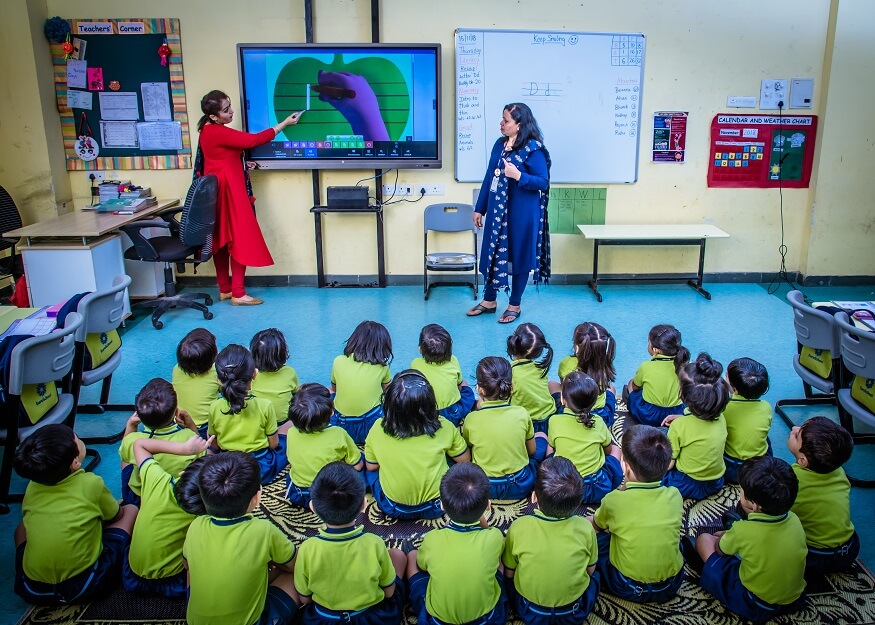

So if you are planning your child’s school admission in Mumbai, chances are that you have already found yourself doing age calculations more often than you’d like.
Maybe your three-year-old is just in time for the start of the admissions process. Or maybe they’re just a few weeks before the school cutoff date. Or perhaps you’ve received different advice from different parents and are now wondering if your child is ready this year or should wait another year.
It’s a common worry, and frankly one of the most confusing things about the admissions process.
Before parents start comparing schools, facilities or teaching methods, they should first understand the Age Criteria for School Admissions in Mumbai.
The good news is, once you understand the basic age guidelines, the process becomes easier to navigate.
Why Do Schools Have Age Criteria?
Many parents believe age requirements are just administrative rules.
In fact they are based on child development.
In the early years, a six month age gap can make a big difference to a child’s emotional, social, language and cognitive development.
Imagine two children in a single classroom. One may have just turned three and the other nearly four. Those few months at this age often make a real difference in communication, attention span, independence and confidence.
That’s why there are specific age admission guidelines for schools. The aim is not to “limit” admissions, but to make sure that children are entering learning environments appropriate to their stage of development.
Children in age appropriate classrooms are often more confident, engaged and ready to learn.
Understanding Age Criteria for Nursery Admissions
For many families, Nursery is the first formal step into education.
One of the most searched admission-related questions every year is around the age criteria for Nursery.
In Mumbai, children are generally expected to be 3 years old for Nursery admission.
This means that by the school’s specified cut-off date, the child should have completed three years of age.
At this stage, learning focuses on:
- Social interaction
- Communication skills
- Play-based learning
- Routine building
- Emotional development
- Exploration and curiosity
Nursery classrooms are designed to help children gradually adjust to structured environments while still learning primarily through play and discovery.
The emphasis isn’t on academics. It’s on helping children become comfortable learners.
Also Read: CBSE Nursery Syllabus
What Is the Age for Admission in Junior KG?
After Nursery, the next stage is Junior KG (often referred to as LKG in some schools).
The typical age for admission in Junior KG is 4 years and above.
By this age, children generally begin developing stronger communication skills, improved attention spans, and greater independence.
Learning experiences may start becoming slightly more structured, while still remaining activity-based and interactive.
Children are introduced to:
- Early literacy skills
- Vocabulary building
- Rhymes and storytelling
- Number recognition
- Creative activities
- Social learning
The focus remains on making learning enjoyable rather than academically demanding.
Senior KG: Building Foundations Before Primary School
Senior KG (UKG) is often viewed as the bridge between preschool and primary school.
Most schools in Mumbai typically require children to be 5 years old for Senior KG admission.
At this stage, children continue strengthening foundational skills such as:
- Language development
- Early reading readiness
- Number concepts
- Listening skills
- Problem-solving
- Classroom participation
The goal is to gradually prepare children for the expectations of primary education without creating unnecessary pressure.
Strong foundations built during these years often make the transition to Class 1 much smoother.
Also Read:
CBSE Age Limit for LKG Admission
What Is the Age for Admission in Class 1?
Another area that often creates confusion for parents is the age for admission in Class 1.
Following the implementation of the National Education Policy (NEP) 2020, schools have increasingly aligned with the recommendation that children should be 6 years old before entering Class 1.
This guideline exists because formal primary education requires children to demonstrate greater readiness in areas such as:
- Communication
- Concentration
- Social interaction
- Literacy skills
- Numeracy skills
- Emotional independence
Research consistently shows that children who enter primary school at developmentally appropriate ages often adapt more comfortably to academic expectations.
While some parents worry that waiting longer may put their child “behind,” educators generally agree that readiness matters far more than starting early.
Why Parents Should Avoid Comparing Admission Timelines
One of the biggest sources of admission stress comes from comparison.
It’s natural to hear about another child getting admission and wonder whether your own child should also be applying.
However, every child develops differently.
A child who appears ready for school at three and a half may have very different developmental needs compared to another child of a similar age.
Instead of focusing on what other families are doing, it’s often more helpful to ask:
- Is my child comfortable being away from home?
- Can they communicate basic needs?
- Are they emotionally ready for group settings?
- Do they show curiosity and engagement?
These questions can provide a much clearer picture of readiness than comparisons with peers.
What Happens If Your Child Misses the Cut-Off Date?
Many parents will have the same worry.
Sometimes a child is a week or two past the cut-off for admission.
This may be frustrating, but remember the age guidelines are in place with long-term development in mind.
Another year in an age appropriate setting often helps children through better communication skills, confidence and social maturity.
Many educators encourage parents to think not in terms of “losing a year,” but rather in terms of giving children more time to build solid foundations before they move on.
Common Admission Mistakes Parents Make
There are a few challenges that are recurrent during admission season.
Focus on Eligibility Only
Being of age is important, but so is finding a school that fits your child’s learning needs.
Playing the waiting game until the last minute
Knowing the age eligibility early can help parents plan applications better.
Putting Academics First, Too Soon
The preschool years are just as important for social, emotional and communication development as they are for academic readiness.
Always comparing children
Children learn at different speeds and admissions should not be a competition but based on individual readiness.
Questions Parents Should Ask Schools
When evaluating schools, it can be helpful to ask:
- What age criteria does the school follow?
- What is the admission cut-off date?
- How does the school support young learners during their transition?
- Is learning play-based in the early years?
- How are communication and social skills developed?
The answers often provide valuable insight into the school’s approach to early childhood education.
Looking Beyond Age Criteria
While eligibility requirements are important, they are only one part of the admission journey.
A child’s first school experience can shape their confidence, curiosity, and attitude towards learning for years to come.
The best learning environments are those that recognize childhood as a time for exploration, creativity, and growth rather than rushing children through milestones.
When age-appropriate learning is combined with supportive educators and engaging experiences, children are often better prepared to thrive both academically and socially.
Final Thoughts
Understanding the age norms for admission in Mumbai can help parents approach the admission process with clarity and confidence.
Whether it is the age criteria for Nursery or the age for admission in Junior KG or the age for admission in Class 1, the key objective is the same to ensure that children enter school at a stage that supports their overall development.
Although admission requirements may vary slightly from school to school age eligibility is there to help children learn, grow and adapt in environments that are appropriate to their developmental needs.
At EuroSchool CBSE schools in Mumbai we believe early childhood education should be about nurturing curiosity, confidence, creativity and a love of learning. Young learners can begin their educational journey with excitement and comfort by providing age-appropriate experiences that align with each developmental stage.