
The CBSE Class 2 Hindi syllabus for the 2026-27 academic year is based on Sarangi, the NCERT textbook introduced under NEP 2020 and NCF 2023. Class 2 is the year when children move from recognising Hindi letters to reading full sentences, writing their own thoughts, and exploring longer stories in Devanagari. The syllabus is built around themes children already know and love, such as family, friendship, nature, colours, and the sky.
Parents searching for the Class 2 Hindi syllabus usually want a clear view of the chapters in Sarangi, the grammar topics covered, and how much reading and writing is expected at this stage. This page brings together the full CBSE Class 2 Hindi syllabus 2026-27 in one place, including all chapters unit-wise, grammar topics, language skills, assessment pattern, and answers to common questions.
Sarangi continues from Class 1 into Class 2 with a fresh set of chapters. It replaces the older Rimjhim Part 2 textbook and moves to a richer, story-led structure. Each chapter combines prose, poetry, or picture-based learning with speaking, reading, and writing activities, so the four language skills keep building together through the year.
CBSE Class 2 Hindi Syllabus 2026-27: Quick Snapshot
Board: Central Board of Secondary Education (CBSE)
Class: 2
Subject: Hindi
Prescribed Textbook: Sarangi (NCERT)
Curriculum Framework: NEP 2020 and NCF for Foundational Stage 2023
Medium: Hindi
Academic Year: 2026-27
Total Units: 5
Assessment Style: Continuous, activity-based, no formal board exams
Unit-Wise CBSE Class 2 Hindi Syllabus
The Sarangi textbook for Class 2 Hindi is divided into five thematic units that take children through family life, colours and friendship, nature and farming, the meaning of friendship, and the world of the sky and imagination. The table below shows the unit-wise Class 2 Hindi syllabus for CBSE 2026-27.
| Unit | Theme | Chapters |
|---|---|---|
| Unit 1 | Parivaar (Family) | Neema Ki DadiGharMala Ki Chandi Ki PayalMaaThathoo Aur MainCheentaTilloo Ji |
| Unit 2 | Rang Hi Rang (Colours and Friendship) | Teen DostDuniya Rang-BirangiKaunBaingani JojoTosiya Ka Sapna |
| Unit 3 | Hari-Bhari Dharti (Green Earth) | TalaabBeejKisaanMooliBarsaat Aur Mendhak |
| Unit 4 | Mitrta (Friendship) | Sher Aur Choohe Ki DostiAautChhupan-ChhupaiHaathi Cycle Chala Raha Tha |
| Unit 5 | Aakash (Sky and Imagination) | TitliChidiyaChanda MamaTaaraEkki-Dokki |
Note on chapter count: Different NCERT reprints and online sources list the Sarangi Class 2 chapter count slightly differently, with some listing between 15 and 27 chapters. The unit structure and major chapters shown above are consistent across NCERT’s official CIET audio book portal and most widely used references. Parents should always cross-check with the latest NCERT reprint issued by the school.
Class 2 Hindi Chapters Explained
Unit 1: Parivaar (Family)
The first unit stays close to home and family, a comfortable opening for the year. It strengthens vocabulary around relationships and daily life.
- Neema Ki Dadi: A warm chapter about a grandmother’s bond with her granddaughter, building words for relationships and home.
- Ghar: Explores what a home means, both as a physical space and as an emotional place of belonging.
- Mala Ki Chandi Ki Payal: A touching story about Mala’s silver anklet that gently introduces sharing and compassion.
- Maa: A poem celebrating the unconditional love of mothers.
- Thathoo Aur Main: A playful chapter featuring a child and a character named Thathoo, great for dialogue and expression.
- Cheenta: A short piece about an ant that blends a small creature’s story with everyday observation.
- Tilloo Ji: A fun character-based chapter that builds listening and recitation skills.
Unit 2: Rang Hi Rang (Colours and Friendship)
The second unit opens the child’s world to colours, friends, and imagination.
- Teen Dost: A story about three friends that reinforces the value of friendship and cooperation.
- Duniya Rang-Birangi: Introduces the colourful variety of the world around us with rich vocabulary.
- Kaun: A question-based chapter that builds observation and simple Hindi sentence formation.
- Baingani Jojo: A playful chapter that uses the colour purple and a fun character to expand vocabulary.
- Tosiya Ka Sapna: A short chapter about Tosiya’s dream, encouraging imagination and narration.
Unit 3: Hari-Bhari Dharti (Green Earth)
The third unit shifts outdoors, focusing on nature, farming, and the environment around us.
- Talaab: A chapter about a pond and the ecosystem around it, introducing words for water, fish, and plants.
- Beej: Explores the miracle of a seed becoming a plant, with vocabulary for growth and change.
- Kisaan: A chapter that celebrates the farmer’s role in our lives, building words related to farms and agriculture.
- Mooli: A playful, familiar story about a radish that is often a favourite among Class 2 children.
- Barsaat Aur Mendhak: A seasonal chapter about rain and frogs that introduces monsoon vocabulary.
Unit 4: Mitrta (Friendship)
The fourth unit is built around the value of friendship and cooperation through animal stories and playful situations.
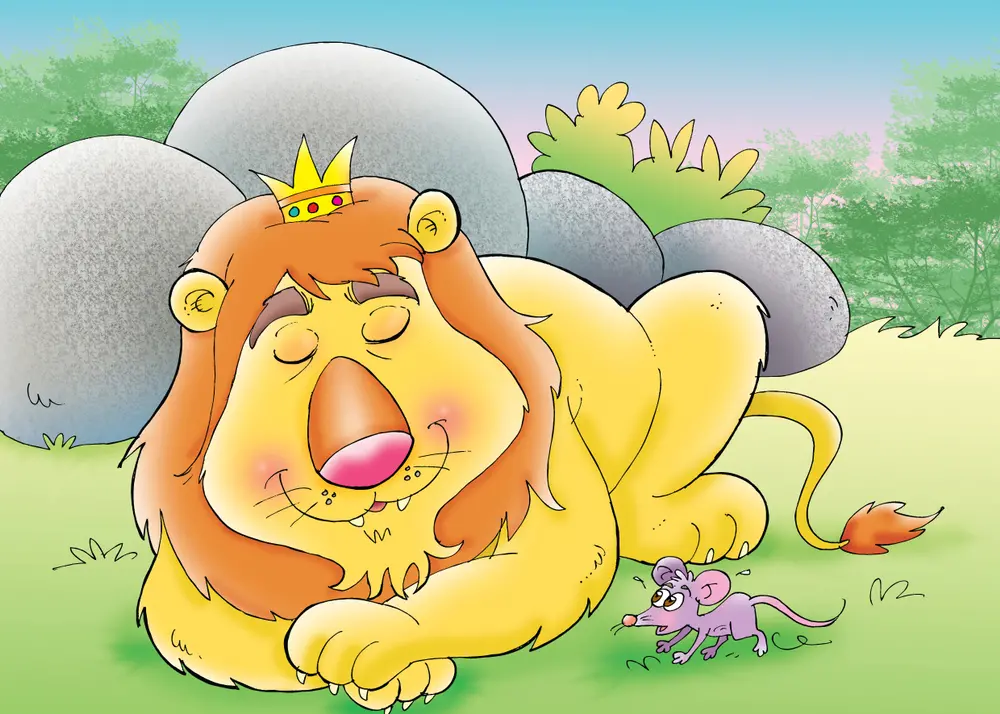
- Sher Aur Choohe Ki Dosti: The classic tale of the lion and the mouse, a favourite for teaching kindness and cooperation.
- Aaut: A light-hearted chapter that builds reading fluency through a short narrative.
- Chhupan-Chhupai: A chapter built around the game of hide-and-seek, adding playful vocabulary.
- Haathi Cycle Chala Raha Tha: A humorous chapter featuring an elephant riding a cycle, great for imagination and oral retelling.
Unit 5: Aakash (Sky and Imagination)
The final unit looks upward and inward, using the sky, the moon, and imagination as themes.
- Titli: A poetic chapter about butterflies that builds words for insects, flowers, and colours.
- Chidiya: A chapter about birds that celebrates freedom and flight.
- Chanda Mama: A classic rhyme around the moon, familiar to most children from very young ages.
- Taara: A gentle chapter about stars and the night sky, encouraging imagination.
- Ekki-Dokki: A traditional counting and rhyming piece that closes the year on a playful note.
Class 2 Hindi Grammar Syllabus 2026-27
The Class 2 Hindi grammar syllabus builds directly on what children learned in Class 1. Grammar is still introduced through stories and activities, but children are now expected to use these concepts consistently in their writing and speech. The table below covers the core grammar topics for CBSE Class 2 Hindi 2026-27.
| Grammar Topic | What It Covers |
|---|---|
| Varna Vichaar | Revision of Hindi vowels and consonants with focus on accurate pronunciation and writing. |
| Matra | All matras practised through word building, including difficult combinations. |
| Sangya (Nouns) | Introduction to naming words for people, places, animals, and things. |
| Kriya (Verbs) | Simple action words and their use in short sentences. |
| Visheshan (Adjectives) | Basic describing words for colour, size, shape, and feeling. |
| Vachan (Singular and Plural) | Changing singular nouns to plural in Hindi, such as ladka and ladke. |
| Ling (Gender) | Masculine and feminine nouns with familiar examples. |
| Vilom Shabd (Opposites) | Opposite word pairs like din and raat, chhota and bada, sardi and garmi. |
| Samaan Shabd (Synonyms) | Simple synonyms introduced through textbook vocabulary. |
| Vakya Rachna | Forming short, meaningful Hindi sentences using familiar words. |
| Giniti | Reading and writing Hindi numbers from 1 to 50. |
Language Skills Developed in Class 2 Hindi
By Class 2, the four language skills start to develop real depth in Hindi. Listening and speaking remain strong focus areas, but reading short passages and writing simple paragraphs become central. The table below summarises what children will learn through the year.
| Skill | Learning Outcomes |
|---|---|
| Listening (Shravan) | Understanding longer Hindi stories, following instructions, and answering comprehension questions. |
| Speaking (Vachan) | Reciting poems, narrating short stories, greeting others, and holding simple Hindi conversations. |
| Reading (Padhan) | Reading short paragraphs, recognising all matras, and reading with correct pronunciation. |
| Writing (Lekhan) | Writing words, short sentences, and simple paragraphs in Hindi with correct letter formation. |
| Vocabulary (Shabd-Bhandar) | Words related to family, friends, colours, nature, farming, animals, and the sky. |
Class 2 Hindi Assessment and Exam Pattern
CBSE does not conduct formal board examinations at the foundational stage. Class 2 Hindi assessment is continuous and activity-based, with teachers observing children through daily classroom tasks, oral activities, and short written work. Common assessment formats are listed below.
| Assessment Area | Typical Activity Type |
|---|---|
| Oral Recitation | Reciting Sarangi poems and rhymes with correct rhythm and pronunciation. |
| Reading Aloud | Reading short passages from chapters like Ghar, Talaab, and Sher Aur Choohe Ki Dosti. |
| Picture Description | Looking at a picture and writing two or three simple sentences in Hindi. |
| Writing Tasks | Short sentence writing, fill-in-the-blanks, matching exercises, and simple Hindi answers. |
| Listening Tasks | Listening to a story read aloud and answering simple who, what, and where questions. |
| Vocabulary Activities | Identifying objects, matching opposites and synonyms, and using simple flash cards. |
Schools may conduct periodic assessments through worksheets and short oral activities, but the focus at this stage is on building reading fluency and writing confidence rather than marks.
Prescribed Textbook: Sarangi by NCERT
The only prescribed textbook for CBSE Class 2 Hindi under the 2026-27 curriculum is Sarangi, published by NCERT. It is aligned with the National Education Policy 2020 and the National Curriculum Framework for the Foundational Stage 2023. Sarangi replaces the older Rimjhim Part 2 textbook and moves to a story-led, activity-based structure.
Key features of the Sarangi textbook for Class 2 Hindi:
- Five thematic units covering family, colours, nature, friendship, and imagination.
- A mix of stories, poems, rhymes, and picture-based chapters.
- Progressive difficulty that builds gradually from the Sarangi Class 1 textbook.
- Activities that build reading, writing, listening, and speaking together.
- Colourful illustrations and relatable characters for young learners.
- Audio versions available through the NCERT CIET portal for pronunciation support.
How to Help Your Child Learn Class 2 Hindi at Home
Class 2 Hindi is best learned when school lessons are supported by short, regular practice at home. A few practical habits that work well:
- Read a Sarangi chapter aloud with your child every day, pointing at each word as you read.
- Ask your child to retell stories like Sher Aur Choohe Ki Dosti or Mooli in their own words.
- Practise all matras through simple word-building exercises in a four-line notebook.
- Recite Sarangi poems aloud together and clap to the rhythm for better oral fluency.
- Speak short Hindi sentences during meal time, bath time, and play time.
- Use picture flashcards for colours, animals, family, and seasons to expand vocabulary.
- Introduce one new grammar topic a week, such as opposites or plurals, through everyday examples.
- Keep writing practice short and neat. Five or six good sentences a day is better than a page of tired writing.
Related CBSE Class 2 Resources
Parents and teachers looking for more Class 2 CBSE resources for the 2026-27 session often explore the following alongside the Hindi syllabus:
FAQs on CBSE Class 2 Hindi Syllabus 2026-27
1. What is the prescribed textbook for CBSE Class 2 Hindi in 2026-27?
The prescribed textbook for CBSE Class 2 Hindi for the 2026-27 academic year is Sarangi, published by NCERT. It is the updated coursebook aligned with the National Education Policy 2020 and replaces the older Rimjhim Part 2 textbook.
2. How many chapters are there in the Class 2 Hindi textbook?
The Sarangi textbook for Class 2 Hindi is organised into five thematic units. Different NCERT reprints list slightly different chapter counts (between 15 and 27), but the unit structure and main chapters remain consistent. Parents should check the latest reprint issued by their child’s school for the exact chapter list.
3. What are the units in the CBSE Class 2 Hindi syllabus 2026-27?
The Class 2 Hindi syllabus is divided into five units. Unit 1 is Parivaar (Family), Unit 2 is Rang Hi Rang (Colours and Friendship), Unit 3 is Hari-Bhari Dharti (Green Earth), Unit 4 is Mitrta (Friendship), and Unit 5 is Aakash (Sky and Imagination).
4. What grammar topics are covered in CBSE Class 2 Hindi?
Class 2 Hindi grammar covers varna vichaar, all matras, sangya (nouns), kriya (verbs), visheshan (adjectives), vachan (singular and plural), ling (gender), vilom shabd (opposites), synonyms, vakya rachna (sentence formation), and Hindi numbers up to 50. Grammar is introduced through examples in stories and activities, not as formal rules.
5. Is Hindi a compulsory subject in CBSE Class 2?
Yes. As per CBSE guidelines, Hindi remains a compulsory subject in Class 2. It helps children strengthen their second language and builds a strong foundation for higher classes where Hindi becomes a scoring subject.
6. Is the CBSE Class 2 Hindi syllabus difficult for young children?
No. The Sarangi syllabus is designed for seven and eight year olds. It builds gradually on what was learned in Class 1 and uses familiar themes, relatable characters, and playful language to keep learning enjoyable. Reading fluency, not rote memorisation, is the focus.
7. Are there formal exams in CBSE Class 2 Hindi?
No. CBSE follows a continuous and activity-based assessment approach at the foundational stage. Class 2 Hindi is assessed through oral recitation, reading aloud, picture description, writing tasks, and simple worksheets. There are no formal board exams.
8. What is the difference between Rimjhim and Sarangi?
Rimjhim Part 2 was the older NCERT textbook used for Class 2 Hindi under the previous curriculum. Sarangi is the updated textbook introduced under NEP 2020 and NCF 2023. It has a cleaner thematic structure, a richer mix of stories and poems, and more age-appropriate content.
9. How can parents support Class 2 Hindi learning at home?
Parents can read Sarangi chapters aloud together, encourage storytelling and retelling, practise matras and word building in a four-line notebook, recite poems, use flashcards, and speak short Hindi sentences during daily routines. Short, consistent practice is more effective than long sessions at this age.
10. Where can I download the CBSE Class 2 Hindi syllabus PDF for 2026-27?
The CBSE Class 2 Hindi syllabus is based entirely on the NCERT Sarangi textbook, which is available as a free PDF on the official NCERT website. Audio versions are also available through the NCERT CIET portal. The unit structure shown on this page reflects the same syllabus followed by all CBSE affiliated schools for 2026-27.