Learning opposite words is one of the most enjoyable parts of early vocabulary building. From simple pairs like hot and cold to more descriptive ones like brave and fearful, opposites help children understand language in a richer, more meaningful way. For preschool, kindergarten, and primary school learners, opposite words strengthen vocabulary, sharpen thinking skills, and make everyday conversations more expressive. Parents and teachers across India often begin vocabulary lessons with opposites because they are easy to grasp and fun to practise.
This guide offers a complete list of opposite words in English, along with teaching strategies, classroom-friendly activities, and practical tips for home practice.
What Are Opposite Words?
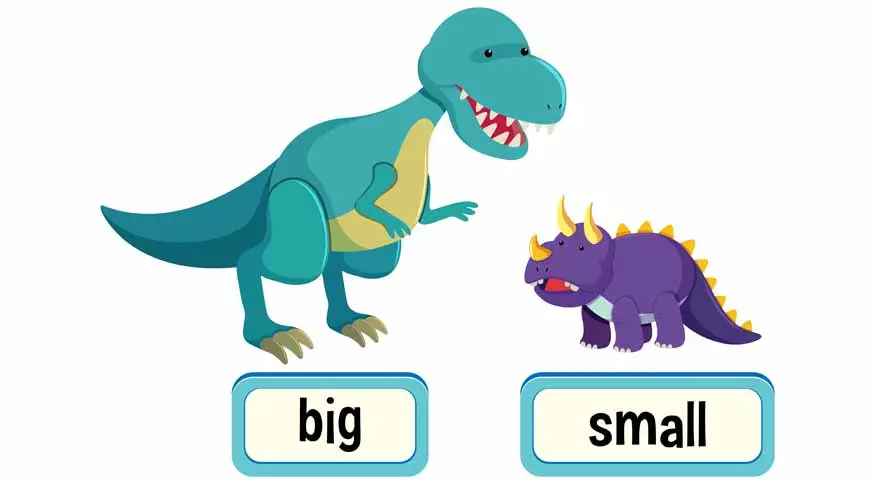
Opposite words, also known as antonyms, are words that have completely different meanings. For example, the opposite of big is small, and the opposite of happy is sad. Opposites show contrast and help children describe the world more clearly.
Some opposites are straightforward, such as day and night. Others are slightly more abstract, such as success and failure. Learning opposites helps children understand meaning, compare ideas, and use more varied language in both speaking and writing.
Why Opposite Words Matter in Early Learning
Opposite words are far more than just a vocabulary exercise. They play a key role in cognitive and language development.
- They build vocabulary in a structured and memorable way.
- They improve comprehension by clarifying word meanings through contrast.
- They strengthen critical thinking and reasoning.
- They support speaking and writing with more expressive word choices.
- They help children understand comparisons, which is useful in maths and everyday reasoning.
- They make conversations and storytelling more engaging.
Most CBSE English programmes and NEP 2020-informed early learning frameworks include antonyms as part of foundational vocabulary development in the primary years.
Opposite Words List in English by Category
The easiest way to teach opposites is to group them by theme. This helps children link new words to ideas they already understand.
Opposites About Size and Quantity
big and small, large and tiny, tall and short, long and short, wide and narrow, thick and thin, heavy and light, full and empty, many and few, more and less
Opposites About Feelings and Emotions
happy and sad, brave and fearful, kind and cruel, calm and angry, proud and ashamed, friendly and unfriendly, cheerful and gloomy, loving and hateful, excited and bored, hopeful and hopeless
Opposites About Movement and Action
push and pull, open and close, come and go, start and stop, give and take, buy and sell, arrive and leave, enter and exit, catch and throw, lift and drop
Opposites About Direction and Position
up and down, left and right, top and bottom, front and back, inside and outside, above and below, near and far, high and low, north and south, east and west
Opposites About Time
day and night, early and late, morning and evening, before and after, young and old, new and old, always and never, fast and slow, begin and end, awake and asleep
Opposites About Appearance
beautiful and ugly, clean and dirty, neat and messy, bright and dull, dark and light, shiny and dull, smooth and rough, dry and wet, soft and hard, sharp and blunt
Opposites About Temperature and Weather
hot and cold, warm and cool, sunny and cloudy, wet and dry, rainy and sunny, stormy and calm, icy and warm, humid and dry, fresh and stale, freezing and boiling
Opposites About Personality and Behaviour
polite and rude, honest and dishonest, generous and selfish, patient and impatient, hard-working and lazy, careful and careless, quiet and noisy, shy and bold, humble and proud, responsible and irresponsible
Opposites About Age and Life Stages
young and old, new and old, fresh and stale, modern and ancient, baby and adult, beginning and end, birth and death, childhood and adulthood, fresh and stale, recent and old
Opposites About Quality and Value
good and bad, right and wrong, best and worst, cheap and expensive, rich and poor, easy and difficult, safe and dangerous, strong and weak, pure and impure, real and fake
Opposites About Speed and Motion
fast and slow, quick and slow, rush and delay, hurry and linger, move and stop, run and walk, race and crawl, accelerate and slow down, advance and retreat, speed and pause
Opposites About Sound and Volume
loud and soft, noisy and quiet, high and low, shout and whisper, speak and listen, sing and silence, roar and murmur, scream and whisper, bang and hush, music and silence
Opposites With Prefixes
happy and unhappy, kind and unkind, fair and unfair, lucky and unlucky, honest and dishonest, agree and disagree, appear and disappear, like and dislike, possible and impossible, correct and incorrect
This gives children more than 200 opposite pairs, ideal for regular vocabulary practice.
Easy Teaching Sequence for Opposite Words
A simple teaching order makes opposites easier to learn. A sequence that works well in classrooms and at home is:
- Start with concrete opposites like big and small, hot and cold.
- Move to action-based opposites such as open and close, push and pull.
- Introduce feeling-based opposites like happy and sad.
- Teach opposites of direction and position.
- Add opposites of quality and behaviour.
- Finally, introduce opposites formed by prefixes such as un, dis, and in.
This gentle progression helps children move from what they can see to more abstract ideas.
Fun Opposite Word Activities for Kids
Learning opposites becomes far more enjoyable through games and hands-on play. The following activities work well at home and in early years classrooms.
1. Opposite Match
Create two sets of cards, one with words and one with their opposites. Children match each word with its correct pair.
2. Action Opposites
Call out an action such as stand up, and ask the child to do the opposite. This is a fun movement-based activity for younger learners.
3. Picture Opposites
Show pictures of opposites like a tall building and a short house. Ask children to describe what they see using opposite words.
4. Opposite Day
Declare one day as Opposite Day. Children describe things using opposite words during play, turning it into a full day of vocabulary practice.
5. Story Swap
Read a short story aloud. Then read it again, replacing certain words with their opposites to create a funny, changed story.
6. Opposite Ball Toss
Toss a ball to a child while saying a word. The child must say the opposite before throwing it back.
7. Flashcard Race
Place opposite word cards face down. Children flip two cards at a time to find matching opposite pairs.
These activities turn vocabulary building into play, which helps children remember words more easily.
Tips for Parents Teaching Opposite Words at Home
Parents can make a huge difference in building their child’s vocabulary through simple daily practices.
- Use opposites in everyday conversation. For example, describe the weather as hot or cold, or a bag as heavy or light.
- Read storybooks that highlight contrasts and opposites.
- Play quick opposite games during travel or meal times.
- Encourage children to describe objects using opposite pairs.
- Praise curiosity and effort rather than only correct answers.
- Repeat and revise opposite pairs regularly.
Vocabulary grows fastest when it is woven naturally into daily life.
Common Mistakes to Avoid
A few common mistakes can slow down the learning of opposite words. Being aware of them helps keep practice smooth.
- Teaching too many opposite pairs at once.
- Focusing on memorising lists instead of understanding meaning.
- Skipping real-life examples and relying only on worksheets.
- Ignoring prefix-based opposites, which are important for older learners.
- Correcting errors harshly and reducing a child’s confidence.
- Not revisiting previously learned pairs.
A relaxed, example-rich approach builds stronger vocabulary in the long run.
Moving Beyond Opposite Words
Once children are confident with opposites, they are ready to explore the next layer of vocabulary skills. This includes:
- Synonyms, which are words with similar meanings.
- Homophones, which sound the same but have different meanings.
- Compound words such as sunlight, rainbow, and toothbrush.
- Descriptive adjectives that make writing more expressive.
- Simple idioms and phrases that enrich everyday language.
Each of these skills builds on the comparison thinking that opposites introduce.
Final Thoughts
Opposite words are a wonderful way to introduce children to the richness of English vocabulary. They make language clearer, more expressive, and more fun to use. With a well-organised word list, engaging daily activities, and consistent practice, children quickly build a strong vocabulary foundation that supports reading, writing, and everyday communication.
For parents looking for a supportive early learning environment that blends vocabulary building with joyful classroom experiences, choosing a school that values language development makes a lasting difference. At EuroSchool, young learners explore vocabulary, grammar, and storytelling through interactive classrooms, experienced teachers, and a curriculum designed to make English both meaningful and enjoyable. This strong start helps children grow into confident communicators and lifelong learners.