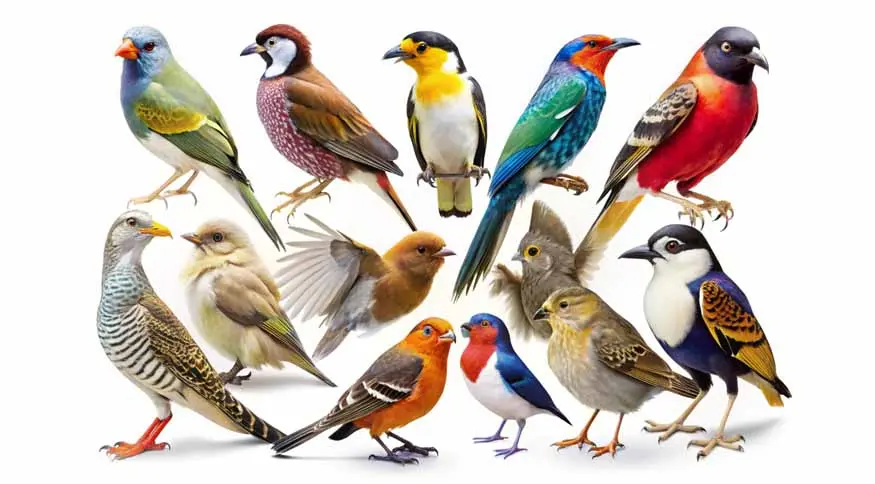
Birds are among the first creatures children notice in the world around them. From sparrows hopping on windowsills to peacocks dancing in the rain, birds capture the curiosity of young minds like few other animals can. Learning bird names in English helps children build vocabulary, develop observation skills, and form a deeper connection with nature.
This guide presents a wide range of bird names in English, organised by category, to make learning enjoyable and meaningful for kids of all ages.
Why Should Kids Learn Bird Names?
Knowing the names of birds opens up a world of learning for children. It strengthens their English vocabulary and pronunciation, encourages outdoor observation and curiosity, and helps them understand concepts like migration, habitats, and ecosystems. Birds also appear frequently in stories, poems, idioms, and school textbooks, making familiarity with their names useful for reading and comprehension.
For younger children, spotting and naming birds during walks or from a balcony can become a fun daily activity that builds both language and attention skills.
Common Bird Names in English
These are the birds that children are most likely to see in their neighbourhoods, gardens, and parks across India.
Sparrow – Small, brown, and found almost everywhere, the house sparrow is one of the most familiar birds in Indian cities and towns. Sparrows often build nests in the nooks of buildings and walls.
Pigeon – Grey with iridescent neck feathers, pigeons are a common sight in urban areas. They are known for their gentle cooing sound and their ability to find their way home over long distances.
Crow – Intelligent and adaptable, crows are found in nearly every part of India. The Indian house crow is black with a grey collar and is known for its sharp, loud call.
Parrot – Bright green with a red beak, the Indian ringneck parakeet is the parrot species children encounter most often. Parrots are popular for their ability to mimic human speech.
Peacock – The national bird of India, the peacock is famous for its stunning blue and green tail feathers, which it fans out in a magnificent display during the monsoon season.
Mynah – A dark brown bird with a yellow beak and eye patch, the common mynah is frequently seen hopping along roads and gardens. Mynahs are talented mimics and have a wide range of calls.
Kingfisher – A small, brightly coloured bird with a long sharp beak, the kingfisher dives into water at incredible speed to catch fish. Its vivid blue and orange plumage makes it easy to spot near rivers and ponds.
Eagle – Large and powerful, eagles are birds of prey with broad wings and sharp talons. They soar high in the sky and have exceptionally keen eyesight.
Owl – Known as a nocturnal bird, the owl is active at night and sleeps during the day. Its large round eyes and ability to rotate its head nearly all the way around make it a fascinating creature for children.
Woodpecker – Recognised by its habit of pecking at tree trunks to find insects, the woodpecker has a strong beak and a specially cushioned skull that absorbs the impact of repeated drilling.
Birds Grouped by Habitat
Learning where different birds live helps children understand the relationship between animals and their environments.
Birds Found Near Water
Duck – Ducks are waterbirds with flat beaks and webbed feet that help them swim. Children often enjoy watching ducks paddle across ponds and lakes.
Swan – Graceful white birds with long curved necks, swans glide across lakes and are often associated with beauty and elegance.
Crane – Tall, long-legged birds found near wetlands and marshes. The Sarus Crane, the tallest flying bird in the world, is native to India.
Heron – A patient hunter, the heron stands still at the edge of water for long stretches, waiting to strike at fish with its sharp beak.
Flamingo – Known for their striking pink colour, flamingos stand on one leg in shallow waters. Large flocks visit the wetlands of Gujarat and Mumbai every winter.
Birds Found in Forests and Hills
Hornbill – A large bird with a distinctive curved beak and a casque (helmet-like structure) on top of its head. Hornbills are found in the forests of Northeast India and the Western Ghats.
Cuckoo – Famous for its melodious “koo-koo” call, the cuckoo is often heard but rarely seen. In Indian culture, the koel (Asian cuckoo) is associated with the arrival of spring.
Pheasant – Colourful ground-dwelling birds found in hilly and forested regions. The male pheasant is known for its vibrant plumage.
Bulbul – A small, lively bird with a cheerful song, the red-vented bulbul is commonly found in Indian gardens and light woodlands.
Birds Found in Open Fields and Grasslands
Sparrow – Apart from urban areas, sparrows are also found in farmlands and open fields where grain is available.
Skylark – A small brown bird that sings beautifully while flying high in the sky. Skylarks are found in open grasslands and meadows.
Kite – The black kite is a common raptor seen soaring in wide circles over cities and countryside alike, often near garbage dumps and open markets.
Migratory Birds That Visit India
Some birds travel thousands of kilometres every year to escape harsh winters in their home countries. India is a major destination for many migratory species.
Siberian Crane – These large white cranes travel from Siberia to the wetlands of Rajasthan and other parts of India during winter.
Greater Flamingo – Flamingos migrate to the Rann of Kutch in Gujarat and the coastal wetlands of Mumbai in large numbers during the cooler months.
Bar-headed Goose – One of the highest-flying birds in the world, the bar-headed goose crosses the Himalayas during its migration from Central Asia to India.
Rosy Starling – These pink and black birds arrive in large flocks from Central Asia and Europe, often seen in agricultural fields across western and southern India.
Amur Falcon – Small but mighty, the Amur falcon migrates from eastern Asia to southern Africa, passing through Northeast India, covering one of the longest migration routes of any raptor.
Colourful Birds and Their Identifying Features
Associating birds with their colours helps children recognise them more easily.
Blue birds – Kingfisher, Indian Roller (Neelkanth), and Blue Jay are known for their striking blue plumage.
Green birds – Parrot, Bee-eater, and Barbet are predominantly green and often spotted in gardens and orchards.
Red and orange birds – Robin, Minivet, and Flameback Woodpecker display bold red and orange markings.
Yellow birds – Sunbird, Oriole, and Weaver Bird feature bright yellow feathers that stand out among foliage.
Black and white birds – Magpie Robin, Pied Kingfisher, and Wagtail have clean black and white patterns that make them easy to identify.
Multi-coloured birds – Peacock, Indian Pitta, and Painted Stork display a dazzling mix of colours.
Fun Facts About Birds for Kids
Sharing fun facts makes bird learning exciting and memorable for children.
The ostrich is the largest bird in the world, standing up to 2.7 metres tall, but it cannot fly. The bee hummingbird, found in Cuba, is the smallest bird, measuring just five centimetres in length.
Peregrine falcons are the fastest animals on the planet, reaching speeds of over 380 kilometres per hour during a dive. Penguins are birds that cannot fly but are excellent swimmers, spending much of their lives in water.
The Arctic tern holds the record for the longest migration, travelling from the Arctic to the Antarctic and back every year, covering roughly 70,000 kilometres. An albatross can glide for hours without flapping its wings, using ocean winds to stay aloft.
Owls cannot move their eyeballs. Instead, they rotate their heads up to 270 degrees to look around. Crows are among the most intelligent birds and have been observed using tools, solving puzzles, and even recognising human faces.
The weaver bird builds one of the most intricate nests in the animal kingdom, weaving grass and twigs into elaborate hanging structures. The tailorbird stitches leaves together using plant fibres to create a cosy, hidden nest.
Indian Birds Every Child Should Know
India is home to over 1,300 bird species, making it one of the most bird-rich countries in the world. Here are some uniquely Indian birds children should learn about.
Indian Peafowl (Peacock) – The national bird, celebrated for its iridescent blue-green plumage and spectacular tail display.
Indian Robin – A small bird commonly found in gardens across India, the male has a glossy black body with a distinctive orange patch under the tail.
Sarus Crane – The tallest flying bird in the world, found in the wetlands of Uttar Pradesh and Gujarat. Sarus cranes are known for mating for life.
Indian Roller (Neelkanth) – A brilliantly blue bird considered auspicious in Indian culture. It is the state bird of several Indian states.
Koel – The male koel is glossy black while the female is brown with white spots. Its rising, melodious call is one of the most recognisable sounds of an Indian summer.
Great Indian Bustard – A critically endangered bird found in the grasslands of Rajasthan and Gujarat. Conservation efforts are underway to protect this majestic species.
Activities to Help Kids Learn Bird Names
Parents and teachers can turn bird learning into an engaging, hands-on experience. Morning walks or balcony bird-watching sessions where children identify and name the birds they spot are a wonderful starting point. Keeping a simple bird journal where kids draw or paste pictures of birds and write their names in English builds both vocabulary and observation habits.
Listening to bird calls through apps or videos and matching them to bird names trains auditory recognition. Building a simple bird feeder at home and observing which species visit teaches children about bird diets and behaviour. Reading picture books and watching age-appropriate nature documentaries about birds adds context and stories to the names children are learning.
Creating bird flashcards with a picture on one side and the name, colour, and one fun fact on the other side is an effective revision tool for younger learners.
How to Teach Bird Names to Young Learners
Start with five to ten birds that children already see regularly, such as sparrow, pigeon, crow, parrot, and peacock. Use real sightings, photographs, or short videos rather than relying only on text descriptions. Encourage children to describe the bird first, noting its colour, size, beak shape, and behaviour, before revealing its name.
Build associations by connecting bird names to sounds (cuckoo and its call), festivals (peacock and monsoon), places (flamingo and Gujarat), or stories (owl and wisdom). Revisit bird names through casual conversations during car rides, park visits, or even while watching birds from a window.
For older children, introduce concepts like migration, endangered species, and bird conservation to deepen their understanding and build empathy for wildlife.
Also Read:
Flower Names in English for Kids
Transport Vehicle Names in English for Kids
Animal Names in English for Kids
Conclusion
Birds bring colour, music, and wonder to our everyday surroundings. From the humble sparrow perched on a rooftop to the majestic eagle soaring above the hills, every bird name a child learns adds richness to their vocabulary and awareness of the natural world. Encourage your child to look up, listen closely, and discover the fascinating world of birds around them.
Looking for more vocabulary-building resources for your child? EuroSchool’s curriculum integrates language learning with experiential activities that bring subjects to life. Explore our CBSE programmes to give your child the best foundation in English and beyond.